02/12/2025
As members of the information society, we are all recently exposed to a massive information overload and data pollution. Many of us struggle to distinguish accurate and truthful information from false and manipulative information in this data "garbage." Science comes to our aid here as well, enabling us to analyze big data and develop strategies based on this analysis.
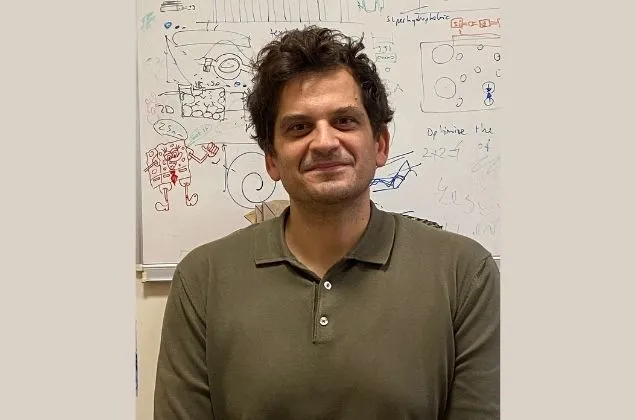
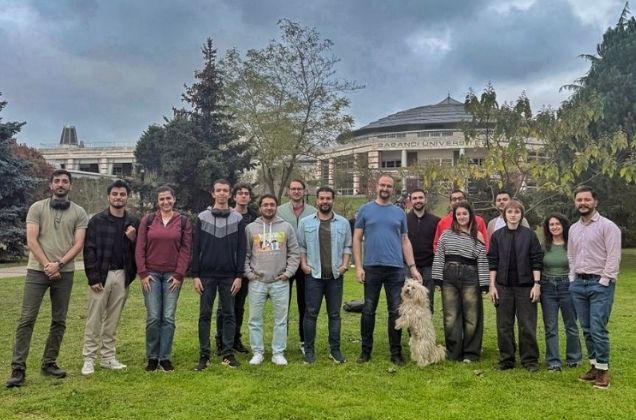
Dr. Onur Varol, a faculty member in the Computer Science & Engineering Program at Sabancı University's Faculty of Engineering and Natural Sciences, addresses social problems using online data through his research in the field of computational social sciences in his laboratory, VIRAL. He utilizes techniques such as data science, machine learning, complex systems, network science, data mining, and Turkish Natural Language Processing to analyze online behavior. Using existing technologies and the tools they develop, they conduct research projects with high societal benefit and broad impact.
A Successful Higher Education in the US
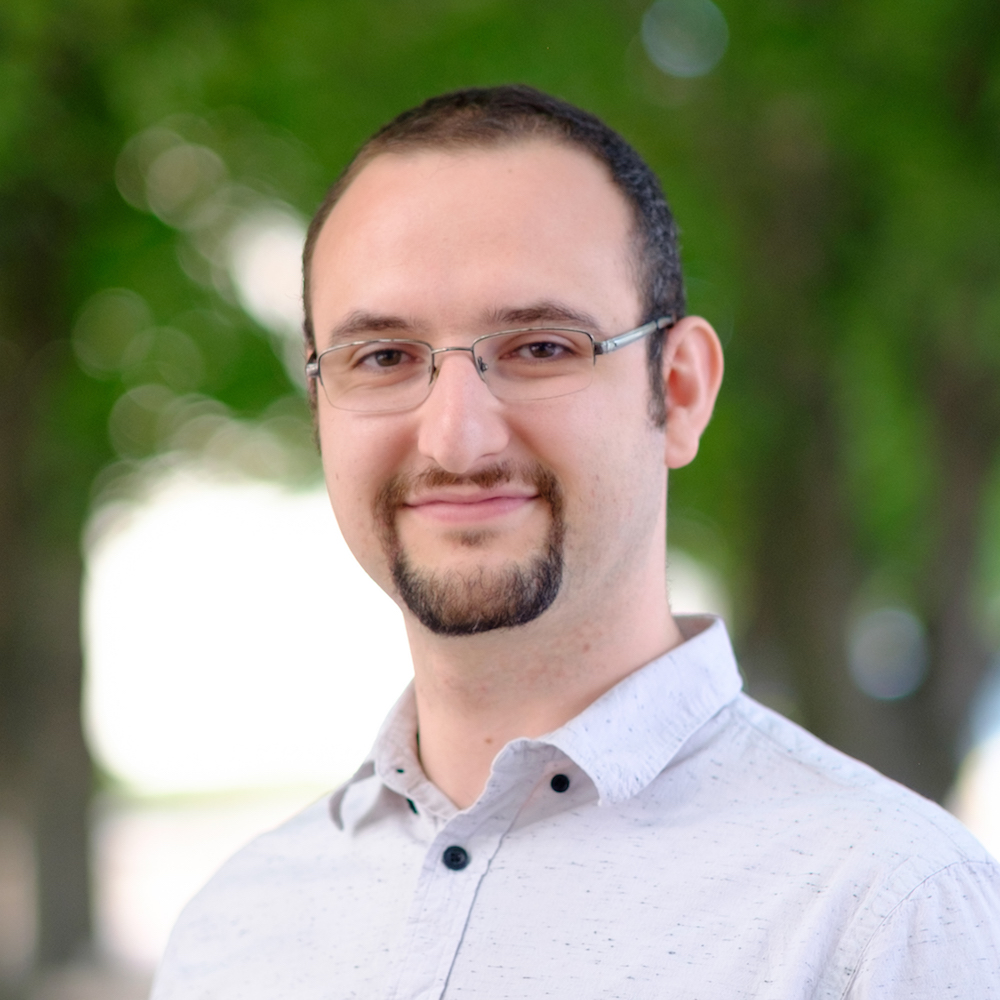
Dr. Varol, who began his undergraduate education in the Department of Electronic Engineering at Istanbul Technical University (ITU) and graduated with a double major in Physics Engineering, focused on mobile robotics, image processing, and robot control using EEG while choosing his area of expertise. During his master's studies at Koç University's Department of Computer Science and Engineering, he conducted research on complex systems and studied protein vibrations and allosteric effects in biophysics. He completed his doctorate in Informatics at Indiana University under the supervision of Filippo Menczer. In his doctoral dissertation, he utilized machine learning, data mining, and network analysis tools to analyze manipulation campaigns and social bots on social media. During this time, he developed the social bot recognition system Botometer (BotOrNot). In 2015, he ranked third globally in the DARPA Bot Detection Challenge. In 2018, he was awarded the Indiana University Distinguished Ph.D. Dissertation Award.
Prior to joining Sabancı University, he was a postdoctoral researcher at Northeastern University at the Center for Complex Network Research. There, he collaborated with Albert-Laszlo Barabasi to conduct groundbreaking research on quantifying online performance and success. His doctoral and postdoctoral studies have been published in journals such as Nature Communications, Nature Human Behavior, and Communications of the ACM, as well as at prestigious conferences such as the International Conference on Web and Social Media (ICWSM).
Dr. Varol was awarded the 2022 BAGEP Young Scientist Award by the Turkish Science Academy. He also received supported for a project he submitted to the TÜBİTAK 2247-D National Young Researchers Program.
Manipulation and Social Bots on Social Networks
We assume that the accounts we follow on social networks are real people like us. However, the sheer number of some accounts and the frequent content production can raise suspicions that they are of a different nature. Dr. Varol points out that behind these accounts are accounts whose behavior is controlled by automation, and these are called social bots. He defines bots as follows: “Accounts whose behavior is controlled by automation, beyond the typical users on social networks, are called social bots, and automation is the distinguishing factor.”
To our question, “Are trolls, which we frequently hear about, the same as bots?” Dr. Varol answers: “Troll accounts, motivated by a specific purpose and controlled by humans or partially using automation, are different. Their behavior partially overlaps with human behavior. However, bots are not human-driven, and their behavioral patterns are different. While media literacy enables to identify these accounts to a certain extent, machine learning approaches produce faster and more consistent results when identifying certain systematic behaviors.”
How to Detect Social Bots?
For ordinary people, identifying abnormal patterns is quite difficult without using specialized tools and software. Software developed by experts is used for social bot detection. The Botometer system, developed by Dr. Varol, is a proven software. According to Varol, this system works as follows: “By examining thousands of samples of human and bot accounts, it can recognize patterns observed in different types of bots and analyze over a thousand signals, such as an account's profile information, friends, language used, and the timing of messages. Botometer can provide an estimate of the percentage of bot accounts on social networks; in our 2017 study, this rate was between 9% and 15%. Measuring the quantity of bots on the platform remains relevant, and our past work resurfaced and demonstrated its importance in the lead-up to Elon Musk's acquisition of Twitter in 2023.”
How Will We Combat It?
As an expert on the subject and as an individual, Dr. Varol makes the following observations: “At this point, the question we should always ask is, ‘Who really benefits from an observed disinformation activity?’ In this area, we need to approach the available data with a skeptical approach. Our greatest responsibility as individuals in the fight against disinformation should be to ‘develop our suspicion muscles’ to identify false information. Unfortunately, the use of machine learning approaches in automated fact-checking has not yet reached sufficient maturity. While fact-checking organizations perform their work with great care and expertise, we must be able to examine their reports with a skeptical eye and use the experience gained to question their analyses as well. Only in this way can we protect ourselves against disinformation under conditions where fact-checking organizations are unable to keep up or where uncertainty is very high.”
Elections 2023 and Examples of Interdisciplinary Studies
Dr. Varol stated that they examined politicians' accounts in detail as part of the #Secim2023 (#Elections2023) project conducted by VIRAL Lab. He said, “We also identified different patterns with the anomalous follower detection system we developed for the 2023 elections. We used computational social science approaches to identify disinformation and online manipulation activities that could be observed during the election period, and we achieved successful results. The collaboration of computer science and political science was crucial in bringing this study to fruition.”
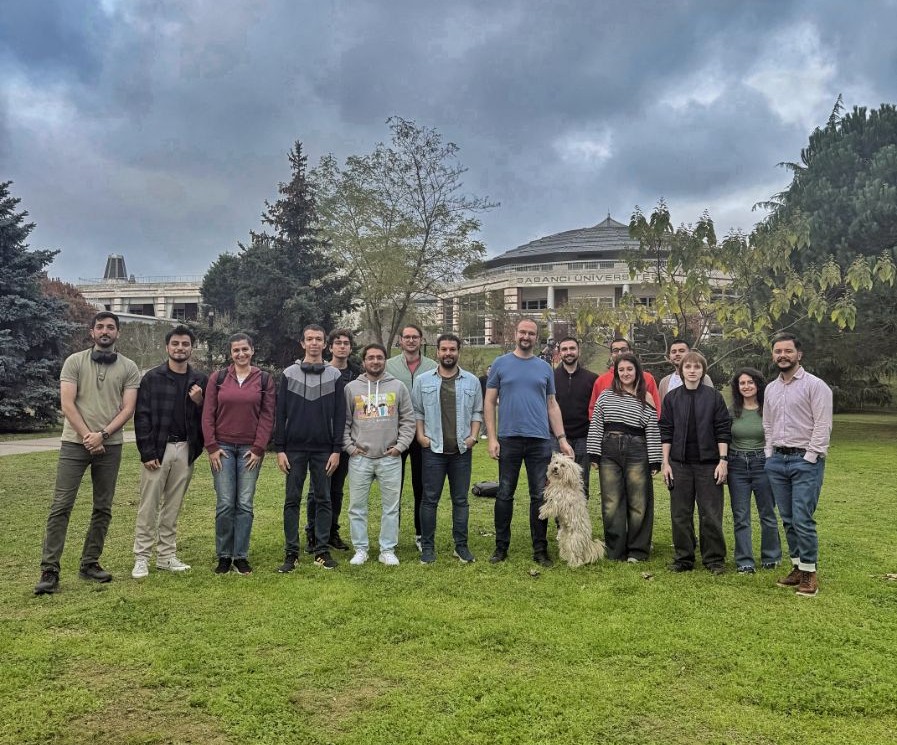
Dr. Varol expressed his excitement about conducting interdisciplinary studies, primarily with political scientists and social psychologists, within the framework of interdisciplinary collaboration using the computational social science approach. He emphasized VIRAL Lab's pioneering role in this field and Sabancı University's important role in carrying out these research projects.
Sources: https://sarkac.org/2023/03/cevrimici-manipulasyon-nasil-incelenmeli-ve-yorumlanmali/
https://sarkac.org/2023/01/sosyal-botlar-ve-dezenformasyon-kampanyalari-nedir/