17/07/2026
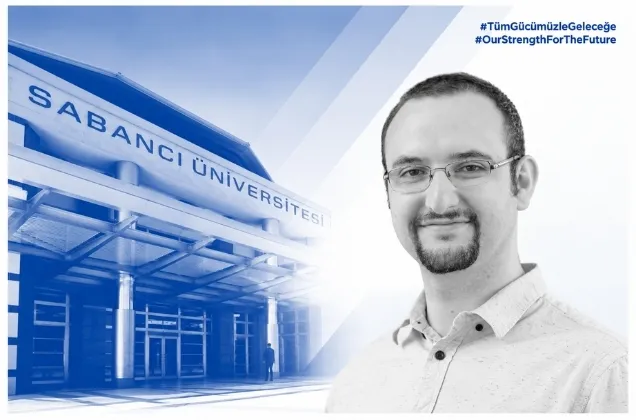
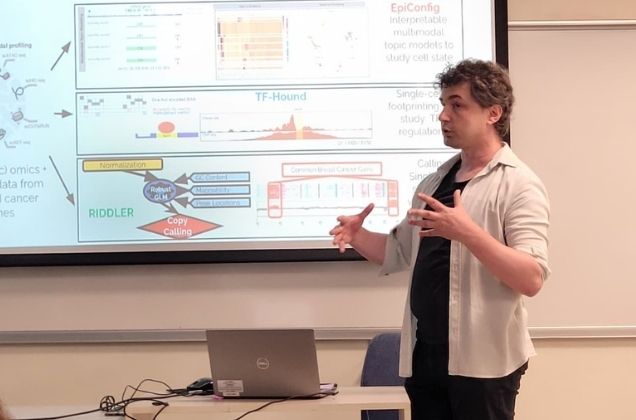
Sabancı University hosted Dr. Gürkan Yardımcı, a faculty member at the Knight Cancer Institute of Oregon Health & Science University (OHSU). In a seminar addressing current developments in single-cell genomics, Dr. Yardımcı shared his approaches to analyzing single-cell genomic data using artificial intelligence and computational methods. The opening speech of the seminar, which attracted considerable interest, was given by Dr. Nur Mustafaoğlu, a faculty member at Sabancı University's Faculty of Engineering and Natural Sciences.
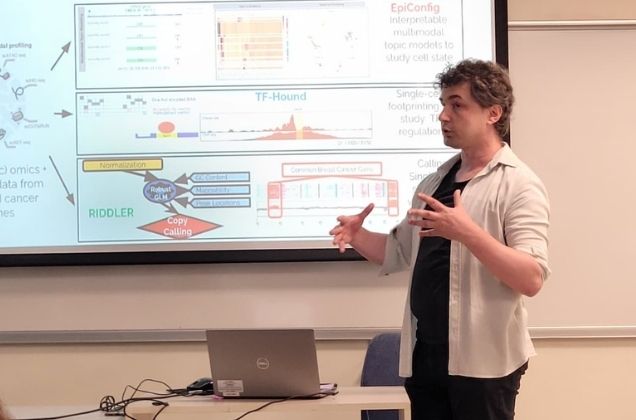
In his presentation, Dr. Gürkan Yardımcı touched upon recent developments in the field of single-cell genomics, explaining that advancements in RNA sequencing (RNA-seq) and ATAC-seq technologies, which examine chromatin accessibility, have enabled the analysis of complex cell populations in much greater detail. He noted that traditional methods reveal the average characteristics of a large number of cells, while analyses performed at the single-cell level make the differences and heterogeneous structure between cells visible.
New Approaches to the Analysis of Single-Cell Data
Dr. Dr. Gürkan Yardımcı explained that the Epiconfig algorithm, developed in their laboratories, models cell populations in an interpretable and unsupervised way by evaluating chromatin accessibility and gene expression data together. He stated that this method aims to reveal which genes and regulatory regions are active together in specific cell groups and to learn the relationships between different data types.
Dr. Gürkan Yardımcı stated that single-cell data create quite large, sparse, and noisy datasets, and therefore, dimensionality reduction and co-structure learning methods are of critical importance.
Computational Methods for Cancer Research
Dr. Gürkan Yardımcı also introduced the RIDDLER algorithm, developed in their laboratories, within the scope of the seminar. He stated that the algorithm, developed to determine copy number variations (CNVs) from single-cell data, contributes to the examination of cancer genomes in particular by detecting gains and losses occurring in specific regions of the genome.
Dr. Yardımcı stated that the algorithm has been applied to datasets belonging to different cancer types such as pancreatic cancer, breast cancer, and glioblastoma, adding that this allows for a more detailed examination of the clonal evolution of cancers.
The seminar concluded with a question-and-answer session where participants asked Dr. Gürkan Yardımcı questions after the presentation.
About Dr. Gürkan Yardımcı
Dr. Gürkan Yardımcı, a faculty member at the Knight Cancer Institute of Oregon Health & Science University (OHSU), develops machine learning and statistical methods to understand chromatin organization in cancerous and healthy cells. His work utilizes population and single-cell genomics data, as well as high-resolution microscopy images, to study transcriptional regulation and chromatin organization. Dr. Gürkan Yardımcı completed his education in computer science with a PhD in Computational Biology at Duke University and conducted his postdoctoral studies at the University of Washington Genome Sciences Department. His research has included work with the NIH ENCODE Consortium and the 4D Nucleome Project, contributing to numerous scientific studies on the analysis and modeling of genomic data.