01/10/2026
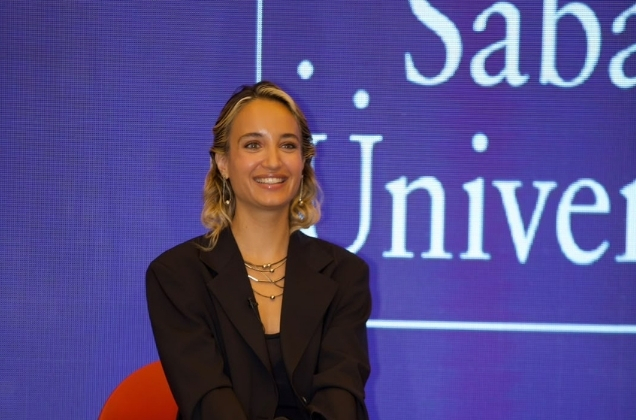
Sabancı University’s AI.SU talks series, which examines artificial intelligence from the perspectives of various disciplines, brought together Melisa Sabancı Tapan, Sabancı Holding Board Member and Sabancı University Board of Trustees Member, and Bünyamin Aydın, Founder and Creative Director of Les Benjamins, for a new event at Minerva Han.
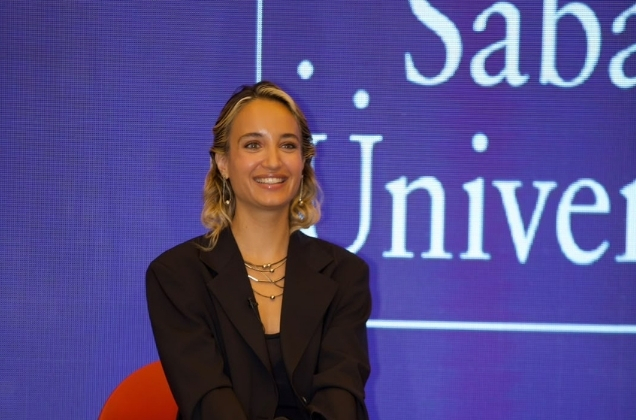
Initiated by Melisa Sabancı Tapan, AI.SU explores the fundamental question "What will it mean to remain human in a world where digital twins play an increasingly prominent role?" across different disciplines and generations; this question originally arose during the creation of Sakıp Sabancı’s digital twin for the Sakıp Sabancı International Research Awards. At the highly attended Minerva Han event, the current state of artificial intelligence was examined through an interdisciplinary lens, covering creativity, fashion, textiles, art, and design, as well as the philosophy of AI.
The event began with a screening of the AI.SU episode titled "Creativity and Originality in the Age of Artificial Intelligence," featuring Melisa Sabancı Tapan and Bünyamin Aydın. The subsequent talk focused on the rapid changes in the field of AI over the approximately six months since the episode was filmed and the impact of these changes on approaches to creativity. Tapan noted that one of the core questions behind the inception of AI.SU was, "What will it mean to remain human in a world where digital twins play an increasingly prominent role?", noting that the series opens up a discussion on this question across various disciplines and generations.
The Balance Between Artificial Intelligence and Analog Life
Bünyamin Aydın touched upon the shift in his own approach alongside advancements in artificial intelligence technologies. Explaining that he has recently moved toward establishing a closer connection with craftsmanship, artisanal work, and culture, Aydın mentioned traveling to different regions of Türkiye to closely examine local production methods and manual craftsmanship. While stating that he continues to use artificial intelligence in his life and work, he emphasized the importance of keeping the creative process human-centric, saying, "I want to write song lyrics myself, even if I make mistakes. I might ask AI which museums to visit when traveling to a country, but maintaining human contact during the journey is what matters."
The talk also explored how artificial intelligence could be positioned as a tool that supports production and simplifies daily life, rather than replacing creative output. Aydın noted that he is still navigating this distinction, stating, "We are trying to figure out how AI can make life easier without stripping away the creative element. I don't expect to have solved this today, but the pursuit itself is significant." Melisa Sabancı Tapan also expressed the importance of AI.SU not being merely a screen-based series, but continuing through physical gatherings that incorporate the thoughts and questions of people from diverse disciplines.
During the Q&A session of the gathering, participants asked questions to Melisa Sabancı Tapan and Bünyamin Aydın regarding the impact of artificial intelligence not only on fashion and textiles but also on its evolution within art, design, and various creative disciplines. In addition to their questions, participants contributed diverse perspectives to the discussion by sharing personal experiences concerning their relationship with artificial intelligence and the role of technology in their daily lives and creative processes. The session, which explored topics such as authenticity in the age of AI, the future of human creativity, and the relationship between technology and humanity, concluded with an exchange of views and experiences.