13/10/2026
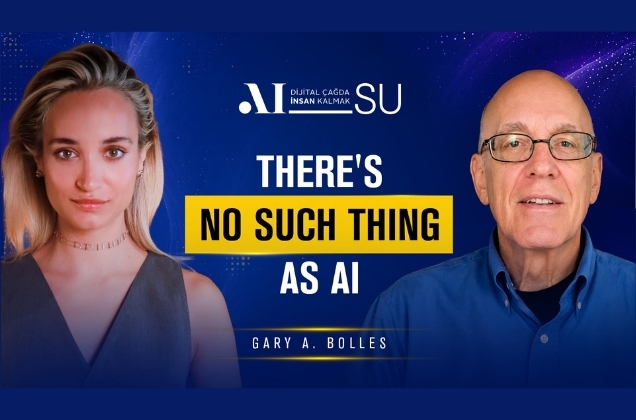
A new episode of the podcast/videocast series from the AI.SU platform, launched under the auspices of Sabancı University and led by Sabancı University Board of Trustees member Melisa Sabancı Tapan, has been released. The platform, which examines the impact of artificial intelligence on human values with experts from various disciplines, hosted Gary A. Bolles, author of the book *The Next Rules of Work*, as its latest guest.
Renowned for his research on the impact of technological transformation on the business world, evolving work models, and the future of human skills, Gary A. Bolles discussed the effects of artificial intelligence on human life in his conversation with Melisa Sabancı Tapan. The discussion covered the changing role of humans in the face of technological transformation, the importance of human skills, and the future of education.
“Artificial Intelligence Can Enable Humans to Solve More Complex Problems”
Noting that work is, at its core, about problem-solving and value creation, Gary A. Bolles highlighted how technological advancements have transformed ways of working throughout human history. Bolles stated that generative AI and large language models have automated many tasks previously thought to be performable only by humans, emphasizing that this transformation necessitates a rethinking of the nature of work and the value of human labor.
Gary A. Bolles argued that AI tools should be used to support human skills rather than replace humans, noting that automating routine tasks could allow people to focus on more complex problems. Challenging the notion that technology can solve every problem, Bolles pointed out that artificial intelligence systems still have significant limitations and that human oversight remains indispensable.
The Future of Human Skills
The conversation also addressed the importance of skills such as problem-solving, creativity, and interpersonal relations in the face of technological transformation. Highlighting the human capacity to generate new ideas, build authentic relationships, and create value through diverse perspectives, Gary A. Bolles stated that organizations need to re-evaluate their traditional working methods, while educational systems must rethink their current approaches to learning.
Questioning common assumptions about artificial intelligence, Bolles argued that "there is no such thing as artificial intelligence," asserting instead that the term is merely a label used to describe various software and technologies with distinct characteristics. Noting that technological advancements show no signs of slowing down, Bolles stated that this transformation would have a significant impact not only on the business world but also on cultural structures and social relationships.
You can watch the conversation between Melisa Sabancı Tapan and Gary A. Bolles, which focuses on the role of humans in the age of AI and the future of work, on the AI.SU YouTube channel.