23/03/2026
Nutrition is one of the most vital issues of the 21st century. Because today, the problem is not only hunger, but also incorrect and unbalanced nutrition. While serious health problems such as obesity and diabetes are increasing on one hand, millions of people are struggling to access healthy food on the other. We consulted Prof. Dr. Zafer Yenal from Sabancı Business School on how a healthy, sustainable, and equitable nutrition system can be established. Yenal, who examines the journey of food from the field to the table in the context of politics, culture, and economics, provided enlightening information on new scientific developments and trends in gastronomy and agriculture.
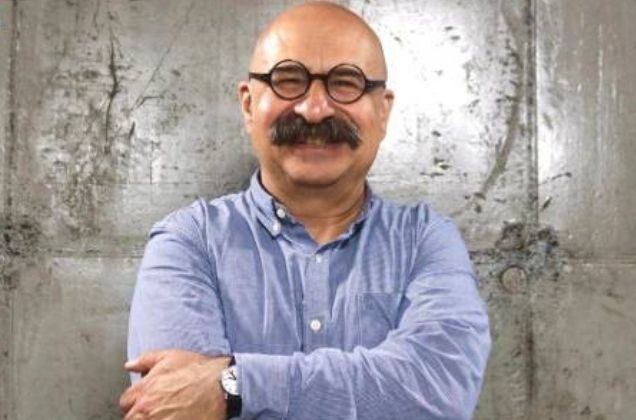
Twenty years ago, when the child of a well-known medical doctor friend of mine announced that he wanted to continue his education in the Gastronomy and Culinary Arts Department at university, the family raised hell, and they did everything they could to dissuade the child. Simply put, they did not find an education focused on food and nutrition sufficiently "respectable". However, the child did not change his mind; after successfully completing his four years of education, he proved himself by working in financially and emotionally fulfilling "food" jobs. Today, the family has no concerns whatsoever about their son's profession and speaks highly of his work.
How did scientific studies in the field of food and agriculture become popular?
And what changed in society that led to scientific studies on food and nutrition gaining popularity and "respectability"?
Professor Dr. Zafer Yenal from Sabancı Business School answers this question on an interdisciplinary platform, addressing food not only as a nutritional issue but also in its historical, social, and political dimensions. Through his courses at the university and in various forums such as the "From Field to Table: Food, Culture and Politics Talks" organized by the Istanbul Policy Center, he sheds light on the rising prestige of food and nutrition.
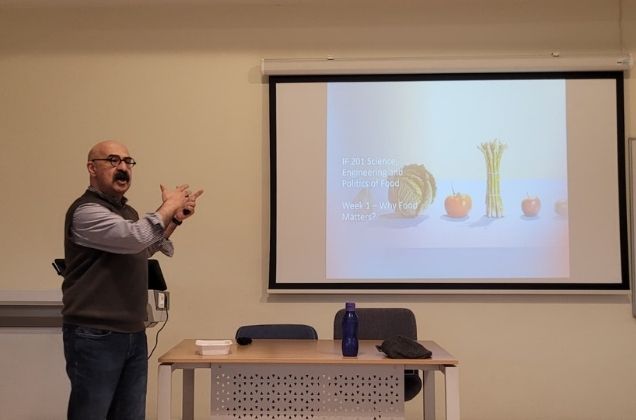
The rapid increase in courses and research on sustainability, food systems, and the scientific dimensions of agriculture at universities is also a significant indicator of this transformation. The "IF 201 - Science, Engineering and Politics of Food" course, launched this semester, offers an interdisciplinary discussion platform that addresses food not only as a nutritional issue but also in its scientific, engineering, political, and ethical dimensions. The course, coordinated by Zafer Yenal, features contributions from faculty members across various departments: Burcu Okan Saner on materials science and recycling, Emre Erol on environmental history, global economic relations, and the social dimensions of technology, Levent Öztürk on soil and plant nutrition, Nihal Öztolan Erol on plant molecular biology and genetics, Ogün Adebali on biology, evolution, and enzymes, and Zafer Gedik on molecular gastronomy and the fundamental principles of science, all offering a different perspective on food.
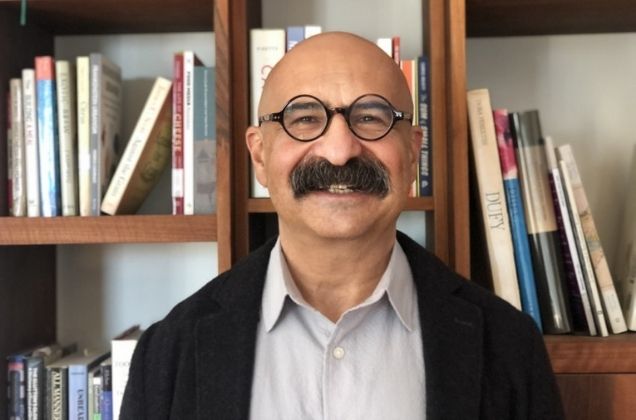
In fact, agriculture and plant sciences have long been strong and pioneering research areas at Sabancı University. Academics like İsmail Çakmak, with his research in soil science and plant nutrition; Selim Çetiner, with his work in plant tissue culture; Stuart J. Lucas, in plant molecular biology and genetics; and Yusuf Menceloğlu, in the use of polymer science in irrigation and pesticide control, are among the important people contributing to the scientific foundations of agriculture. This research accumulation is also laying the groundwork for new courses and projects that address food systems with a more holistic approach.
Other important reasons for the rising trend in food and agriculture can be listed as follows:
*Agriculture is the sector most affected by climate change. The role of technology in production has increased.
*Globalization has revealed how interdependent the chain from field to plate is.
*People no longer just want to "stay full," but want healthy and high-quality nutrition. This increases interest in production methods.
*Economic crises in many countries have particularly affected food prices. Food is now considered not only a cultural issue, but also a matter of social justice and poverty.
*People want to participate in the production process to break the dominance of global corporations. For example, alternative models such as cooperatives and local market networks.
*Gastronomy tourism, the discovery of local cuisines, and the influence of social media have increased the visibility of food culture. Food also represents national/local identity and memory.
In short, the popularization of food and agriculture stems from its location at the intersection of the climate crisis, health concerns, economic inequality, and cultural transformations.
The Meeting of Local and Global in Kahta
While interest in local cuisines has increased significantly in recent years, Yenal's work focuses not only on this area as a subject of gastronomic exploration, but also on addressing it within its social, historical, and political contexts. Yenal, who mostly views food and agriculture through the lens of sociology and sustainability, spearheaded the organization of a workshop on local food culture in Kahta, Adıyaman, at the foot of Mount Nemrut in August 2023. He later compiled the findings of this workshop in a book titled Imagining Sustainability and Food at Nemrut Mountain, in collaboration with İsmail Ertürk, an academic from the University of Manchester. This initiative, bringing together chefs, academics, designers, food writers, and artists from different countries, opens up discussions on local cuisines not only as an element of cultural heritage, but also as dynamic structures shaped by migration, disasters, development, and ecological vulnerabilities. Thus, the reciprocal interaction, power relations, and transformation processes between the local and the global are made visible from a broader perspective through gastronomy.
In the book published in recent weeks, Yenal, who co-authored the chapter titled "Rural Development, Locality, and Gastronomy" with Mısra Şen, sheds light on how the food culture in Adıyaman has changed due to the decline of nomadic life, the submersion of settlements and agricultural areas under the waters of the Atatürk Dam Lake, the displacement of residents due to the impact of political events, the significant influx of migrants from Syria, and natural disasters that dealt a heavy blow to the region's economy, such as the recent earthquake on February 6th.
Yenal suggests avoiding standardized recipes in addressing these problems. "As seen in Adıyaman, a uniform approach to highlighting both the richness and problems of the locality leads to the blurring of the region's multilingualism and multiculturalism," says Yenal, adding, "When setting goals for sustainable development, it is important to evaluate how well these goals align with the unique characteristics of the locality," reminding us that we must listen to the voice of the region.
Social Sustainability
In food and agriculture, the real issue is not just about saving the day; it's about establishing a long-term social balance. Yenal addresses sustainability within this broad framework in Zappa Zamanlar, a popular sociology bulletin focusing on science communication, which he has been writing for four years on the Aposto communication platform. According to him, the issue is not just about environmental risks:
“When we talk about the future of agriculture and food in Türkiye, we generally focus on environmental risks: frost, drought, floods, fires… We are not wrong, because the climate crisis is no longer just about extraordinary weather events; it is a new normal embedded in the agricultural calendar. Unfortunately, 2025 was a year in which this new normal frequently manifested itself.”
However, according to Yenal, there is another area that is invisible but at least as destructive: social sustainability. “That is, people, labor, generations, and daily life in agriculture,” he says, and draws attention to the following data: “The average age of farmers in Türkiye has risen to 59. A significant portion of producers are concentrated over the age of 50; young people are moving away from agriculture and rural life.”
This situation is not simply a matter of "aging." The decline in the agricultural population weakens the social fabric of rural areas, as well as the continuity of production; it also increases employment, infrastructure, and environmental pressures on cities. According to Yenal, sustainability, for precisely this reason, requires considering environmental, economic, and social dimensions together.
Final Words
Blanca del Noval, a Gastronomy and Culinary Arts expert who participated in the Kahta workshops, expresses how a sound strategy can be developed under these conditions in the book, Imagining Sustainability and Food at Nemrut Mountain: "It is important that we deeply analyze and understand the relationship between gastronomy and economic growth, cultural identity, social impact, and environmental sustainability. To develop strategies that consider this multifaceted mechanism, it is essential for governments, local communities, and business sectors to adopt a holistic and collaborative approach. In this context, interdisciplinary studies combining history, archaeology, geology, sociology, anthropology, philosophy, psychology, and agricultural science are critically important."
Source:
chrome-extension://efaidnbmnnnibpcajpcglclefindmkaj/https://dergipark.org.tr/tr/download/article-file/3234026
Imagining Sustainability and Food at Nemrut Mountain - Kırmızı Publishing House
https://aposto.com/s/luks-gidanin-siyaseti
.