12/11/2026
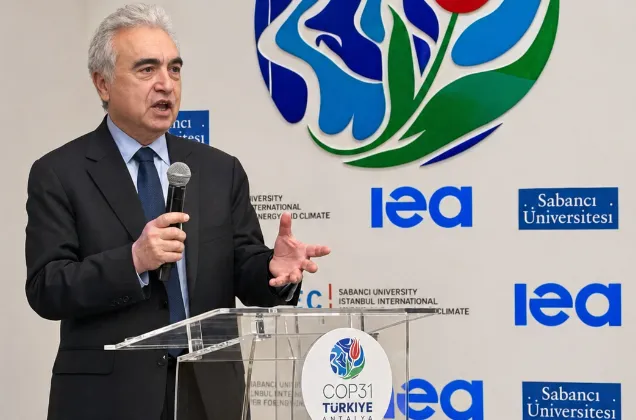
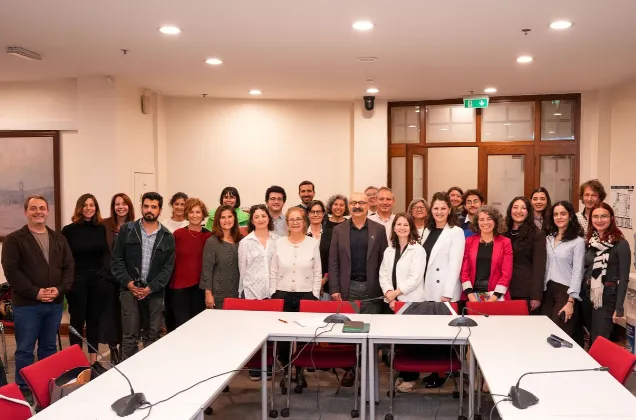
The "Special Water Event," organized by the Sabancı University Istanbul International Center for Energy and Climate (IICEC) in Antalya on the opening day of COP31, addressed escalating water stress, its associated risks, and potential solutions. The event featured a keynote address by Dr. Fatih Birol, Executive Director of the International Energy Agency (IEA), and included the presentation of the IICEC COP31 Special Water Report. During a panel discussion attended by high-level representatives from the business world, water security and sustainability were examined through the lenses of resource efficiency, technological solutions, investments, and their links to electrification.
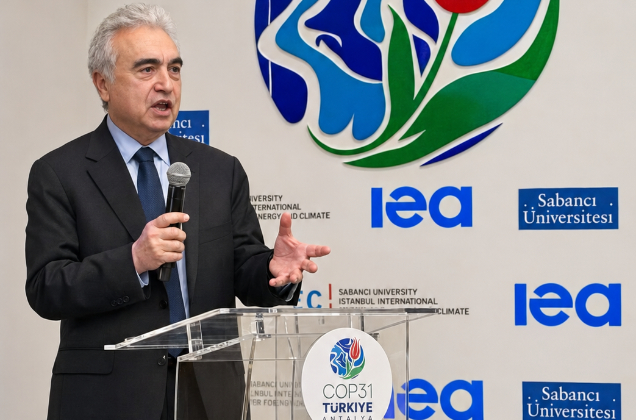
The IICEC Special Water Event was held on November 9, 2026, at the Türkiye Pavilion within the Blue Zone of the Antalya Expo, the venue for the United Nations Climate Change Conference COP31, under the auspices of the Sabancı University Istanbul International Center for Energy and Climate (IICEC).
In addition to the keynote address delivered by Dr. Fatih Birol, Executive Director of the International Energy Agency (IEA) and Honorary Chair of IICEC, the event also saw the launching of the IICEC COP31 Special Water Report.
The panel, moderated by Sabancı Holding CEO Kıvanç Zaimler, featured contributions from Ahmet Erdem, President of the Energy Efficiency Association; Elchin Ibadov, CEO of SOCAR Türkiye and Advisor to the President of SOCAR; and Yasemin Öztekin, General Manager of Hitachi Energy Türkiye.
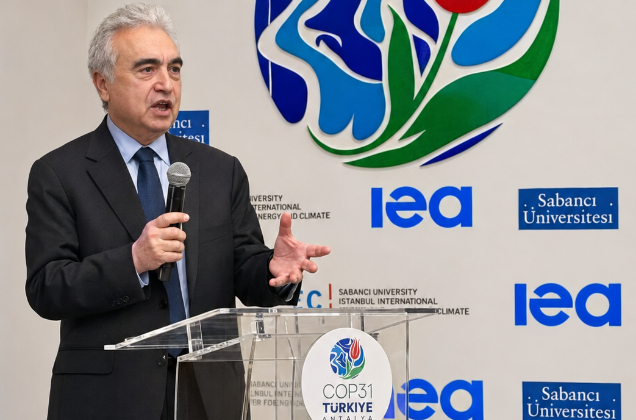
Dr. Fatih Birol, Executive Director of the International Energy Agency (IEA) and Honorary Chair of IICEC, drew attention to water stress, the strategic importance of water, its critical role for the energy sector, and the potential contributions of COP31 to the global energy transition, offering the following observations:
Dr. Fatih Birol: The issue of water is extremely important and strategic; I congratulate IICEC for bringing this topic to the agenda.
“First and foremost, I would like to congratulate IICEC for bringing such an important and strategic issue, water, to the agenda and for preparing a dedicated report in this field. I would like to extend a special thank you to Güler Sabancı, who proposed this study. I also want to thank the IICEC team; they have done an excellent job. I have followed the various stages of this work, and I look forward to learning about the report’s findings and recommendations with great interest.
To illustrate why the issue of water is so critical for the energy sector, I would like to share an example that recently occurred in Hungary. During a meeting I had with the Prime Minister of Hungary two weeks ago, he explained that his country faced a very serious electricity supply crisis this summer, right in the heart of Europe, and narrowly avoided a large-scale blackout. Due to extreme temperatures and drought, water levels in the rivers dropped to near zero; as a result, the cooling required for nuclear power plants to operate safely could not be provided, forcing the plants to shut down due to water stress. For this reason, I consider the water report prepared by IICEC to be of vital importance. I look forward to hearing the report’s conclusions in Istanbul on December 23rd.”
Dr. Fatih Birol: The success of COP31 will be measured by the participation of leaders and the adoption of concrete decisions. Target for electrification: 35 percent by 2035
“I have observed that the issue of climate change has carried less weight on the international policy agenda in recent years. Compared to two or three years ago, climate change is receiving less attention at G7, G20, and other international summits. In my discussions with President Erdoğan and the Prime Minister of Australia, both asked me how a successful COP might be defined. I have two primary criteria: first, the number of heads of state and government attending the summit; and second, the adoption of concrete, visible decisions agreed upon by the participating nations.
In Antalya, we are looking at the participation of nearly 100 heads of state and government. This is a highly significant and positive development, especially when considering the current geopolitical climate. However, beyond high-level attendance, we also need tangible outcomes. I have proposed to Türkiye and Australia that electrification should be the key deliverable of COP31. Currently, electricity accounts for approximately 23 percent of total energy consumption. Our proposal is to increase this share to 35 percent by 2035, a goal we refer to as ‘35 by 35.’
In my conversations with numerous governments around the world, I see a growing consensus forming around this target. I am hopeful that, by the conclusion of COP31, more than 100 governments will have committed to this objective. Türkiye and Australia are also working intensively toward this goal, and they, too, are optimistic. Should this concrete outcome be achieved, it will be more than just a decision on paper; it will send a strong and clear message to markets and investors that the future of energy lies in electrification. I hope that COP31, which is being organized in Antalya through the joint efforts of Türkiye and Australia, will be a success, both in terms of high-level participation and in terms of concrete outcomes.”
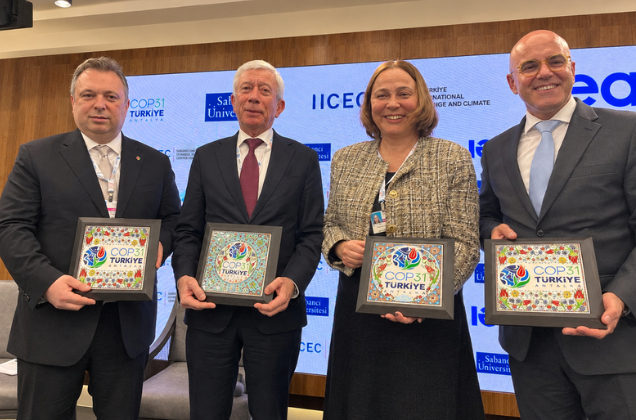
Kıvanç Zaimler: IICEC makes a strong contribution to defining strategies and trends through its pioneering and analytical reports; the IICEC Special Water Report will serve as a guide toward a secure and sustainable water future for Türkiye.
Sabancı Holding CEO Kıvanç Zaimler highlighted the critical importance of water, and the growing water stress in Türkiye, for the industrial and energy sectors, as well as for all other sectors. Emphasizing the significance of a strategic electrification agenda, Zaimler noted that water-related issues must be carefully addressed in the coming period, given Türkiye’s vital electrification goals. Stressing the importance of raising awareness and implementing effective, efficient solutions to combat increasing water stress across all sectors, Zaimler stated that IICEC contributes significantly to shaping strategies and trends through its pioneering, analytical outlook reports for the energy sector. He added that IICEC’s specialized, forward-looking work on water will serve as a guide for a more secure and sustainable water future for Türkiye.
Ahmet Erdem: Efficiency is a common ground for solutions in water and energy.
Sharing striking figures regarding Türkiye’s water budget, Ahmet Erdem, President of the Energy Efficiency Association, explained that approximately half of Türkiye’s average annual gross freshwater budget of 450 billion cubic meters is lost to evaporation, while only half of the remainder constitutes the net potential that is technically and economically viable for use. Highlighting that freshwater consumption has increased by 50 percent over the last two decades, surpassing 60 billion cubic meters, and that the pressure on limited water resources is intensifying due to climate change, Ahmet Erdem emphasized that current trends and challenging dynamics in the water supply-consumption balance clearly demonstrate the urgency of water stress for Türkiye. Noting that this situation poses significant risks across various sectors, from agriculture and industry to energy and households, Erdem stressed that solutions must be implemented without delay. He pointed out that both water and electricity supply and consumption are subject to seasonal fluctuations, and suggested that efficiency in both sectors offers substantial potential as a shared solution; specifically, reducing water losses also contributes significantly to energy efficiency. Furthermore, Ahmet Erdem underscored the critical importance of investment and governance in securing a safe and sustainable water future.
Elchin Ibadov: The Future of Water and Energy Systems Lies in Integrated Solutions
Elchin Ibadov, CEO of SOCAR Türkiye and Advisor to the President of SOCAR, highlighted the decisive impact of water crises on societies and economies, citing the drought experienced by the Hittite Empire as an example. Noting that "the Hittites could sit at the negotiating table with Egypt, but they could not negotiate with the rain," he underscored the importance of anticipating water-related risks and taking timely action. Emphasizing the need to measure the water footprint in industry, reuse water, and manage water resources at a watershed scale, rather than focusing solely on individual facilities, Ibadov proposed an innovative "blue energy combined-cycle" approach that integrates wind energy, seawater desalination, data centers, and the chemical industry. This model envisions using wind energy to desalinate seawater, repurposing the resulting salts and minerals for the chemical industry, utilizing the desalinated water for liquid cooling in data centers, and recovering the waste heat generated by these data centers for use in chemical production processes. Ibadov stated that the joint planning of water and electricity systems, alongside university-industry collaboration, is critical to developing such integrated solutions.
Yasemin Öztekin: Water Efficiency, Digitalization, and Integrated Planning Must Be Priorities
Yasemin Öztekin, General Manager of Hitachi Energy Türkiye, emphasized that water scarcity is not merely an environmental issue, but a critical challenge that affects economic and social stability, as well as the resilience of infrastructure. Pointing out that the interdependence between water and electricity systems will further intensify as electrification accelerates, Öztekin emphasized the importance of planning these two critical systems in an integrated manner and utilizing resources more efficiently through digitalization and smart infrastructure. Stating that the focus in water management must shift from mere resource management to water efficiency, Öztekin identified key priority areas: reducing water losses in urban networks, expanding the use of precision irrigation systems in agriculture, implementing rainwater harvesting, and increasing the reuse of treated water. Noting that digital monitoring, forecasting, and smart grid applications, already employed in the electricity sector, offer significant opportunities for water infrastructure, Öztekin underlined the need for predictable regulatory frameworks and new financing models that would render water-efficiency investments financially viable and scalable.
Bora Şekip Güray: Through our pioneering study, we examine Türkiye’s water stress and scarcity, along with the associated risks, opportunities, and solutions, from an analytical and holistic perspective.
Bora Şekip Güray, Director of IICEC, delivered the launch presentation for IICEC’s special report on water. In his presentation, Güray underscored that Türkiye is currently experiencing water stress, with water scarcity already present in certain river basins. He emphasized that the intensifying water stress and scarcity represent a critical, strategic issue for Türkiye, carrying growing risks and significant consequences. Explaining that this pioneering, specialized report adopts an analytical approach focused on Türkiye’s water stress, water security, and sustainability, Güray noted that the study provides a comprehensive assessment of freshwater resources, consumption dynamics, risks, opportunities, and potential solutions. He added that, consistent with all of IICEC’s "outlook" reports, this significant work, developed through the "success triangle" model (Public-Industry-Academia) and with the participation of various stakeholders, offers concrete recommendations for a more secure and sustainable water future. Furthermore, Güray highlighted that the report specifically examines the two-way dynamics between Türkiye’s water and electricity sectors, a topic closely linked to the electrification agenda of COP31.
Dr. Mehmet Doğan Üçok: Every link in the energy transition is connected to water.
The event was moderated by Dr. Mehmet Doğan Üçok, Coordinator at Sabancı University IICEC. In his assessment of the event, Üçok stated the following:
“COP31 is defined as an ‘implementation summit.’ At Sabancı University IICEC, we are responding to this call by focusing on the issue of water, an area where the impacts of climate change are felt first and most directly. Water is not a peripheral aspect of the energy transition; rather, it is integral to every stage of that transition. From electricity generation and hydrogen production to critical minerals and cooling systems, every link in the energy transition chain is dependent on water, a chain increasingly strained by rising global water stress. Through the ‘IICEC COP31 Special Report on Water,’ we present the current situation and future outlook, grounded in Türkiye’s own data and actionable policy options, thereby bringing this critical issue to the global agenda in Antalya. The solutions proposed by high-level business representatives during the panel demonstrated that concrete steps can indeed be taken in this field. This event represents IICEC’s contribution toward bridging the gap between commitments and implementation. This is precisely why the concept of an ‘Implementation COP’ is so vital.”