17/07/2026
The research, conducted in collaboration between Sabancı University and Khalifa University and focusing on converting post-consumer polycarbonate waste into high-value-added graphene materials, has been published in Advanced Functional Materials, one of the leading scientific journals in the field of materials science.
The research, led by Prof. Dr. Burcu Saner Okan, a faculty member of the Materials Science and Nanoengineering Program at Sabancı University, and conducted in collaboration with Khalifa University, was carried out within the scope of the Light-G-Comp Project, funded by the Research and Innovation Center for Graphene and 2D Materials (RIC2D) at Khalifa University.
From Waste Plastic to High-Performance Material
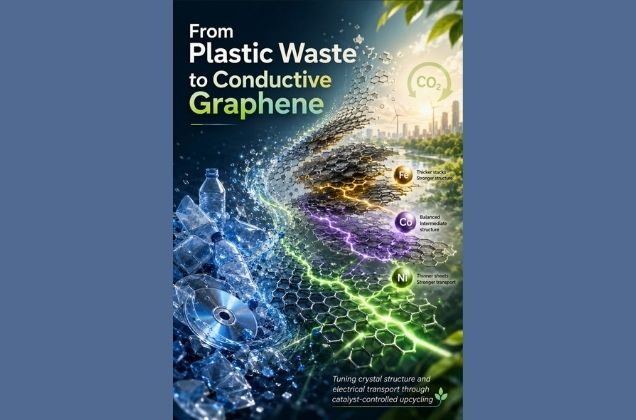
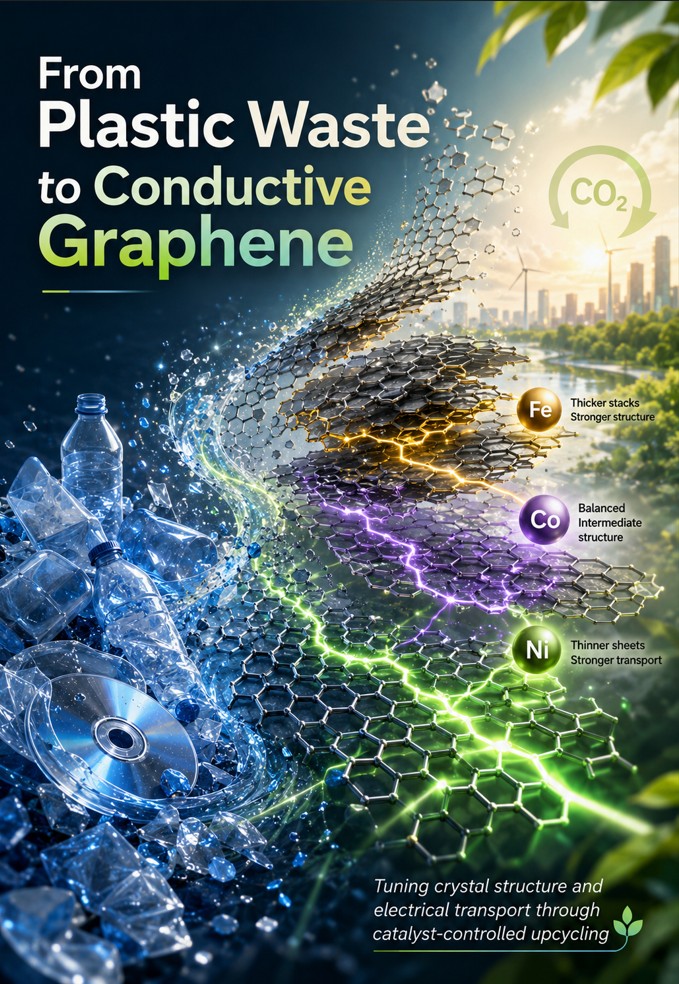
In the research titled "Crystallinity–Electrical Transport Relationships in Upcycled Graphene via Catalyst-Controlled Aspect Ratio Engineering," post-consumer polycarbonate waste was converted into graphene nanosheets using a thermo-catalytic conversion method. By using different catalysts, the crystal structure, layer architecture, and electrical networking properties of graphene were manipulated in a controlled way.
The research revealed that the electrical performance of graphene is not solely dependent on its degree of crystallinity; the geometry, thickness, and networking ability of the nanolayers are also decisive in electrical conduction. The developed graphene materials also provided significant improvements in the mechanical properties of polypropylene composites at low usage rates.
According to the life cycle assessment results, the cradle-to-door global warming potential of graphene developed from plastic waste was calculated to be approximately 99 percent lower compared to traditional graphene production methods. This result demonstrates the potential of the developed approach in terms of both high-performance material production and environmental sustainability.
Plastic waste transformed into a new value.
The Light-G-Comp Project aims to produce graphene and advanced carbon materials from sustainable resources using nanoengineering approaches, control structure-property relationships, and integrate these materials into high-performance composite systems. The project brings together the expertise of Sabancı University and Khalifa University in the fields of sustainable graphene technologies, advanced composites, and scalable manufacturing processes.
The research team included Sabancı University PhD student Nihan Birgün, Sabancı University postdoctoral researcher and Light-G-Comp Project Leader Dr. Havva Başkan-Bayrak, and Israr Ahmed, Ebrahim Al Hajri, Yahya Zweiri, and Yarjan Abdul Samad from Khalifa University. The article was published online on July 15, 2026.
Advanced Functional Materials, where the study was published, is among the most prestigious and high-impact scientific journals in the field of materials science, with a Journal Impact Factor of 19.9.