30/09/2026
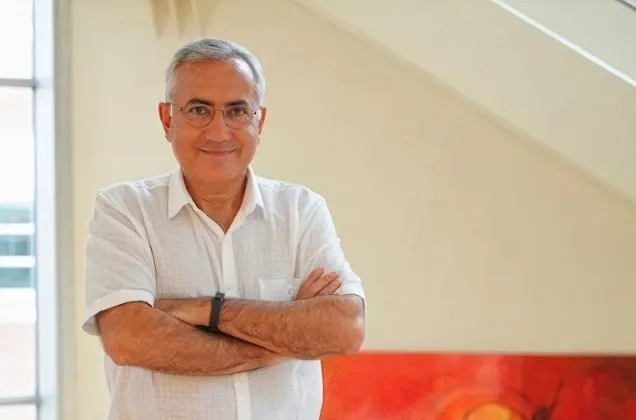
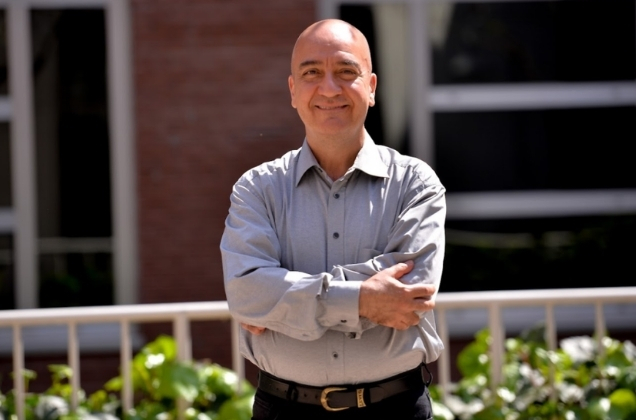
Professor Dr. Zafer Gedik, a faculty member at the Sabancı University Faculty of Engineering and Natural Sciences since 2002, conducts research primarily in the fields of the foundations of quantum mechanics, quantum information theory, and quantum computing. Regarding quantum mechanics, a scientific discipline that has the unfortunate reputation of being difficult to understand or grasp, Dr. Gedik offers this perspective: “I believe that for a good student, the striking predictions of quantum mechanics should be a source of excitement and a desire to learn, rather than fear.”
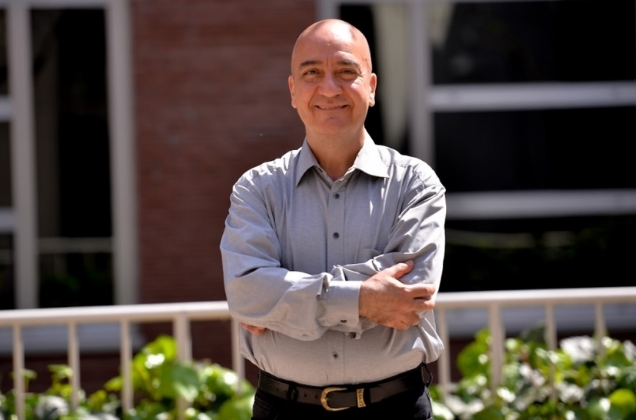
People fear what they do not understand. For those encountering it for the first time, quantum mechanics can seem intimidating, as people often struggle to clearly understand or grasp this field using their everyday intuition. Until I met Professor Dr. Zafer Gedik from the Sabancı University Faculty of Engineering and Natural Sciences, quantum mechanics seemed like a highly complex, incomprehensible, and rather daunting subject to me. It still does; however, the topic became less frightening once I learned that quantum mechanics lies at the heart of many modern technologies we use daily and will play a strategic role in developing the technologies that shape our future.
Without this theory, which explains the behavior of atoms and subatomic particles, the most important tools of the digital age we live in today could not have been developed. Technologies used in computer chips, lasers, LEDs, MRI scanners, flash memory, and GPS systems all rely on quantum physics. In the realm of communications, quantum cryptography technology is also expected to usher in an era of “unbreakable” security.
Dr. Gedik, who enjoys widespread international recognition, focuses his work particularly on the foundations of quantum mechanics, quantum information theory, and quantum computing. He has also conducted significant research on the Quantum Permutation Algorithm, often referred to as the "Gedik algorithm." This algorithm aims to solve specific problems by leveraging the properties of quantum mechanics, requiring fewer operations compared to classical methods.
A multidisciplinary research group at Sabancı University
Sabancı University hosts a multidisciplinary quantum research group that includes Dr. Gedik. This year, the group spearheaded the organization of the third "International Workshop on Quantum Technologies and Computing" (SUQUNET) on September 4th. Researchers from diverse disciplines, industry representatives, students, and early-career researchers shared their insights to contribute to the development of a sustainable quantum ecosystem. Participants working in complementary fields such as quantum computing, communication, sensing, photonics, advanced materials, nanoelectronics, cryptography, and micro/nano systems are paving the way for new connections between basic science, technology development, and future industrial applications.
Quantum mechanics for everyone, from Dr. Gedik
We asked Dr. Gedik about his work and the aspects of quantum mechanics that those unfamiliar with the subject (like myself) find difficult to grasp. His answers offer eye-opening insights for everyone.
Reyhan Oksay- Nobel Prize-winning physicist Richard Feynman first made the following comment regarding quantum mechanics during the Messenger Lectures he delivered at Cornell University in 1964: “If you think you understand quantum mechanics, you don't understand quantum mechanics.” With this statement, Feynman meant that while the mathematics of quantum mechanics can be scientifically analyzed and proven, the subject does not fit into an intuition that can be fully internalized or visualized.
However, as an academic who teaches quantum mechanics, you point out that starting a class with such a statement would have a negative impact on students. What kind of approach should be adopted to ensure that a difficult subject like quantum mechanics does not intimidate students?
Zafer Gedik- Shankar (Ramamurti Shankar)\ whose textbook I have used in my classes for thirty-five years, has also recently referenced these remarks by Feynman. Generally, quantum mechanics courses teach how to perform calculations and how to solve the Schrödinger equation for various scenarios. Any difficulty involved here is primarily mathematical in nature; it can be overcome by solving diverse examples and gaining proficiency through practice. However, the real problem arises when you arrive at the wave function, solution derived from all those calculations, because this function serves solely to calculate probabilities. About fifteen years ago, a significant development occurred regarding this topic, which has been the subject of intense study for a century. The answer to the question posed by Einstein, Podolsky, and Rosen in 1935 "Can Quantum-Mechanical Description of Physical Reality Be Considered Complete?" was found: Yes. As they stand, the probabilities in quantum theory do not stem from variables that we are unable to measure or do not yet know but might discover in the future. The wave function is physical reality itself. I believe that, for a good student, the striking predictions of quantum mechanics should be a source of excitement and a desire to learn, rather than fear. I wholeheartedly agree with Aharonov’s reaction to claims about the incomprehensibility of quantum mechanics; one must try to light a candle to make it more understandable.
How do you ensure that quantum technologies at Sabancı University are approached not merely as a single research topic, but as an integrated field of science and technology spanning everything from materials to devices, sensing to communication, and algorithms to security? Do you have any initiatives other than the SUQUNET workshop to foster international collaboration?
I must mention that Türkiye’s first quantum information and quantum computing team was formed at Sabancı University in 2002. We began with theoretical work. The algorithm known today as the "Gedik algorithm", the most fundamental quantum algorithm in terms of simplicity, was developed here. Today, the number of researchers actively working in the field has surpassed ten. More importantly, experimental work has commenced. SUQUNET was an acronym I coined at the first workshop, inspired by "Sabancı University QUantum NETwork." At the suggestion of our colleague Mehmet Yıldız, it became the name of our events. It evolved into a workshop series involving not only physics but also mathematics and various engineering disciplines, particularly computer, electronics, materials, and industrial engineering. We are among the organizers of the Quantum Optics and Information Meeting (KOBİT), the 11th edition of which took place this year. Sabancı University was the only institution from Türkiye to receive funding under the European Union’s QuantERA 2025 call. It is highly significant that the partnership involved here is in the experimental domain, thanks to our colleague Serkan Ateş.
You emphasize that quantum technologies hold strategic importance for the future of science, technology, and industry, particularly in sectors such as aviation, defense, finance, and healthcare. In your opinion, in which sector will the greatest leap in quantum technology occur in the coming years? Furthermore, telecommunications companies are leveraging quantum entanglement to transmit information and ensure secure communication. In which sectors will this phenomenon, which is revolutionizing the field of quantum encryption, be utilized?
Quantum Key Distribution (QKD) has become the first commercialized application in this field. It allows you to protect the encryption key, used for secure communication, from third parties by employing quantum communication techniques. QKD can be implemented using existing fiber-optic infrastructure, as well as via satellite links between very distant locations. Detectors represent another area witnessing rapid advancements. However, the development everyone is eagerly awaiting is, of course, in the realm of quantum computers. Applications for optimization, finding the shortest or most efficient path, based on quantum mechanical principles already exist; superior machines are being built and sold. Now, we look forward to quantum computers that will be used in virtually every field, from discovering new materials and pharmaceuticals to generating highly accurate weather forecasts. Just imagine a quantum-based artificial intelligence.
Quantum channels do not yet possess the capacity to handle all communication traffic. However, as you noted, it is possible to transmit the encryption key via this channel and subsequently conduct encrypted communication over a standard open channel. Entanglement is one of the most striking quantum behaviors—indeed, according to Schrödinger, the most striking of all. It allows a particle to remain "linked" to another across distances that even light cannot traverse within the timeframe of the experiment. I place the word "linked" in quotation marks because it is not possible to communicate directly using entanglement alone. This situation already contradicts the most fundamental axiom of Einstein’s theory of special relativity. Nevertheless, it is still possible to perform teleportation and key distribution using quantum correlations arising from entanglement. We will see increasingly widespread applications in every field requiring secure communication including banking, defense, intelligence, and so on.
Have efforts to raise the critical temperature for superconductivity to room temperature reached a promising threshold? Will solving this problem facilitate the faster deployment of quantum computers, or are there other issues that still need to be resolved?
Superconductors were, so to speak, my first true scientific passion. During my years at Bilkent, my master’s and doctoral studies, as well as my initial research, were all focused on this field. The electrical resistance of certain materials vanishes when they are cooled sufficiently. Lossless electricity! Bednorz and Müller won the Nobel Prize in 1987 for discovering a way to raise this temperature. As a student, I was the one tasked with showing Bednorz around when he visited Türkiye J However, the real breakthrough came later. Superconductors, which are fundamentally quantum phenomena, began to be used to create quantum bits, or "qubits," the building blocks of quantum information processing technology. The temperatures involved are still very low, but as you mentioned, if we can reach room temperature, it would also mean quantum computers become more resilient to external interference. This offers a way to overcome one of the biggest challenges: the computer crashing before a calculation is complete. Although they are widely used, superconducting qubits are not the only option; alternatives such as light particles (photons), cold atoms, and ions also exist. The process might involve, for instance, first creating the qubits and then assembling them within a suitable architecture to control them as desired. Quantum systems can easily lose their properties due to uncontrolled interactions with the outside environment. Therefore, calculations must be completed quickly enough. On one hand, it is necessary to increase the number of qubits to perform meaningful calculations; on the other, the system’s quantum properties must be preserved for a sufficiently long time.
Is research utilizing quantum mechanics being conducted at Sabancı to uncover clues about dark matter? Does our university possess the necessary infrastructure to identify new particle candidates associated with dark matter?
Dark matter, dark energy... In a sense, these are models proposed to sustain our existing theories. It would not be incorrect to follow Descartes and say, "I fall, therefore I am." We speak of universal gravitation because everything that exists is influenced by this force, affecting both mass and energy, which are interconvertible. The idea that something must exist out there, even if we cannot see it, stems from this. One could list a wide range of relevant fields: quantum mechanics, quantum field theory, general relativity, particle physics, astrophysics, and astronomy. Even if there are no researchers at Sabancı working directly in this specific area, the subject is, at least indirectly, relevant to almost everyone. In the late 19th century, physicists believed there had to be a substance filling all space, including the vacuum, to facilitate the propagation of light. Experiments proved this hypothesis incorrect; in fact, that very realization paved the way for the development of the theory of relativity. Let us see what the future holds regarding dark matter and dark energy, which are estimated to be twenty times more abundant than the matter we know.
What is the connection between your identity as a physicist and processes like Ostwald ripening or garum production? Do you view the kitchen as a multi-particle physical system?
The truth is, physics underlies everything, even a mere hobby. It is possible to advance culinary practices by applying scientific methods. For instance, Ostwald ripening is a phenomenon we encounter constantly in daily life; the process where small particles shrink while large ones grow appears everywhere, from ice cream to caffè latte. If you understand the mechanism, you can control it. There are even neutron scattering experiments related to this topic. Years ago, when I met Hervé This, one of the founders of molecular gastronomy, we spent nearly the entire night discussing these and similar phenomena. That acquaintance was one of the inspirations behind the IF 201 course that Professor Zafer Yenal and I taught for the first time last year. The same applies to garum. Instead of simply mixing fish with salt and waiting for it to turn into a sauce, as described in ancient texts, it is possible to directly access enzymes found in the small intestine and control the temperature.
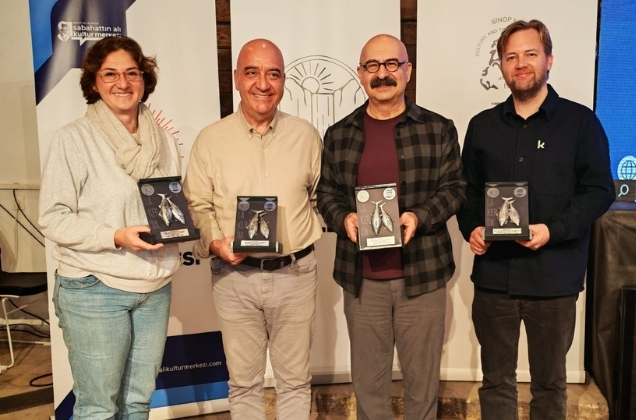
What is the current status of your work on molecular gastronomy at the Sinop Lakerda Festivals? Do you plan to publish findings that ground the physical and chemical transformations occurring in the kitchen in scientific principles?
It was a fascinating experience. Don’t let the name mislead you; while lakerda was certainly featured, a wide range of topics was discussed based on the concept of curing fish in salt rather than on ice. It wasn't just chefs; marine scientists, historians, and sociologists were there as well. We had previously worked on garum a few times during the PROJ 201 course at Sabancı. Our panel in Sinop focused on garum. A Danish expert attended the event specifically for this reason. Considering the exchanges we had, especially with foreign academics, it felt just like the physics conferences I’ve attended. The only difference was that it was delicious! As for writing... I’ll mention Professor Zafer Yenal again here; he keeps emphasizing that "spoken words fly away, but the written word remains," urging us to keep writing. I hope we do. Years ago, my work on Ostwald ripening became the subject of a conference paper. Let’s hope for the same for garum.
Some opportunists, seeking to capitalize on the fact that quantum mechanics cannot be fully grasped through the everyday intuitions of the human mind, claim that spiritual or paranormal phenomena can be explained by quantum mechanics. This field is known as "quantum metaphysics." Do these studies, which are fiercely criticized by scientists as pseudoscience, tarnish the reputation of quantum mechanics research grounded in scientific methods?
Developments in science and art have always had societal repercussions. Similar phenomena occurred years ago regarding the theory of relativity. Interpretations ranged from the idea that everyone could have their own moral code—analogous to how different observers measure time differently—to conclusions that objective reality or universal truth does not exist. Language and terminology belong to us all; anyone is free to use them, as long as there are no scientific errors.
Who is Dr. Zafer Gedik?
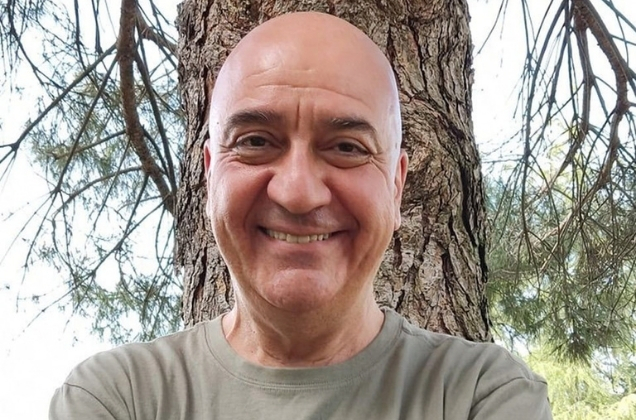
He graduated from Ankara Science High School in 1984 and from the Department of Physics at METU in 1987. He completed his Master’s degree in 1989 and his PhD in 1992 at the Department of Physics at Bilkent University. He worked as a visiting scientist at the IBM Zurich Research Laboratory and at Johns Hopkins University in the USA. He conducted research at the International Centre for Theoretical Physics (Trieste, Italy), the Institute of Cybernetics (Naples, Italy), and the National Institute of Standards and Technology (Gaithersburg, USA). He has earned the TÜBİTAK Incentive Award, the French Academy of Sciences Scientia Europaea Award, the METU Prof. Dr. Mustafa N. Parlar Research Incentive Award, and the TÜBA Distinguished Young Scientist Award. He serves as an editor for the journals Nature Scientific Reports and Frontiers in Quantum Science and Technology and represents Türkiye in the European Union’s Quantum Community Network (QCN). His research focuses on quantum information theory, quantum computing, and the foundations of quantum mechanics. He has been a faculty member at Sabancı University since 2002.