22/12/2025
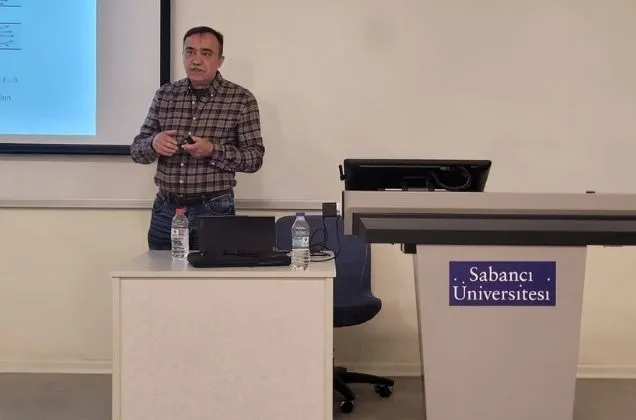
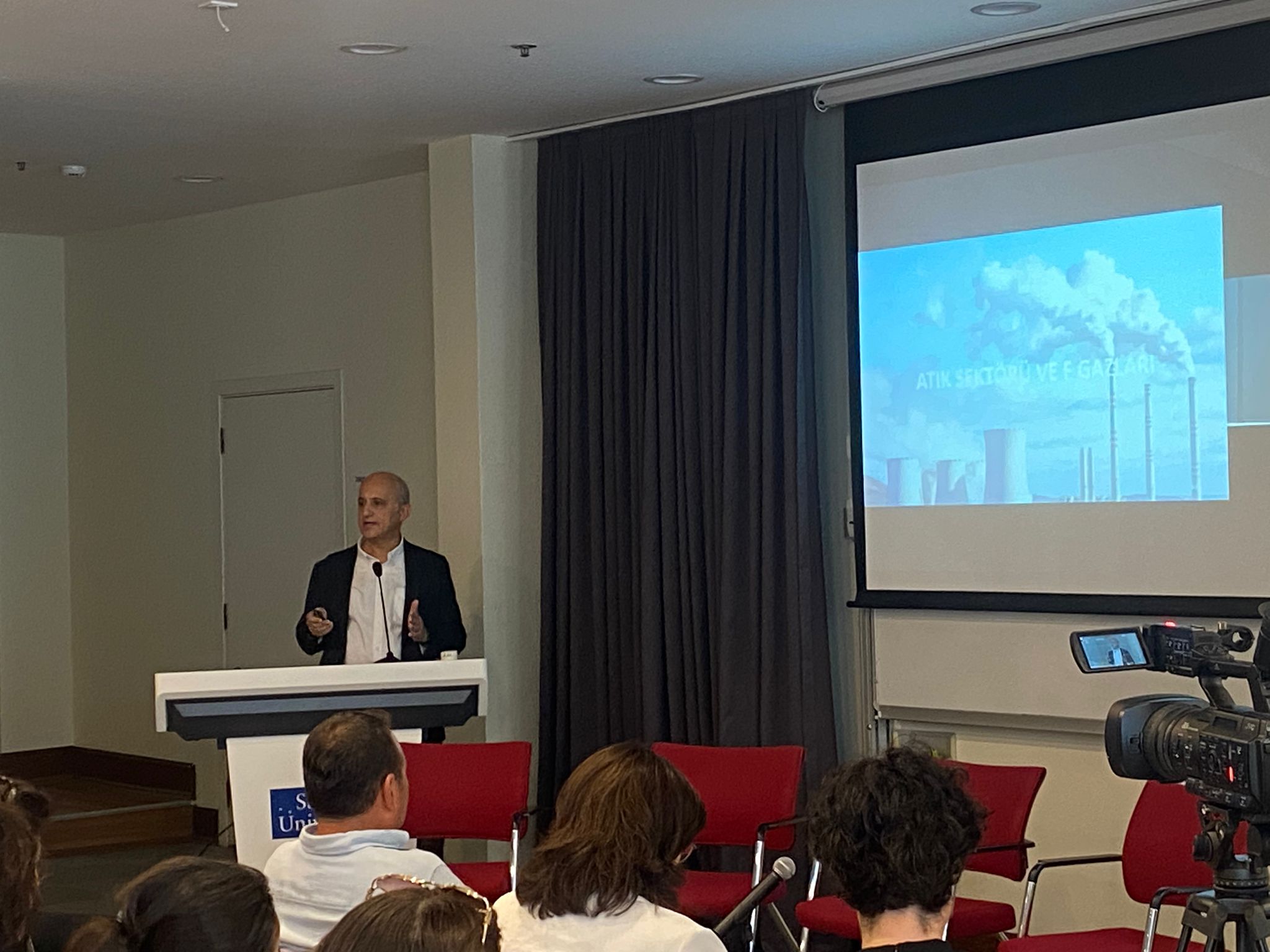
The report entitled ‘Türkiye’s Decarbonization Pathway: Towards Net Zero in 2053’, prepared by Sabancı University’s Istanbul Policy Center (IPC), was launched at a meeting held on September 2nd. The study compiled greenhouse gas emission data from all relevant sectors of the economy to create reduction scenarios for Türkiye for the period 2025–2053 and to determine investment costs.
The report provides a scientific background for Türkiye's new Nationally Determined Contribution (NDC) that it will submit to the United Nations this year.
Türkiye, which declared its goal of reducing greenhouse gas emissions to net zero by 2053 with the Paris Agreement signed in 2021, set a target of reducing emissions by 41 percent in its updated NDC in 2022. However, this target is not compatible with net zero in the long term and does not allow for the creation of a reduction path in sectors. The IPC study is important because it compares reference and net zero scenarios and reveals the interim target that Türkiye should set for 2035 towards the Net Zero target of 2053.
The meeting was attended by member of the report's research and writing team including Dr. Ümit Şahin, Coordinator of IPC Climate Change Studies, Assoc. Prof. Dr. Osman Bülent Tör, Faculty Member of the Department of Electrical and Electronics Engineering at Hacettepe University and General Manager of EPRA, Prof. Dr. Ebru Voyvoda, Faculty Member of the Department of Economics at METU, Prof. Dr. İlkay Dellal, Faculty Member of the Department of Agricultural Economics at Ankara University, Assoc. Prof. Dr. Duygu Erten from Ankara University and TURKECO Enerji, and Dr. Özay Uslu from the Faculty of Engineering and Natural Sciences at Medipol University.
Giving the opening speech of the meeting, Dr. Şahin emphasized that IPC started model studies even before Türkiye became a party to the Paris Agreement, and said: " Türkiye can absolutely reduce greenhouse gas emissions between 2025-2035 with a well-planned strategy and approach the Net Zero target by further reducing its emissions until 2053. According to the Net Zero scenario in this study, in order for the new NDC that Türkiye will present this year to be compatible with the Net Zero target in 2053, it is necessary to first maintain 2021 as the year when emissions peak and to reduce emissions at an accelerated rate from 2025 onwards.
Türkiye can reduce its greenhouse gas emissions by 35 percent to 370 million tons in 2035 compared to 2021 by following the necessary policies. This also means that emissions will be reduced to pre-2010 levels. According to the Net Zero scenario in the report, the reduction in carbon dioxide emissions is faster. Türkiye's carbon dioxide emissions in 2035 can be reduced by 40 percent compared to 2021, falling to 277 million tons. This means that carbon dioxide emissions can be reduced to pre-2005 levels.
This reduction, achievable by 2035, largely depends on a gradual phase-out of coal in the electricity sector and the rapid construction of new renewable energy plants. The phase-out of coal use in the electricity sector can be completed by 2036. This is possible with a wind and solar energy installation rate reaching approximately 10 GW per year and a 9 GW battery investment by 2035."
61% REDUCTION IN EMISSIONS IS POSSIBLE
According to the IPC's 'Türkiye's Decarbonization Pathway: Towards Net Zero in 2053' report, Türkiye can reduce its total greenhouse gas emissions by 61% by 2053 if it achieves a rapid transition to renewable energy and electric vehicles, a gradual phase-out from coal, a technological transformation in industry, and electrification in buildings. This corresponds to an average annual reduction of approximately 3%. Achieving Türkiye's Net Zero target requires an additional cost of $265 billion USD over the ten years between 2025 and 2035. The largest portion of this cost (75%) stems from the transformation of the building sector. Within this figure, the cost of transformation for the industrial sector remains at approximately $8.3 billion, while for the electricity sector it reaches $80 billion. For the transformation of the transportation sector, there is a benefit of $36.5 billion due to the reduction of oil imports instead of additional costs.
Türkiye's Decarbonization Pathway report was prepared by considering all relevant sectors of the Turkish economy (electricity, industry, buildings, transportation, agriculture, waste) and all greenhouse gases (carbon dioxide, methane, nitrous oxide, and F-gases) for the 2053 Net Zero target. The pathway examines the possible trajectory of Türkiye's greenhouse gas emissions through two separate scenarios.
-The reference scenario shows the level of energy demand and greenhouse gas emissions that would be reached in 2053 by carrying the current economic trajectory forward, without additional economic intervention or ambitious climate policies, in order to achieve net zero emissions.
-The Net Zero scenario assumes that the necessary economic interventions are implemented to achieve net zero emissions in 2053. Accordingly, it shows how energy demand and emissions would evolve with a rapid transition to renewable energy, a gradual phase-out of coal, a rapid transition to electric vehicles, a gradual technological transformation in industry, and electrification of buildings.
GREENHOUSE GAS EMISSIONS IN THE ELECTRICITY SECTOR CAN BE REDUCED BY 6.5% ANNUALLY
The report emphasized that while greenhouse gas emissions in the electricity sector are projected to increase by an average of 1.2% annually in the reference scenario during the 2025-2053 period, they could decrease by an average of 6.5% annually in the Net Zero scenario. In the Net Zero scenario for the electricity sector, a reduction of 54% in CO₂ equivalent can be achieved by 2035 compared to 2025, and 84% by 2053. The total cost for the Net Zero transition in the electricity sector, including maintenance, fuel, operation, and grid investments, is 80.1 billion USD. Power plant investments constitute the largest share of these cost items.
Elaborating on the study, Assoc. Prof. Osman Bülent Tör said: “The Net Zero Roadmap, prepared for Türkiye's electricity sector using the EP-SIM model, places both reference and net zero scenarios on a realistic foundation. This provides a reliable and implementable roadmap for policymakers. The assumptions made for the energy sector offer a concrete basis for the creation of the updated NDC. The projections are not only technically robust but also provide guidance for political decision-making processes.”
$8.3 BILLION NEEDED FOR INDUSTRY'S NET ZERO TARGET
The report examined the industrial sector, one of the major contributors to greenhouse gas emissions in Türkiye, including its sub-sectors such as steel, aluminum, cement, fertilizers, chemicals, and textiles. According to the study, a significant transformation is taking place in the industrial sector towards a Net Zero trajectory. The Net Zero scenario creates approximately 11 percent more electricity demand in the industrial sector compared to the reference scenario. This increase is mainly due to electrification in the chemical and other industrial sectors. Nevertheless, total energy consumption is balanced by efficiency increases and demand decreases in many sectors.
Approximately $8.3 billion in additional investment is needed by 2035 for the necessary transformation in industry to take place. During the 2025–2053 period, while industrial emissions increase by an average of 2.5 percent annually in the reference scenario, emissions decrease by 2 percent annually in the Net Zero scenario, according to which a 22% reduction in CO₂ equivalent is achieved in 2035 and a 44% reduction in 2053 compared to 2025.
Professor Dr. Ebru Voyvoda stated that the findings of the study clearly reveal applicable decarbonization options for each sector, continuing: “Technological transformation in metals, catalytic reduction in fertilizers, and reducing clinker content and using recycled materials in cement stand out. The cement sector is a critical focus area as the largest source of process emissions on the road to 2053. While electrification is expected to increase in the chemical and other industries, the determined implementation of energy efficiency gains will determine the pace of transformation.”
ELECTRIFICATION INSTEAD OF FOSSIL FUELS IN TRANSPORTATION CAN REDUCE EMISSIONS BY 52%
Looking at the transportation sector, a reduction of 70% is achieved in 2053 compared to the reference scenario; and 52% compared to 2025. While it is calculated that approximately $75.3 billion investment will be needed for the transformation until 2035, savings of $111.9 billion can be achieved thanks to moving away from fossil fuels. This means that the transformation in transportation will provide a net benefit of $36.5 billion.
Dr. Özay Uslu, who presented the transportation section, noted the following: “The transportation sector is a strategic lever in reducing greenhouse gas emissions. Our modeling and projections show that the transition to electric vehicles and the acceleration of investments in this area significantly reduce emissions. A shift from road to rail transportation presents a strong opportunity, both environmentally and economically. These scenarios increase energy efficiency while reducing dependence on fossil fuels. The resulting picture reveals a viable and cost-effective roadmap for low-carbon transportation policies.”
BUILDING EMISSIONS COULD BE ZERO BY 2045
In the Net Zero scenario, it is envisioned that all new buildings in the building sector after 2025 will be constructed as 'Nearly Zero Energy Buildings' (NZEB), the use of Renewable Energy Sources (RES) will be increased to 20% in 2040 and 30% in 2050, buildings constructed before 2000 will be gradually demolished and rebuilt, and energy efficiency improvements will be made in existing buildings. Furthermore, the goal is to completely abandon fossil fuels for heating by 2045 through a transition from coal to natural gas, and then from natural gas to electricity. With this transformation, emissions from buildings will fall to zero from 2045 onwards. However, this transformation requires an investment of approximately $200 billion.
Speaking at the meeting, Prof. Dr. Duygu Erten described the building sector as a 'sleeping giant' with vast untapped potential for climate action. Erten stated, “In Türkiye, buildings are responsible for approximately 14 percent of energy-related carbon dioxide (CO₂) emissions. Approximately 76 percent of these emissions originate from residential buildings, and 24 percent from commercial and institutional buildings. The NDC study includes a special section outlining various specific measures and targets for reducing greenhouse gas emissions and increasing energy efficiency in buildings. Accordingly, with the transition from coal to natural gas, then from natural gas to electricity, and the complete abandonment of fossil fuels in heating, we can reach net zero even before 2053.”
ELECTRIFICATION AND EFFICIENCY OF MACHINERY STAND OUT IN AGRICULTURE
In the agricultural sector, if current trends continue, agricultural emissions are expected to rise to 99 MtCO₂e in 2053. If the Net Zero scenario is implemented, emissions could decrease to 68 MtCO₂e in 2053. When the impact of the strategies is examined, reductions in fertilizer-related emissions can be achieved by 66.5% through the use of biogas, 67.6% through the electrification of agricultural machinery, and 14.3% through genetic improvement and feed quality improvements in cattle breeding.
Professor Dr. İlkay Dellal, detailing the studies on agriculture, emphasized that they addressed the issue with the goal of reducing emissions and protecting Türkiye's food security and global competitiveness until 2053. Regarding the prominent practices, Dellal stated: “In scenarios designed in line with national climate policies, steps such as reducing the use of chemical fertilizers, increasing crop rotation with legumes, less tillage, electrification of agricultural machinery, utilizing animal manure in biogas plants, and increasing productivity through animal breeding stand out. Thanks to these practices, a low-emission and environmentally friendly agricultural model will be possible, making a strong contribution to Türkiye's achievement of the 2053 Net Zero target.”
The conclusion of the report emphasized that with a planned strategy encompassing the entire Turkish economy and technologically and economically feasible measures, Türkiye can absolutely reduce greenhouse gas emissions between 2025-2035 and further reduce emissions by 2053, approaching the Net Zero target.
The report can be accessed via the link below.