14/04/2026
The newly established Marketing specialization within Sabancı Business School is ushering in a new era in doctoral programs. This new structure, which combines academic research with data-driven decision-making processes, aims to provide students with both theoretical depth and a strong set of practical competencies.
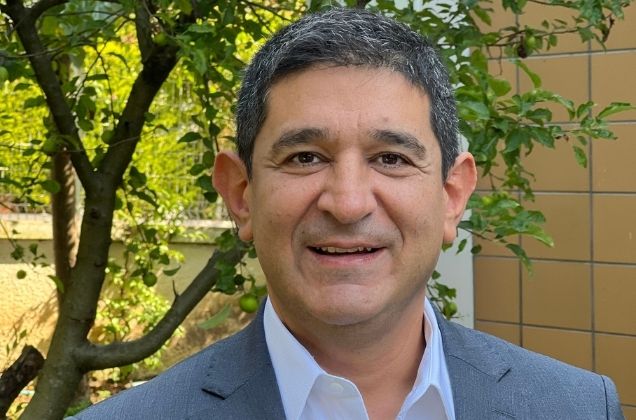
The program's scope, interdisciplinary approach, and vision focused on international competitiveness offer a compelling framework for researchers aiming for careers in marketing. In this context, Professor Cenk Koçaş, a faculty member at Sabancı Business School, details the content, research focuses, and opportunities offered by the new specialization.
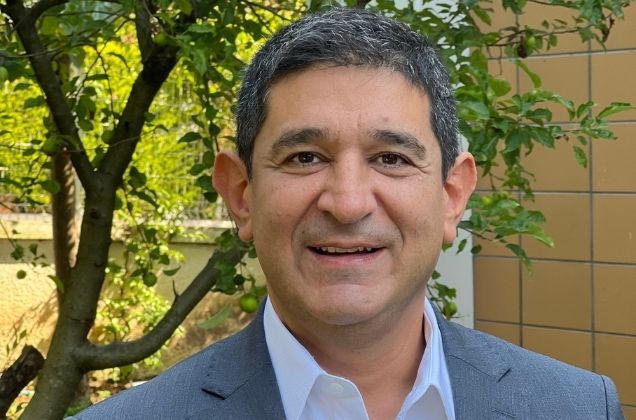
Could you provide a more concrete framework for the curriculum and research focuses of the newly established Marketing specialization? In which theoretical and methodological areas will students have the opportunity to deepen their knowledge?
The field of marketing research traditionally rests on three main theoretical axes worldwide. These three areas are briefly called Consumer Behavior (CB), Marketing Strategy (Strat), and Analytical/Quantitative Marketing Theory (Quant). Firstly, CB (Consumer Behavior) examines how individuals make choices within the framework of consumer behavior and decision theory, the psychological and cognitive processes involved in decision-making, and how these decisions can be represented by economic models. Secondly, Strat (Strategic Marketing) addresses how firms behave in areas such as pricing, competition, and market design within the scope of marketing strategy and market structures, and how these behaviors can be theoretically modeled. Thirdly, Quant is analytical/quantitative marketing theory; here, consumer and market behaviors are analyzed mathematically and statistically using tools such as demand modeling, choice models, and structural modeling. Sabancı University Marketing PhD students will potentially specialize in one of these areas.
We see that the program focuses on topics such as consumer behavior, digital marketing, customer analytics, and sustainability. Among these areas, are students required to choose a specific specialization, or is there a flexible structure that encourages interdisciplinary studies?
In our Marketing PhD program, as in most marketing PhD programs, students are required to specialize in a particular area over time, but we have tried to design a program that is flexible and open to exploration. In the first 1-2 years, students will receive extensive theoretical and methodological education. At this stage, they will be exposed to both behavioral and quantitative fields, and by working with different professors, they will discover which area they are more inclined towards. After this process, they will usually determine a main focus (e.g., consumer behavior or quantitative/analytical marketing), as academic deepening and dissertation writing require this. Sabancı University has an environment that strongly encourages interdisciplinary studies, and this approach also applies to the marketing doctorate; students can take courses from fields such as economics, psychology, statistics, and computer science, and integrate their research with these fields. In fact, we hope that future dissertation studies will not be confined to a single subfield, but will instead use, for example, behavioral theory and data science methods together, or structural models and experimental findings.
How does combining behavioral and analytical approaches add depth to marketing research? How does the program concretely integrate these two approaches?
Combining behavioral and analytical approaches provides marketing research with a "multi-layered depth" that no single approach can offer. The behavioral approach reveals the psychological processes that shape consumer decisions—for example, perception, attention, reference points, social influences, or cognitive biases—and answers the question, "Why do people behave this way?" The analytical approach, on the other hand, represents, measures, and generalizes these behaviors through mathematical and statistical models; that is, it answers the questions, "How strong is this effect, under what conditions does it change, and what happens in different scenarios?" When these two approaches are combined, research ceases to be merely descriptive or explanatory and transforms into a highly predictive and decision-supporting structure.
Behavioral studies often produce causal inferences through controlled experiments; however, it is not always clear how these findings will work in real markets. Analytical models offer the possibility of generalization from large datasets, but when used alone, they may not fully explain the underlying psychological mechanisms. When these two approaches are used together, an experimentally validated mechanism can be embedded into a structural or econometric model, allowing for testing with real data and simulation of alternative strategies. This enables research to simultaneously answer both the "why" and "what happens" questions.
The Sabancı University Marketing PhD program provides students with this integration by teaching them the fundamental structures they need in microeconomics, statistics, and econometrics, as well as consumer behavior and psychology, followed by analytical and quantitative methods. Ultimately, the combination of these two approaches transforms marketing research from a purely theoretical or data-driven activity into a scientific production method directly linked to real-world decisions. Researchers can understand the fundamental mechanisms of human behavior while simultaneously quantitatively predicting market outcomes and comparing alternative strategies. This leads to significantly stronger and more effective outputs, both academically and practically, particularly in areas such as pricing, promotion, platform design, and customer management.
How will the research environment, mentoring structure, and international collaborations offered by the program contribute to students' academic development?
The Sabancı University Marketing program, with its more than ten full-time and network marketing professors, provides students with both the foundations mentioned above and a comprehensive infrastructure that enables them to conduct detailed studies in their final choices. In the coming years, we plan to further develop these capabilities annually through international partnerships.
The field of marketing has become increasingly intertwined with data science, behavioral sciences, and technology in recent years. What are the most critical competencies that distinguish a researcher who wants to study marketing at the doctoral level from other social sciences today?
A modern marketing doctorate, unlike classical social sciences, requires a strong integrated set of competencies. The most critical skill is causal thinking and the ability to test outcomes using experimental or econometric methods. This requires the researcher to have advanced knowledge of statistics and data analytics, not only to analyze data but also to build and interpret models.
Students considering applying to a marketing doctoral program often find themselves torn between industry experience and an academic career. What kinds of opportunities does a doctoral program in this field open up for graduates, not only in academia but also in the business world?
Sabancı University's Marketing PhD program is designed to equip its graduates with the ability to think with data, perform causal analysis, and model complex problems; a skill set that will be highly valued, especially in data-driven sectors. Graduates will be able to take on advanced analytical and decision support roles in technology companies (product analytics, experimental design), consulting firms (strategy, pricing, demand modeling), finance, and retail. Essentially, this PhD program aims to transform graduates into professionals who not only generate theory but also develop data-driven strategic decisions.
In line with the goal of training researchers who can compete at an international level, what knowledge, skills, or perspectives would you particularly recommend applicants acquire?
I would probably say that the most fundamental ability is "the ability to think like a researcher." For this, it is necessary to first acquire a strong quantitative foundation (statistics, probability, fundamentals of econometrics) and be comfortable working with data. Being able to perform data analysis with tools like Python or R will provide a significant advantage. In addition, candidates need to develop not only technical but also theoretical curiosity: It is important to read good articles from leading publications in the field such as the Journal of Marketing, Journal of Marketing Research, Journal of Consumer Research, Marketing Science, and Journal of the Academy of Marketing Science, and to question "what question does this study solve, how does it solve it, and what is missing?" Even a small amount of research experience (such as working as a thesis, project, or research assistant) will make a big difference.
How does the position of Sabancı University's Faculty of Management Sciences, which has been certified with international accreditations such as AMBA, create an academic and professional advantage for students who will choose the Marketing PhD program?
As I briefly mentioned above, Sabancı University, with its large full-time and network faculty, its emphasis on interdisciplinary studies, and its distribution of expertise in each of the fundamental areas of marketing that can support both basic knowledge and specialization, manages to achieve a balance that is difficult to find in our region. Sabancı University's strategy of being close to the business world ensures that, built upon these solid foundations, the entire marketing doctorate achieves an applied framework, providing graduates with problem-solving skills both in the professional world and even within academia.