


24/03/2026
It is widely believed that agricultural technologies will play a vital role in making food production sustainable and efficient in the future. Problems such as the increasing world population, climate change, and the limited availability of natural resources necessitate the use of new technologies in agriculture. Thanks to ongoing research on plant genetics, farmers will be able to maximize the benefits of soil and plant conditions and use resources more efficiently.

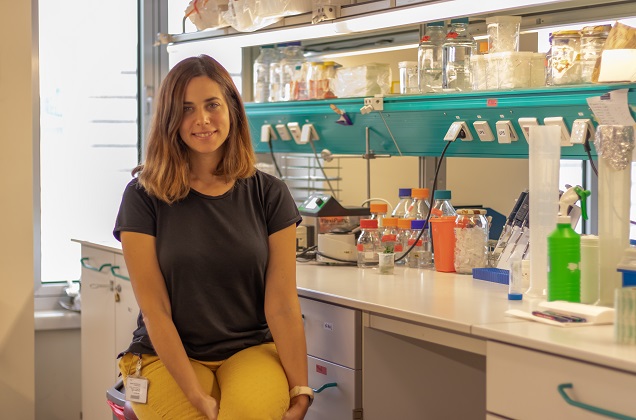
We asked Nihal Öztolan Erol, Principal Researcher at Sabancı University Nanotechnology Research and Application Center (SUNUM), about the research she is conducting regarding the problems facing the world in agriculture. Erol wholeheartedly believes that agricultural biotechnology will play a critical role in the future. She even says that if her child were to choose agricultural biotechnology as a profession in the future, she would be ready to provide them with all the necessary support.
Erol first addressed the importance of correctly defining techniques such as GMOs and CRISPR-Cas, before answering our questions. Now let's give the floor to Nihal Öztolan Erol:
What are GMOs, their strategies and regulation?
GMOs are organisms whose genetic structure has been altered using genetic engineering techniques. There are two types of modification strategies that are subject to GMO regulation: cisgenesis and transgenesis. Cisgenesis is the transfer of genes between individuals that produce healthy offspring when mated, using genetic engineering tools. Transgenesis, on the other hand, is the transfer of genes between two species that cannot be mated. Both are carried out with advanced laboratory techniques and require special equipment and expertise.
On the other hand, there is the gene transfer that humans have done on species they have domesticated through artificial selection since the agricultural revolution, which we call traditional breeding. These products are not subject to any GMO regulation. Although cisgenesis resembles traditional breeding and produces genetically more advantageous and faster results, it cannot be exempted from GMO regulations because its implementation technology is based on laboratory processes.
An important issue regarding CRISPR
There is another issue that is currently being challenged by European Union laws. Will modifications made using CRISPR-Cas techniques be considered GMOs or not? To answer this question correctly, it is first necessary to define the CRISPR-Cas technique.
The CRISPR-Cas technique is a gene editing technique adapted from the natural defense mechanism of bacteria against viruses. It allows for the precise cutting and editing of a targeted region in the genetic material of a living organism through small additions, deletions, or changes. This method is less expensive and easier to perform than previous gene editing techniques.
With the decrease in the cost of genetic sequencing, the CRISPR-Cas technique has paved the way for genetic editing in various organisms with efficient transfer methods in many laboratories. In the context of plant breeding, this technique shortens the process of producing an elite plant variety through breeding and prepares the product for market conditions more quickly.
A safe method
I am highly confident that this method will effectively change plant breeding and that it poses no danger to the ecosystem because, in the end, no transgenic residue remains in the product that reaches the market. If we ask which characteristics in plants can be improved using CRISPR-Cas technology, editing the target gene in traits controlled by a single gene—for example, genes that provide resistance to a specific disease—will always yield more effective results.
Now, let's consider the European Union's stance on plants produced using CRISPR-Cas technology. The EU Commission has labeled all technologies that modify plant genetics in a faster and more targeted manner than classical breeding methods, such as CRISPR-Cas, as New Genomic Techniques (NGTs). Initially, when all NGTs were grouped under GMOs, products produced with technologies like CRISPR-Cas, which actually do not contain transgenic residues, were also required to bear the GMO label.
The European Union's Solution
Advanced seed producers seriously opposed this situation, and the EU Commission also discussed the issue and divided NGTs into two categories: NGT 1 and NGT 2. Products in the NGT 1 category will be considered similar to conventional breeding products if the editing is made below 20 nucleotides, and no labeling will be applied. Those in the NGT 2 category will remain GMOs. If you ask what the 20-nucleotide decision is based on, the number of unique single-nucleotide mutations that occur randomly in nature varies between 19 and 21. Therefore, if the CRISPR-Cas system is to be likened to a natural mutation made by humans, the modification should not exceed 20 nucleotides. If it does, the products will be categorized as GMOs.
Is the CRISPR-Cas technique applied in Türkiye?
As in many parts of the world, CRISPR-Cas studies on plants for research purposes are being carried out intensively in Türkiye. Many laboratories working on plant genetics (currently quite numerous) have all the necessary materials for this technique at their disposal. Furthermore, government support is readily available. Therefore, in our TÜBİTAK applications, there isn't a single project plan that doesn't mention the CRISPR-Cas technique.
On the other hand, there is no definitive regulation yet regarding the planting of products developed with the CRISPR-Cas system. This issue, currently in a grey area, will, I believe, be shaped by the decision of the EU Commission. Also, since the CRISPR-Cas gene editing technique leaves no trace on the gene, it is impossible to detect it with any marker, unlike classic GMO products. If Türkiye introduces a law on this matter, then I think these controls will be implemented in laboratories and seed companies conducting R&D. On the other hand, there is strict control over GMO products. We inform the Ministry of Agriculture and Forestry that we are conducting research on GMOs through a letter of permission or notification.
Studies conducted with the CRISPR-Cas technique at SUNUM
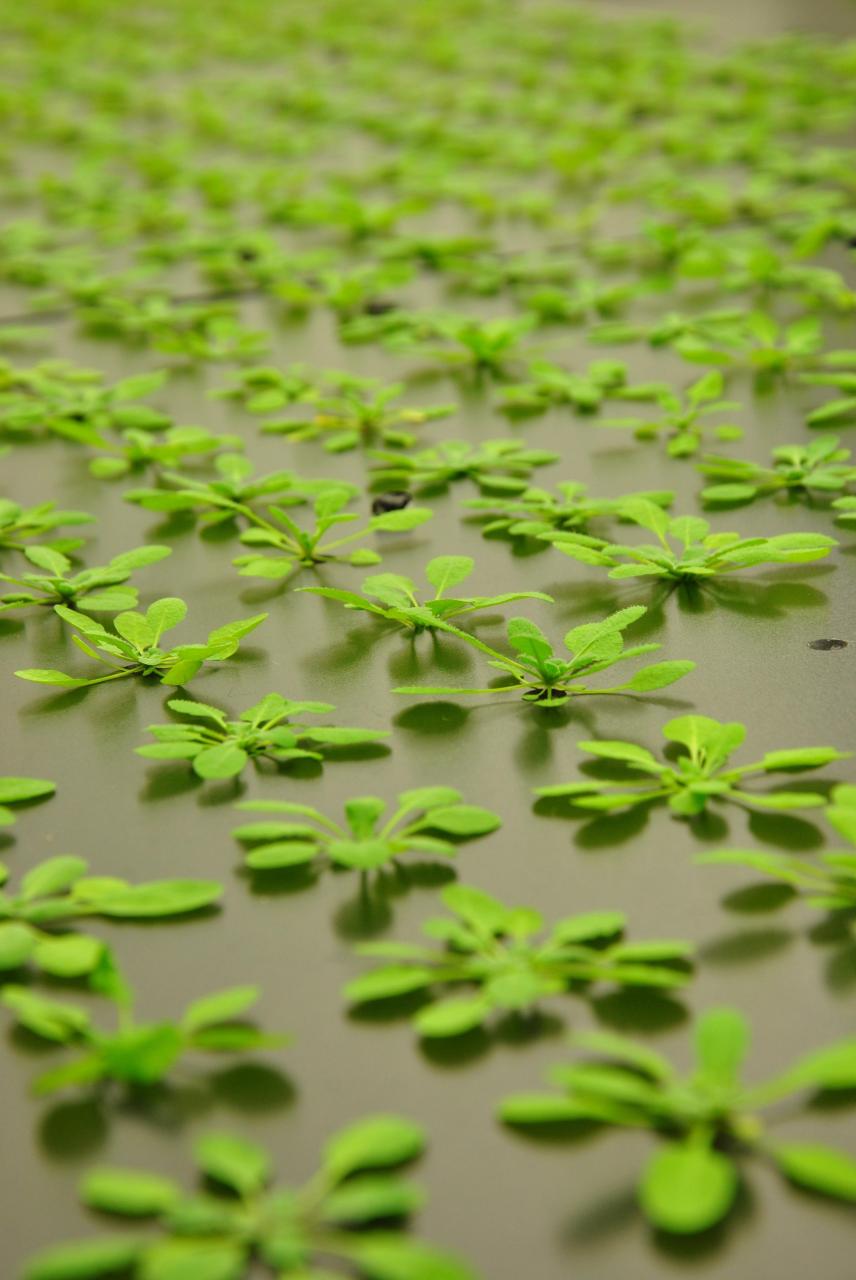
I generally study this technique in the Arabidopsis thaliana model plant. I use this technique to confirm the functions of the genes I am researching. In the TÜBİTAK 1505 project, in which I participated as a researcher between 2022 and 2024, I performed gene transfer in pumpkin leaves for the first time using single-walled carbon nanotubes and carried out regional CRISPR-Cas9-mediated mutation. Since this project, I have started nanoparticle-mediated gene transfer studies. I use selenium nanoparticles.
Selenium nanoparticles travel from tissues to the inside of cells without harming the plant, carrying the DNA molecules we load onto them into the cell. Since their size is smaller than the plant cell wall, their transfer is also efficient. With the recent TÜBİTAK 1001 and 3501 grants we received, we are planning to use these particles in plants in two ways:
1. Gene transfer via tissue in pumpkin and Arabidopsis thaliana,
2. Application of abiotic stress-resistance providing proteins to plant tissues without damaging them.
With these two projects, which will be completed in 2029, we will have presented a groundbreaking material to the agricultural sector that allows for the use of a single material in two different ways.
Studies on the Utilization of Plant Waste
We are also conducting studies at SUNUM on the soil conditioning properties of nanocellulose obtained from plant waste by SUNUM leader researchers, specifically Tülay İnan. We are investigating whether we can increase soil fertility and water retention through the functionalization of these materials. In this way, we will ensure the reuse of plant waste.
Project to Prevent Invasive Plant Pests
I would like to mention the TÜBİTAK 1505 project that I previously referred to. The starting point of this project is the damage caused to pumpkin plants by the invasive plant pest, the whitefly, as a result of the subtropical climate zone extending towards the southern regions of Türkiye due to climate change. The whitefly settles on the plant leaves and causes silvering on the pumpkin leaves with the fluids it secretes into the plant's vascular bundles, seriously reducing the quality of the pumpkin fruit. In this project, led by Stuart J. Lucas, a SUNUM principal researcher, we investigated the genes that provide resistance to the damage caused by the whitefly. At the end of this project, which we conducted in partnership with a seed company, we made the candidate genes available for use by this company.
Experience in Agricultural Biotechnology
Including my PhD, I've actually been in this field since 2009. After completing my PhD at Wageningen University in the Netherlands with very valuable professors, I took on a role in the R&D department of a Dutch-based international company where biotechnology and breeding intersected. There, I clearly learned how biotechnology is used in agriculture. This left me with an insatiable curiosity. After returning to Türkiye, I continued my plant genetics studies. Since 2021, I have been continuing my work in agricultural biotechnology at SUNUM.
Technology use is at very low levels in our country.
I am still using the knowledge I gained in the Netherlands in this field. This unique experience showed me the applicable aspects of agricultural biotechnology outside of academia. I have always prioritized topics that could attract the interest of companies in my work. Of course, I am also interested in basic science. For example, with my first TÜBİTAK 1002 project, I researched the genetic structure of nitrogen utilization efficiency in the Arabidopsis thaliana plant. This fundamental science research is currently progressing towards promising results. I'm even preparing for a new project. However, years of experience and perspective are leading me to focus on applied science.
In Türkiye, agricultural biotechnology needs to be developed and supported more. While Türkiye is among the countries with the highest agricultural production in the world, its use of technology is at very low levels. Yet, climate change and the damage humans inflict on nature negatively affect agriculture. For this reason, I believe that the government should provide more support for advanced technologies in agriculture.


