06/07/2026
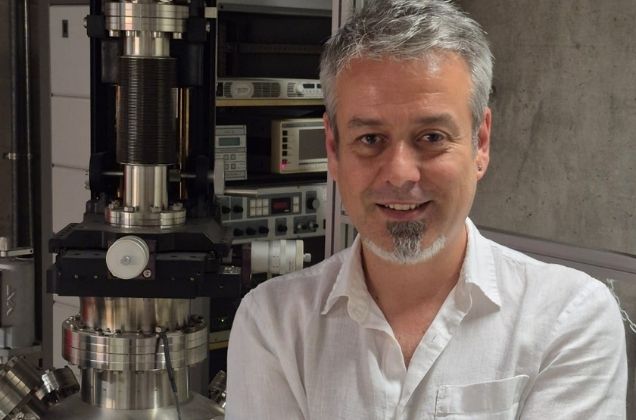
One of the biggest problems with large artificial intelligence systems today is their excessive energy consumption. Dr. Kaan Demirel, Principal Investigator at Sabancı University Nanotechnology Research and Application Center (SUNUM), is focusing on technologies that can provide a solution to this problem.
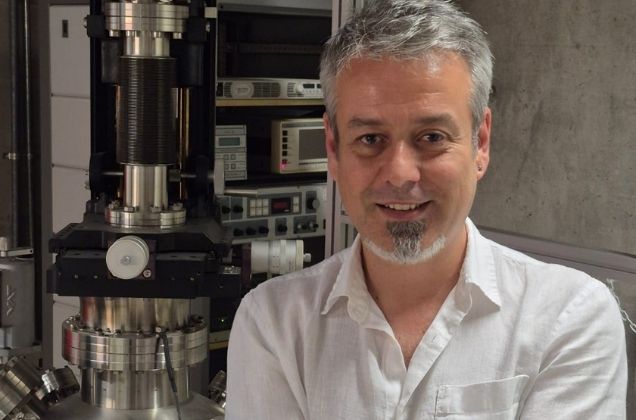
Dr. Demirel completed his education at leading higher education institutions in Türkiye such as METU, Ankara University, Bilkent University, and Hacettepe University, and conducted numerous academic studies with these institutions. Today, he continues his work in nanotechnology and nanomedicine, where he gained expertise, through his research at Sabancı University SUNUM. Dr. Demirel explains his reasons for choosing SUNUM and why he didn't work abroad as follows: “The opportunities offered by Sabancı University are very rich. It also provides a much more valuable advantage. Here, we have the chance to approach projects from a broader perspective. In other words, we don't have to specialize in a limited area. We have the opportunity to work with researchers from different disciplines, gain different perspectives, and understand the importance of scientific collaborations. This increases our creativity and productivity.”
We asked Dr. Demirel about the technologies he has researched in his career. Let's hear about his work from him:
Neuromorphic Approach
Neuromorphic computing is a new computing approach inspired by the working principles of the human brain. While large artificial intelligence systems consume very high amounts of energy today, the human brain can perform extremely complex operations with only about 20 watts of power. Therefore, one of the most important goals in future artificial intelligence hardware is to transfer this energy efficiency of the brain to electronic systems.
In this field, I am working on next-generation electronic memory units that mimic the behavior of synapses in our brain using two-dimensional (2D) materials and thin-film technologies. These studies aim to contribute to the development of faster, lower-power consuming artificial intelligence systems with less environmental impact in the future.
Semiconductor Technologies
Semiconductor technologies are at the heart of my work. Semiconductor technologies are at the foundation of almost every electronic product we use today, from mobile phones and computers to automobiles and defense systems.
I particularly work on electronic systems operating at the micro and nano scale. These include sensors, microelectromechanical systems (MEMS), next-generation memory technologies, artificial intelligence hardware, and advanced packaging technologies.
NanoDiamond
Throughout my research career, I've had the opportunity to participate in some studies that were carried out for the first time in Türkiye. One of these was the development of nanoscale electron sources based on nanodiamonds. Within the scope of this study, structures that provide electron emission using nanodiamonds were developed and characterized for the first time in Türkiye. These types of electron sources form the basis of technologies that can be used in the future in fields such as vacuum microelectronics, sensors, and specialized electronic systems.
High-Speed Transistors
Another area I worked in was high-speed semiconductor devices. I participated in the first high-speed transistor development studies carried out in Türkiye. Today, high-speed transistors are at the heart of many critical technologies, from communication systems to radars, from satellite technologies to defense applications. Thanks to these studies, I had the opportunity to contribute to the development of advanced semiconductor technologies in our country.
Microelectromechanical Systems
Microelectromechanical systems, or MEMS technologies, also hold an important place among my areas of work. In particular, the switching structures we developed in the RF MEMS field have reached levels that can compete with the results published by leading research groups and some international companies in terms of performance. These studies have made significant contributions to critical applications such as high-frequency communication and radar systems.
Infrared Detection Systems
I also worked on infrared detection systems used in defense, security, and health technologies. I participated in the design and production processes of microbolometer-based infrared sensors, which are one of the basic components of night vision and thermal imaging systems. These types of sensors detect temperature differences that the human eye cannot see, making it possible to obtain images in the dark.
Next-generation Memory Technologies
Today, I am continuing my work on next-generation memory technologies, artificial intelligence hardware, two-dimensional materials, and advanced semiconductor packaging technologies. In particular, I aim to develop low-energy electronic components that can be used in future computing systems.
European Union Projects
I conduct research on next-generation electronic systems, semiconductor technologies, and advanced packaging methods. In addition, I work with research teams on European Union projects, develop international collaborations, and strive to contribute to the development of young researchers.
Clean Room Infrastructure Setup
I also serve as the Chair of the SUNUM Clean Room Advisory Committee (CAC). In this role, I contribute to strategic planning aimed at determining research priorities for one of Türkiye's most advanced clean room infrastructures, bringing new technologies to the center, and enabling researchers to utilize this infrastructure in the most efficient way.
International Collaborations
Currently, I am collaborating with various universities, research centers, and technology organizations, primarily the University of Southampton (UoS), Delft Technical University (TU Delft), the Lausanne Federal Institute of Technology (EPFL), and IBM.
TEAM-NANO (Teaming for Capacity Development and Synergies in Micro-Nanofabrication and Flexible Electronics for Widespread Impact), one of the most important international projects I've been involved in, is a project supported by the European Union that aims to transform SUNUM into an international center of excellence in micro-nano engineering, flexible electronics, and advanced materials. Within this project, we are working with TU Delft in the Netherlands and the University of Southampton in the UK to both strengthen our research infrastructure and increase Türkiye's international competitiveness in advanced technology. I lead one of the research components within this project, coordinating international research studies on two-dimensional (2D) materials, next-generation memory technologies, and artificial intelligence hardware.
TÜBİTAK BİGG Entrepreneurship Support
I believe that my academic work should directly contribute to society and industry. With this in mind, we were awarded support from the TÜBİTAK BİGG Entrepreneurship Program with the technology idea we developed with Dr. Korkut Kaan Tokgöz, and we established our own technology company. In our company, we work on advanced packaging technologies, one of the fastest developing areas of the semiconductor sector, and we develop glass interposer and through-glass via (TGV) structures in particular. Today, artificial intelligence processors and high-performance chips stand out not only for their power but also for how quickly and efficiently they can communicate with each other. In this context, TGV-based advanced packaging technologies stand out as one of the critical infrastructures for communication between chips and other electronic components.
Our Goal
Our goal is to contribute to the development of this strategic technology in our country, supporting both research infrastructures and the production of high value-added technologies.
About Kaan Demirel
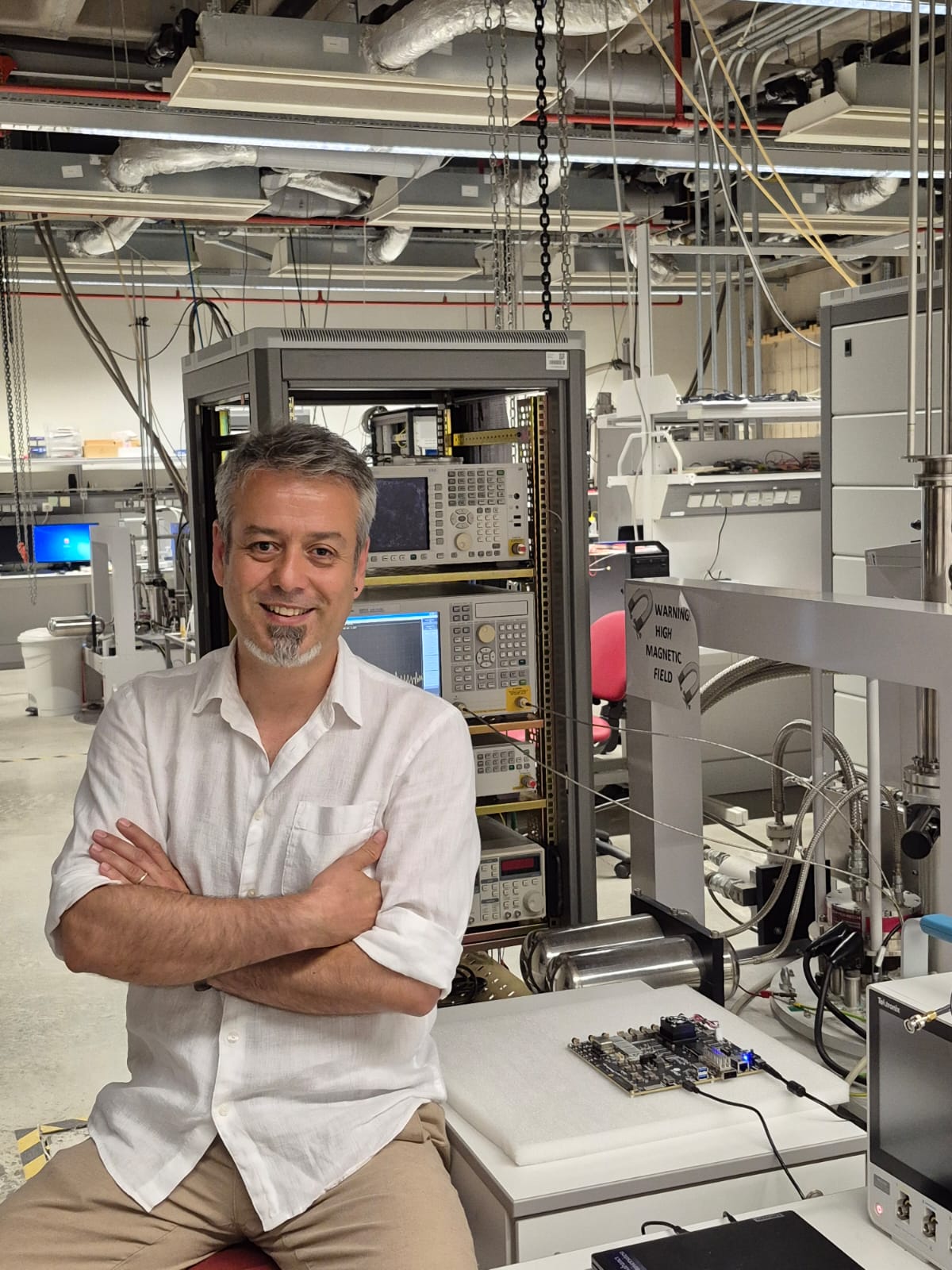
Kaan Demirel graduated from Ankara University with a Bachelor's degree in Physics Engineering. He completed his PhD studies on RF MEMS switches at Hacettepe University's Department of Nanotechnology and Nanomedicine and the METU-MEMS Center. He is currently working as a Principal Investigator at SUNUM. His areas of interest include neuromorphic hardware, advanced chip packaging, micro/nano vacuum devices, 2D materials, MEMS/NEMS structures, uncooled microbolometers, thermal sensors, and smart nanomaterials.