07/07/2026
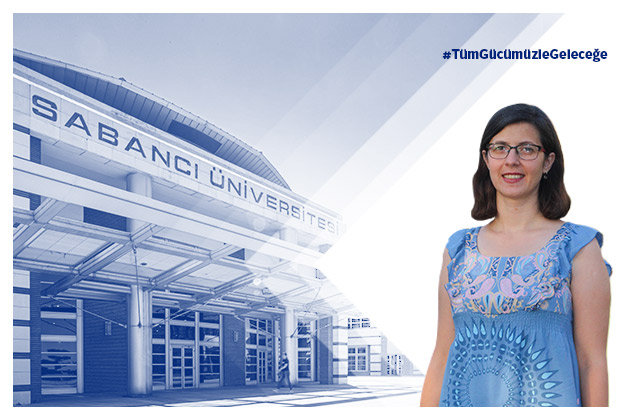
Dr. Nur Mustafaoğlu, a faculty member at Sabancı University's Faculty of Engineering and Natural Sciences, has been selected as a member of the 2026 term of the FENS-Kavli Network of Excellence (FKNE) program, run by the Federation of European Neuroscience Societies (FENS), Europe's largest neuroscience organization, and the Kavli Foundation.
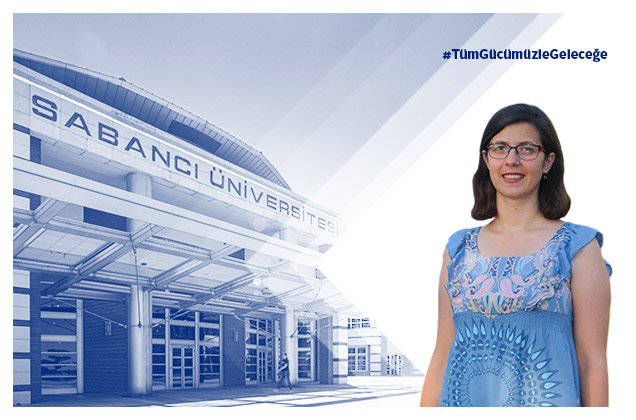
The newly selected members were announced at a ceremony held as part of the FENS Forum 2026 in Barcelona, Spain.
Dr. Nur Mustafaoğlu, selected based on criteria such as scientific excellence, original research approach, and leadership potential, will be among the new members of FKNE along with 15 researchers selected from different European countries. Dr. Mustafaoğlu will contribute to the network's scientific activities for two consecutive two-year terms; she will play an active role in developing international collaborations, promoting interdisciplinary research, and strengthening the European neuroscience ecosystem.
Dr. Nur Mustafaoğlu has achieved a significant milestone as the first scientist from Türkiye to be selected for the FKNE program. This achievement will both strengthen Sabancı University's visibility in the international research arena and support Türkiye's scientific representation in neuroscience at a high level within one of Europe's most prestigious research networks.
Among Neuroscience Researchers Who Will Shape Europe's Future
Dr. Nur Mustafaoğlu's research at Sabancı University focuses on pioneering areas such as bioengineering, organ-on-a-chip systems, blood-brain barrier models, understanding the mechanisms of brain diseases, and developing new treatment strategies. The work carried out under the Mustafaoğlu Lab aims to contribute to a better understanding of brain health and neurodegenerative diseases by bringing together bioengineering and neuroscience.
European Network of Excellence in Neuroscience
Established in 2014 by the Federation of European Neuroscience Societies (FENS) and the Kavli Foundation, the FENS-Kavli Network of Excellence brings together neuroscience researchers working across Europe. Composed of researchers who stand out for their scientific excellence, originality, and leadership qualities, the network aims to strengthen scientific collaborations in neuroscience, contribute to science policies, and raise public awareness.
FKNE researchers exchange ideas on current issues and opportunities in the European neuroscience ecosystem through meetings held throughout the year; and contribute to the development of various initiatives in areas such as funding mechanisms, science policies, social interaction, and diversity. Network members also prepare policy recommendations for European stakeholders and play an active role in the implementation of mentoring and diversity-supporting award programs in the field of neuroscience.
About Dr. Nur Mustafaoğlu
Dr. Nur Mustafaoğlu, a faculty member at Sabancı University's Faculty of Engineering and Natural Sciences, completed her undergraduate studies at Istanbul Technical University with a double major in Molecular Biology and Genetics and Physics Engineering. She received her master's degree in Nanoscience and Nanoengineering from the same university. She completed her PhD in Bioengineering at the University of Notre Dame in the USA. She conducted her postdoctoral studies at the Wyss Institute for Biologically Inspired Engineering at Harvard University.
Dr. Nur Mustafaoğlu's research focuses on pioneering fields such as bioengineering, organ-on-a-chip systems, blood-brain barrier models, understanding the mechanisms of brain diseases, and developing new treatment strategies.
Dr. Nur Mustafaoğlu has been awarded the 2023 EMBO Installation Grant, the 2023 Academy of Sciences Young Scientists Award Program (BAGEP), the 2024 TÜBA Young Scientist Award (GEBİP), the 2024 Science Heroes Association Young Scientist of the Year Award, the 2024 METU Mustafa Parlar Foundation Research Incentive Award, and the Lightning Scholar Award given within the scope of the Sabancı University Science and Arts Awards for her scientific work.