06/04/2026
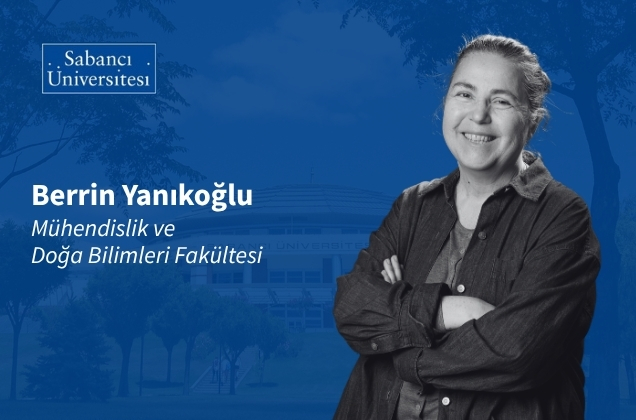
Prof. Dr. Berrin Yanıkoğlu
Sabancı University Faculty of Engineering and Natural Sciences
We are in an era in which artificial intelligence is significantly impacting our lives. Choosing a major has become more challenging than before, especially for students about to start university, and we receive many questions on this topic from students and their families. It is widely predicted that some professions will undergo substantial transformation in the near future, and some may even disappear. For example, with the widespread adoption of autonomous vehicles, the demand for workers in taxi, courier, and delivery services is expected to decline.
Recent layoffs in the technology sector show that these developments will not be limited to routine or physical jobs. For example, a financial technology firm in the US recently laid off 40% of its employees and attributed this to increased efficiency due to artificial intelligence. In other words, even if artificial intelligence doesn't eliminate a profession, it can disrupt employment balances by allowing existing jobs to be carried out with far fewer employees.
Although this would have seemed unlikely just a few years ago, artificial intelligence has made remarkable progress even in areas requiring creativity—once considered uniquely human. For example, AI systems can design, compose music, produce visual content, and even create “virtual artists” with large followings on social media. This suggests that even these fields may not be as “safe” as we once thought.
So, is it logical to choose engineering in general, and computer science and engineering in particular, during this period, and how will artificial intelligence affect these professions? I prefer to look at the question in two stages.
Short Term
Many AI researchers expect that in the next couple of years, solutions to significant problems facing humanity will be developed using existing AI technologies — especially foundation models— in different fields. In this context, two most critical problems where AI is expected to help are global warming and climate change and health sciences: large data and knowledge repositories and intelligent and fast simulation models may bring the necessary developments.
On the other hand, another important research line is the development of next-generation AI models, the advancement of existing models to higher levels, and the guidance of these systems with safe and ethical principles.
To give an example from my own field of study, the success rate of AI-powered medical systems in detecting cancer in mammography or dermoscopy images has surpassed that of the average doctor; this means that cancer is detected with great sensitivity at a very early stage, and the chances of treatment are significantly increased. The challenges in this field require interdisciplinary collaboration, large-scale data collection, and the development of new models that improve the still-evolving pillars of explainability and reliability.
From this, it is clear that students in a wide range of university disciplines can gain a significant advantage in seizing high-impact opportunities by learning the fundamentals and applications of artificial intelligence and engaging in interdisciplinary work.
However, interests outside of technology can also provide an important advantage. An engineer with an interest in sports, art, or finance, for example, can lead the development of multidisciplinary solutions in these domains. Similarly, the social sciences and humanities can play a guiding role in shaping an AI-enabled future.
Finally, with the growing prevalence of digital platforms and AI systems, social skills—such as effective communication, ability to collaborate across disciplines, and the ability to clearly express complex ideas—are already becoming increasingly sought after in job postings.
Medium-to-Long Term (AGI and Beyond)
Looking further ahead, we can say that a world in which artificial intelligence attains more general, human-like capabilities—often referred to as artificial general intelligence (AGI)—will be very different from today. Although the timing and scope of this transformation remain uncertain, its overall direction appears to be clear.
Even today, people without coding skills can create software or products simply by describing what they want, thanks to advances in artificial intelligence. As a result, software engineers can focus on more complex problems, while non-programmers can also seize opportunities in this field. Similar developments are likely to emerge in areas such as law, medicine, economics and finance, and communication. However, in the medium to long term, this transformation is unlikely to be limited to increased efficiency; it is plausible that many jobs currently performed by humans will be carried out by “intelligent” machines.
It is currently not possible to precisely predict how the role of humans will shape in this world with artificial intelligence; however, we can say that this new world will also require well-educated individuals who can adapt to change and possess interdisciplinary knowledge and strong social skills. In this respect, the question of “which competencies” is more meaningful than “which field of study.”