01/04/2026
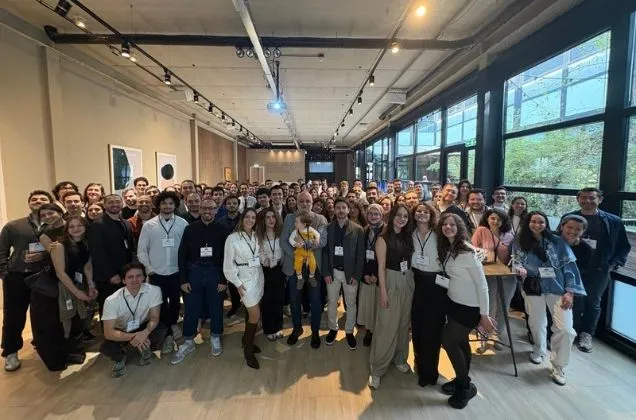
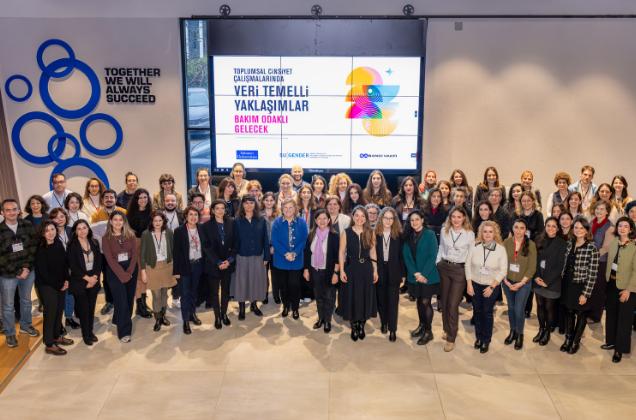
The Data-Driven Approaches in Gender Studies Meeting, organized for the first time this year by Sabancı University's Center of Excellence for Gender and Women's Studies (SU Gender) with the support of the Sabancı Foundation, was held on March 30th on Sabancı University's Altunizade Digital Campus. Approximately 100 participants from universities, NGOs, international organizations, and the private sector from 6 different provinces of Türkiye attended the meeting, representing nearly 70 institutions.
In her welcome speech, SU Gender Director Zeynep Gülru Göker summarized the meeting's aim as, "To bring together individuals who have been conducting data-driven studies in academia, civil society, and international organizations in the field of gender studies in Türkiye in recent years, and to create a platform where we can develop proposals together while addressing different dimensions of inequality," and stated that they aim to repeat the meeting at regular intervals. This year's meeting, organized under the sub-theme of "care-focused future," aimed to address care work and care policies from a multi-dimensional perspective.
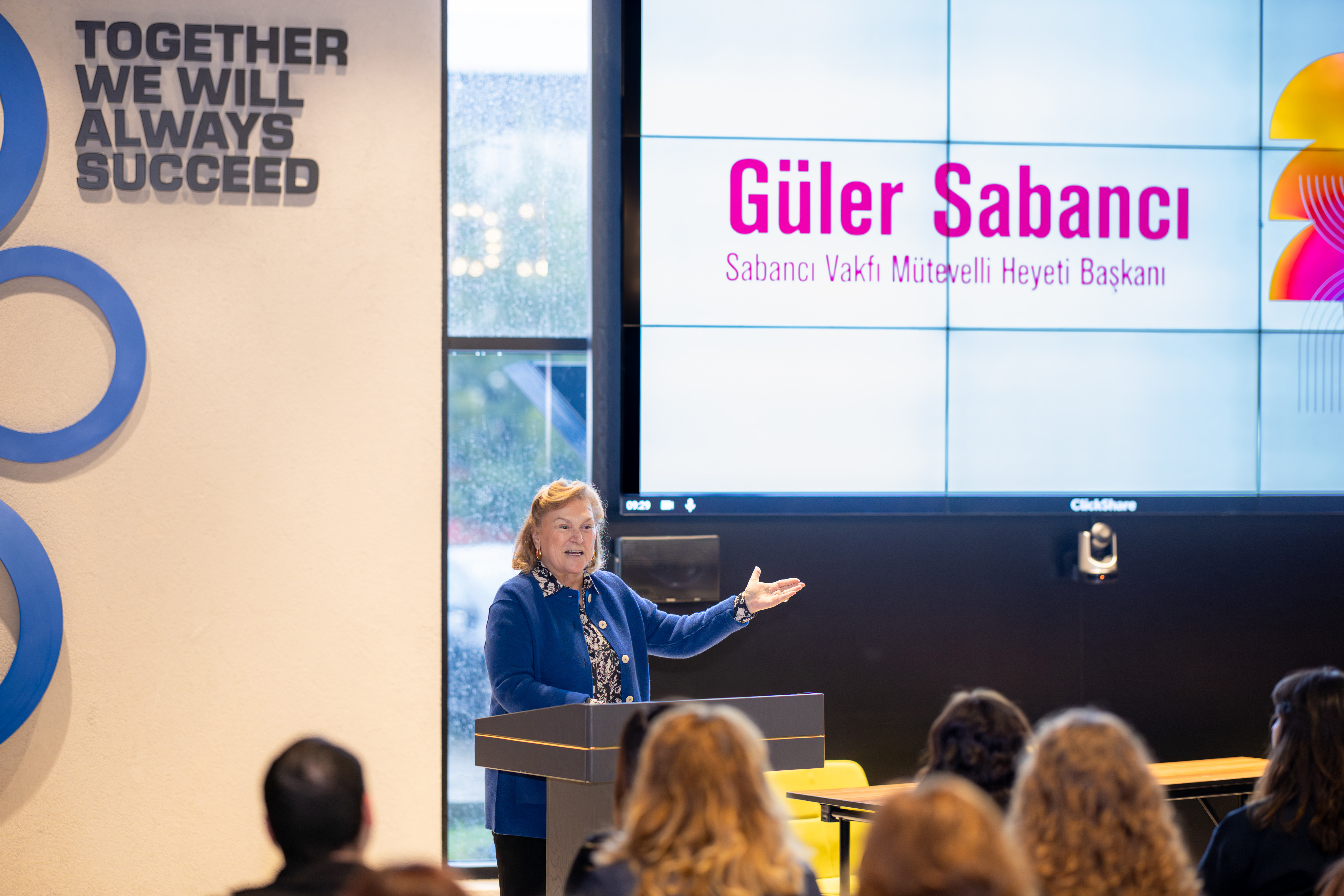
The opening speech of the event was given by Güler Sabancı, Chair of the Sabancı Foundation Board of Trustees. In her speech, Güler Sabancı drew attention to the importance of cooperation between academia and civil society, saying: "When academia works with civil society connected to the field, it amplifies the impact and makes a stronger contribution to policy processes. Because it is civil society that creates the impact in the field. In a way, civil society is the implementer. Therefore, it is now necessary to think, design, produce, and then measure the impact together."
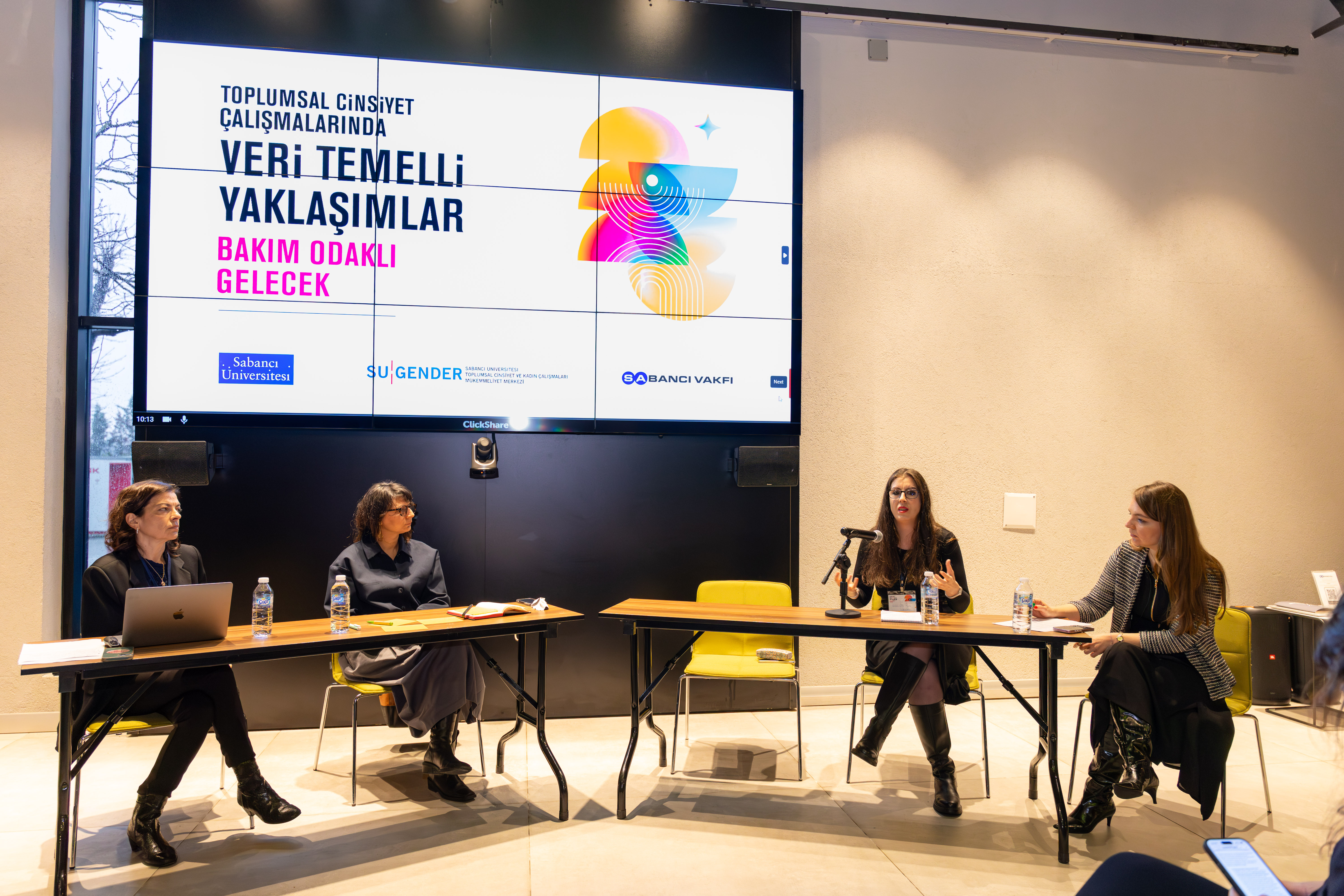
Data-Driven Care Needs from Different Perspectives
In the first panel of the day, moderated by Zeynep Gülru Göker from Sabancı University, İpek İlkkaracan from Istanbul Technical University, Özge İzdeş from Istanbul University, and Gülçin-Con Wright from TED University came together. In the panel titled "Demography, Transformation, and the Future," the issue of care was discussed from economic and social policy perspectives. The economic dimension of care services, the relationships between aging, poverty and care labor, the future of care labor in light of technological developments, intergenerational care dynamics and intersectional inequalities were discussed comprehensively. In the second panel of the day, moderated by Ece Öztan from Bağ Dernek, Oğuz Can Ok and Gözde Çörekçioğlu from Özyeğin University, İdil Seda Ak from the Disabled Women's Association, Itır Akdoğan from TESEV, and Özlem Aslan and Yeşim Sünbüloğlu from Kadir Has University came together to focus on institutions and civil society within the framework of the theme of "equality, diversity and sustainability". The relationship of care policies with institutional structures, inclusive practices, and sustainability perspectives were discussed. In both panels, the needs of data-driven studies and the proposed methods and tools for the future were discussed.
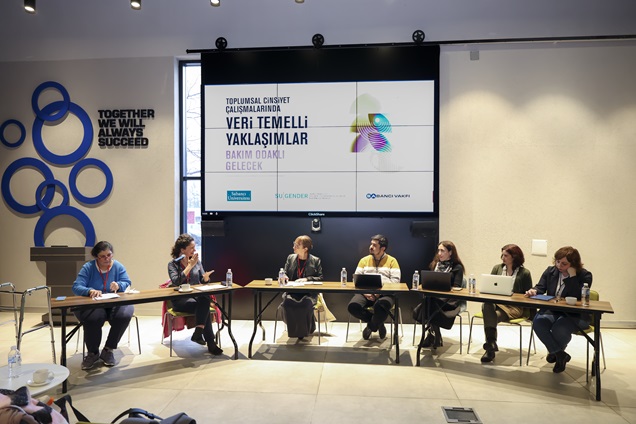
Simultaneous Workshops and Day-Long Discussions
Following the panels, simultaneous workshops continued throughout the day in morning and afternoon sessions, where participants engaged in in-depth discussions around thematic topics. The first theme, "Care-Oriented Institutions," featured Gökçesu Özgül (SU Gender) and Emirhan Deniz Çelebi (Dive-In Global), who discussed how organizational culture can be transformed to encompass care work. The second theme, focusing on technology and employment, included Semiha Arı and Nevgül Bilsel Safkan, Simla Yavaş (Sabancı Foundation), and Hülya Bayrak (UNDP), who presented the current state of care work and women's employment, and discussed the impact of technological transformation in this area. The third theme, focusing on data-driven studies, included Nükhet Sirman (Dissensus), Agata Fortuna and Tuğçe Aktepe Dursun (KUSİF), and Ülker Şener (CEİD), who addressed gender-sensitive data production, data interpretation, and social impact management processes in a multi-dimensional way.
Closing and Joint Evaluation
The closing session of the day was moderated by Begüm Acar from SU Gender. In this session, the workshop groups shared their discussions with all participants. In the closing session, the themes highlighted throughout the day, policy recommendations, and collaboration opportunities were reviewed together, bringing the meeting to a conclusion with collective sharing and evaluation.