02/04/2026
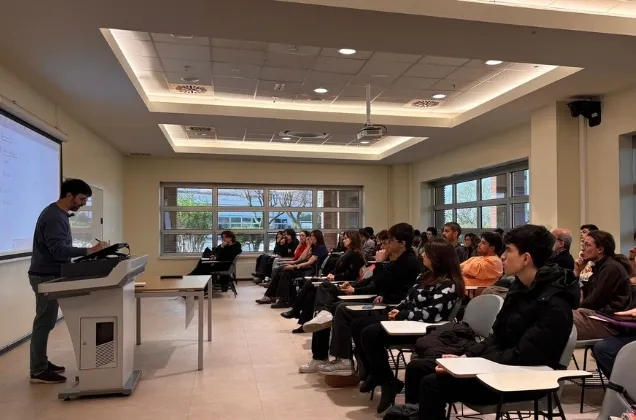
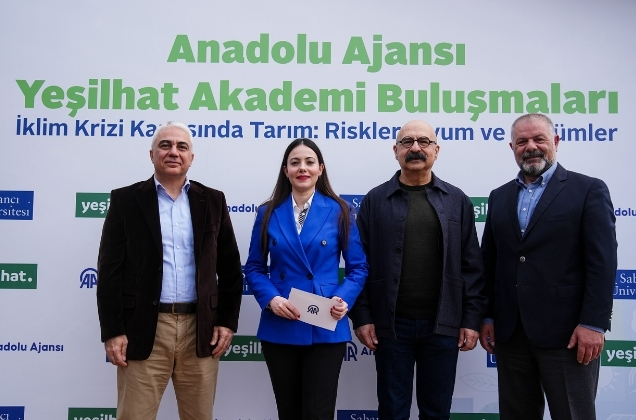
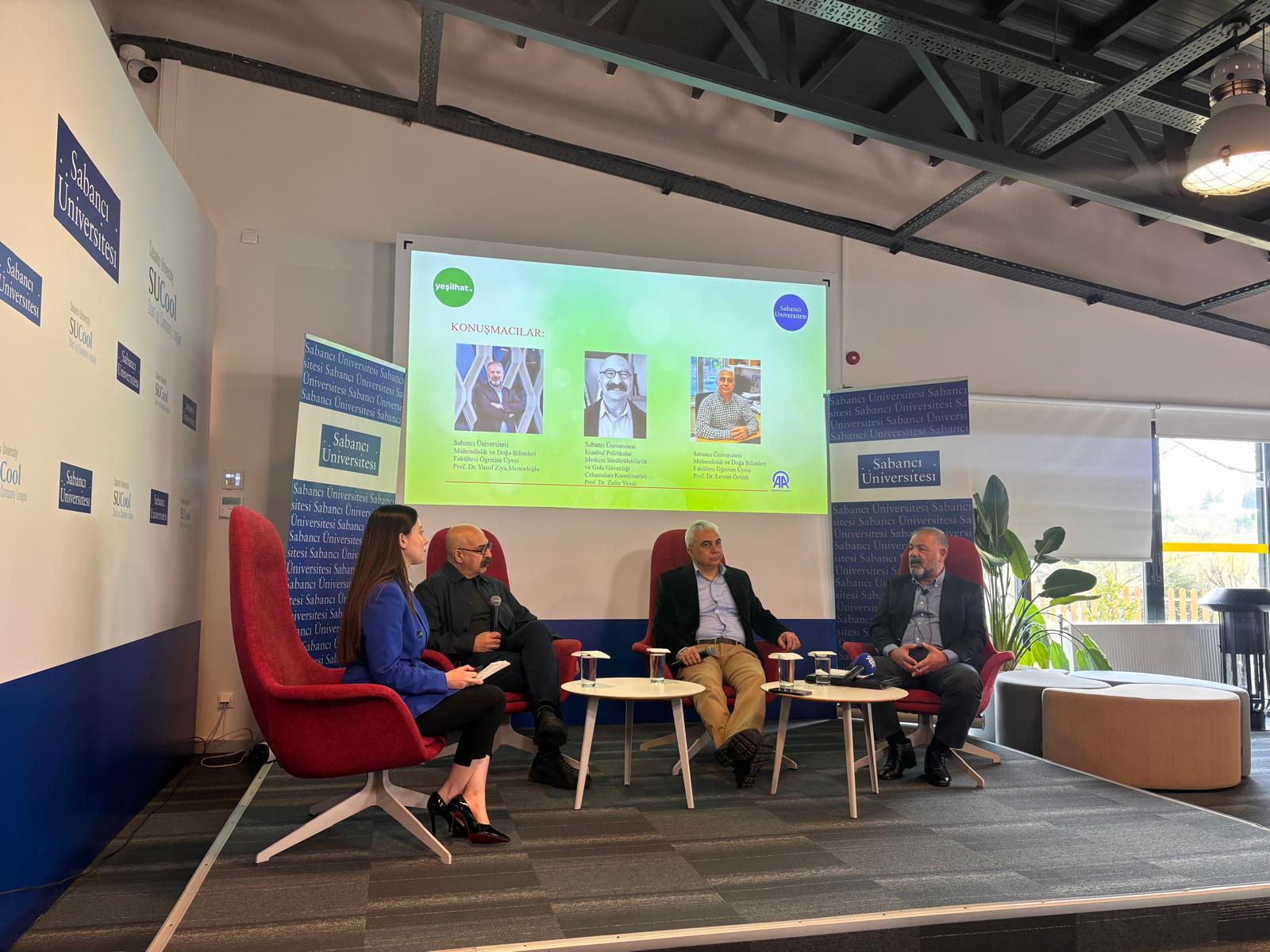
As part of the “Yeşilhat Academy Meetings” series of talks organized in collaboration with Sabancı University and Anadolu Agency, a talk titled “Agriculture in the Face of the Climate Crisis: Risks, Adaptation, and Solutions” was held at our university on March 25th. The speakers at the talk included Sabancı University Faculty of Engineering and Natural Sciences faculty members Prof. Dr. Yusuf Ziya Menceloğlu and Prof. Dr. Levent Öztürk, and Sabancı Business School member and Istanbul Policy Center Sustainability and Food Security Studies Coordinator Prof. Dr. Zafer Yenal.
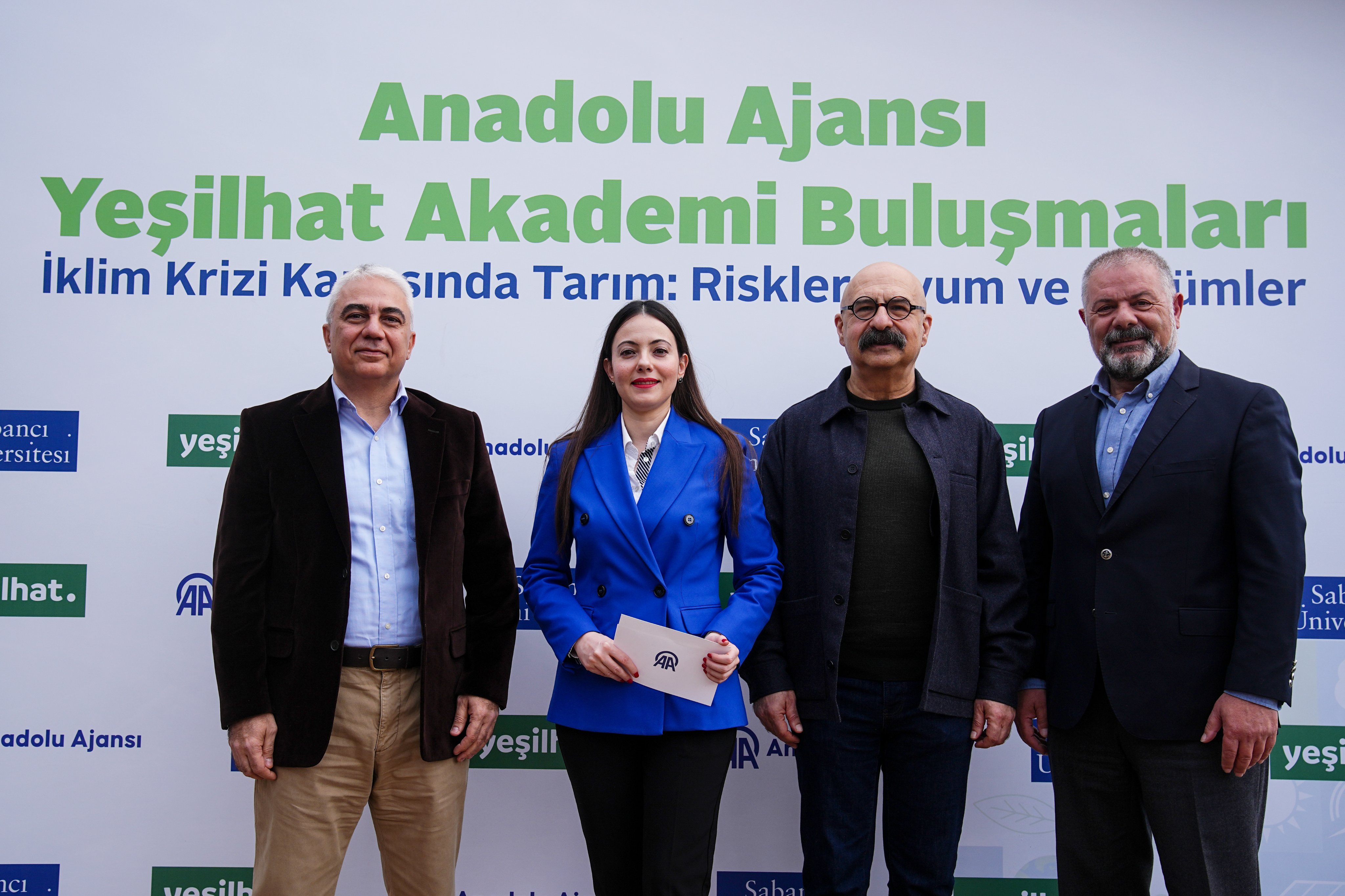
Yeşilhat Academy Meetings talk, held at SUCool, evaluated the pressure created by the climate crisis on agriculture, agricultural policies, and the role of technology in combating climate change. Prof. Dr. Yusuf Ziya Menceloğlu, who spoke first at the talk moderated by AA Green Line Correspondent Biriz Özbakır, stated: Professor Menceloğlu stated that the effects of the climate crisis are felt in all regions of Türkiye, and that serious yield losses are experienced in many products, from citrus fruits to grapes, olives to hazelnuts, due to heatburn, frost, drought, and pests. He said that these developments have led to decreases in agricultural production of up to 30% and that water scarcity threatens the sustainability of production.
"Increased temperatures also change pollen activity"
Professor Menceloğlu pointed out that one of the effects of climate change is the rapid depletion of underground water resources that have formed over centuries, leading to serious environmental problems such as sinkholes. He said, "Increased temperatures actually change pollen activity. Perhaps it also changes insect emissions. Similarly, increased use of pesticides also leads to soil poisoning. In terms of irrigation practices, when you use uncontrolled irrigation, the salinity level in the soil increases. As the salinity level increases, microbial life decreases. These are serious challenges that climate change brings to agriculture."
Menceloğlu pointed out that the simultaneous occurrence of drought and regional climate crises could seriously disrupt food supply and pose a major risk to food security, adding that in order for Türkiye to become resilient to these risks, the young population should be directed towards agriculture and industrial and efficient production models should be widespread.
"Developing new technologies related to climate change is very important"
Pointing out that young people are not showing enough interest in agriculture, Prof. Dr. Zafer Yenal stated that the solution is not only professionalization and industrialization, but also the creation of conditions that will ensure that rural areas maintain their attractiveness as living spaces and that producers remain there.
Pointing out that the rapid and challenging transformation of the widespread small producer structure in the country could lead to serious social problems, Prof. Dr. Yenal said that therefore, policies that facilitate the lives of producers and increase sustainability should be prioritized.
Emphasizing that agriculture is more than just a chain from field to table, but a vast ecosystem intertwined with many areas from culture to economy, gastronomy to technology, Zafer Yenal noted the following:
"Climate change is taking away what we have, existing resources are gradually drying up. For this reason, protecting biodiversity and trying to preserve our seed capacity is very important, but equally important is innovation. Developing new technologies related to climate change is also crucial, but it's not enough to just develop technology; you also need to bring that technology to the producers."
Zafer Yenal stated that increasing farmers' adaptation capacity to climate change is primarily possible by going into the field and communicating directly, cooperating with local authorities, and effectively delivering new technologies to producers. Prof. Dr. Yenal said that providing economic support and subsidies to accelerate the adoption of technologies in this process plays a critical role in reducing farmers' concerns.
"The real problem arises when plants experience multiple stresses"
Prof. Dr. Levent Öztürk stated that the country is in a stronger position than ever before in developing resistant and high-yielding plant varieties, and that new technologies enable the rapid and effective testing and improvement of genes, unlike the long process of classical breeding methods.
Pointing out that plants have advanced defense systems such as early detection mechanisms against heat and drought stress, but that these mechanisms can be insufficient when these stresses occur simultaneously, Levent Öztürk continued:
"Drought and heat are among the main problems that plants face. That is, if it were drought alone, or heat alone, if these stresses came one by one; plants have actually evolved to the level of being able to cope with them. There are various defense mechanisms, but when they are together, when they experience multiple stresses, the real problem arises here."
Prof. Dr. Levent Öztürk stated that agricultural technologies should no longer be a luxury and that it is important for technologies to be cheap and widespread in order to increase producers' access. Levent Öztürk, drawing attention to the fact that producers can reduce their costs by making joint purchases and productions through methods such as data cooperatives, stated that the rapid adaptation of new technologies to the field through cooperation between industry, the state and local administrations is critical for the widespread adoption of data cooperatives.