14/04/2026
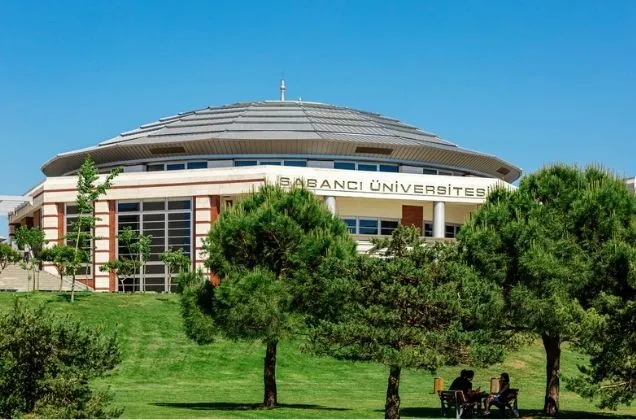
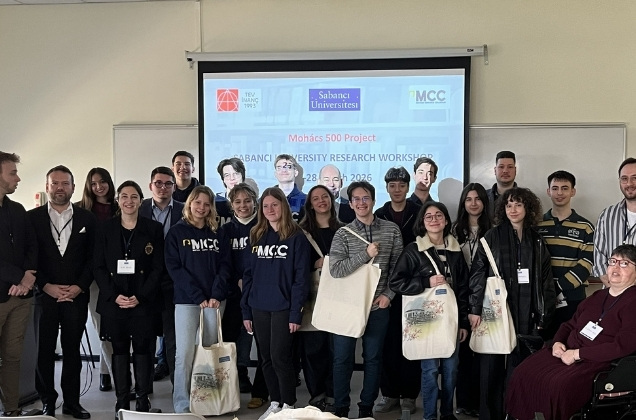
On March 27-28, 2026, Sabancı University Foundations Development Humanities group hosted students from the Hungarian Mathias Corvinus Collegium (MCC) Learning Institute and TEV İnanç High School in an educational twinning project aimed at enabling students to contribute to the Hungarian Mohács 500 anniversary with their own semi-academic articles.
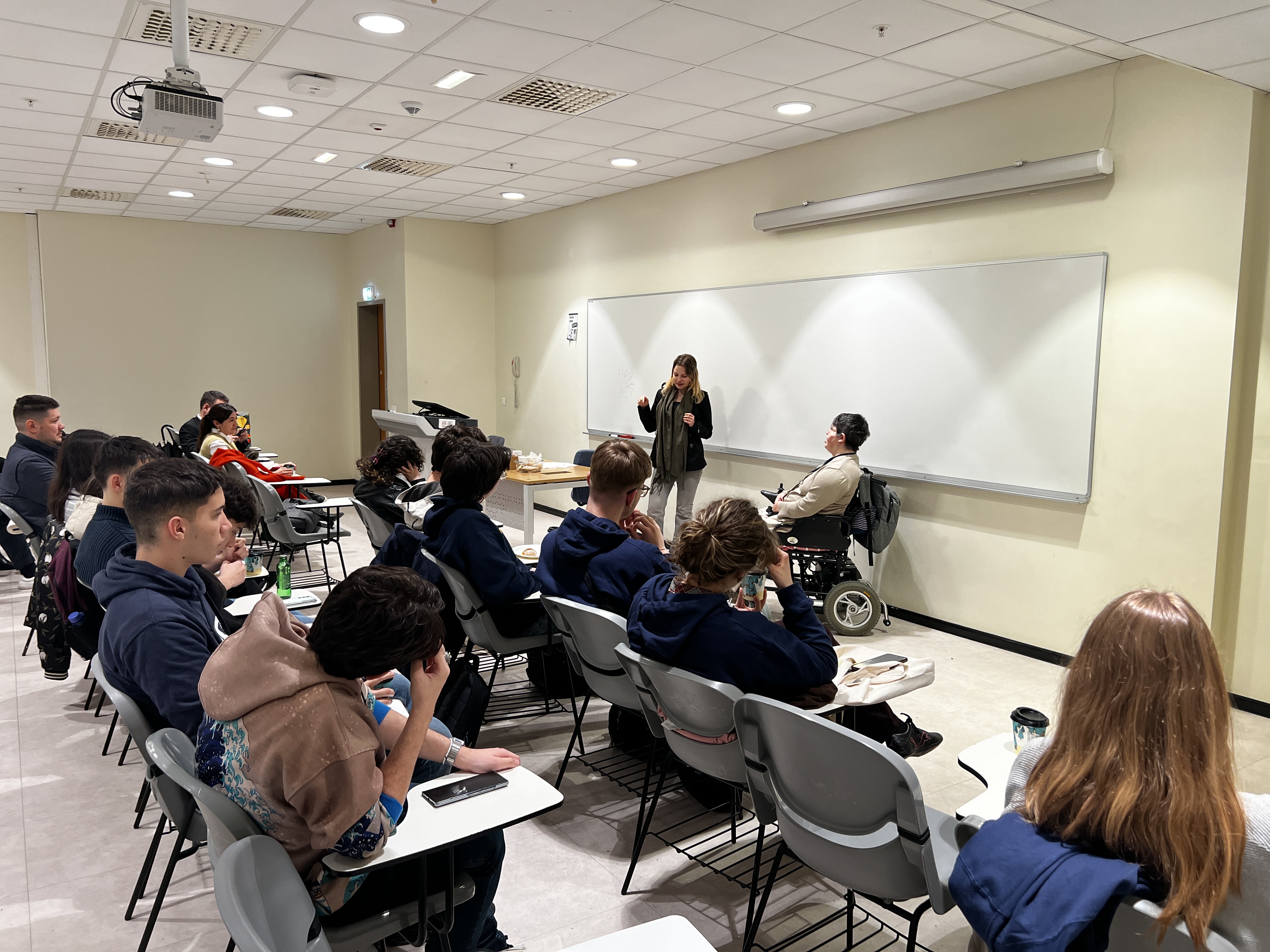
The project teams who have been working through months of online collaboration came together in a two-day sprint of article writing on campus with the guidance of Sabancı University’s N. Zeynep Yelçe and Ela Bozok, who are experts in historical research that focuses on the Battle of Mohács. Participants had the opportunity to study at the Sabancı University Information Center and benefit from the university’s resources as well as expert guidance.
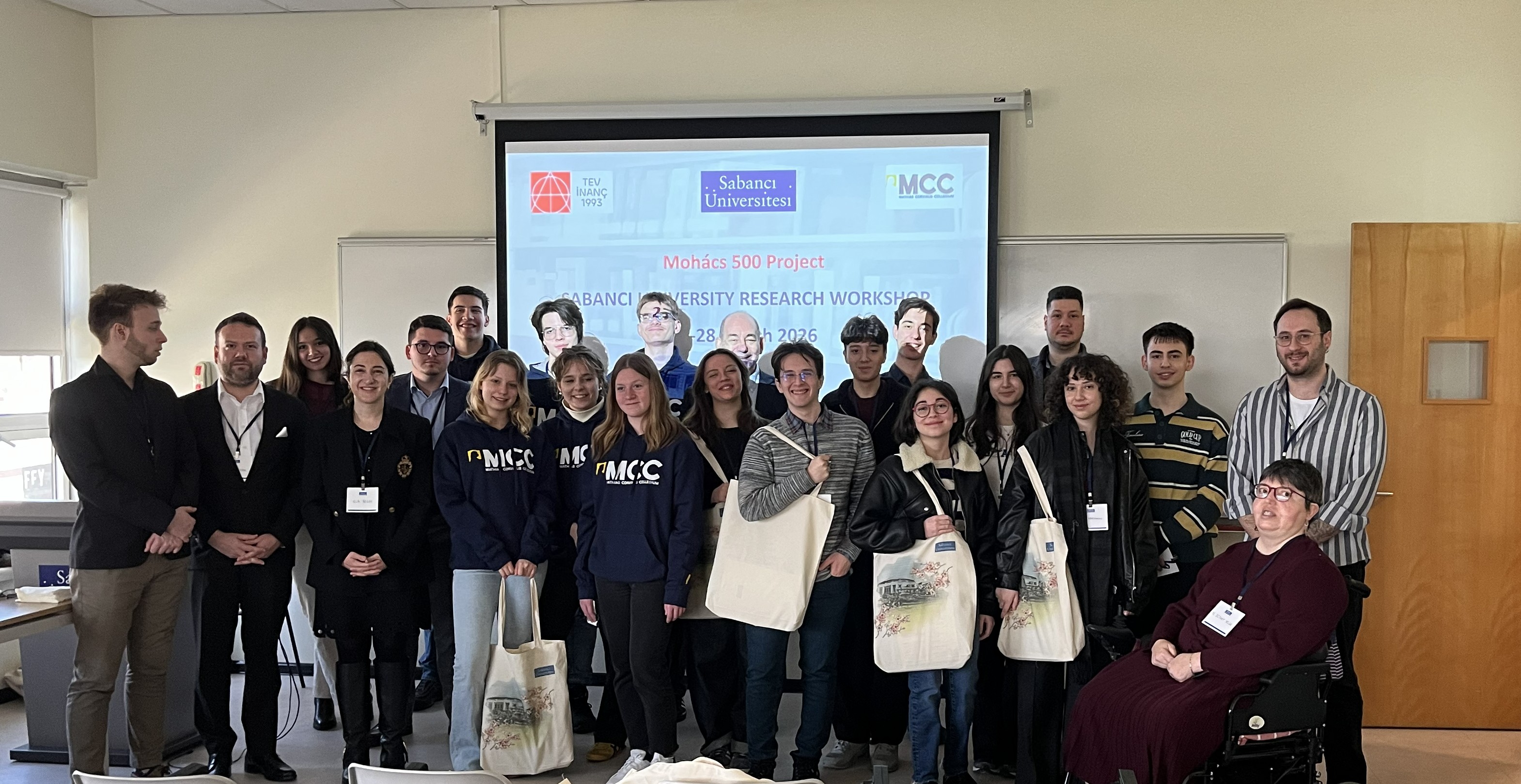
In this cross-national twinning programme, students worked together online in international teams ( 2 students from Turkey and 2 from Hungary). Each team had a leader responsible for the coordination and organization, while each group was also supported by a professional mentor from MCC High School and TEV İnanç. The project was reviewed by Mohács500, MCC Rubicon, MCC Magyar Összetartozás Intézete, alongside N. Zeynep Yelçe and Ela Bozok. 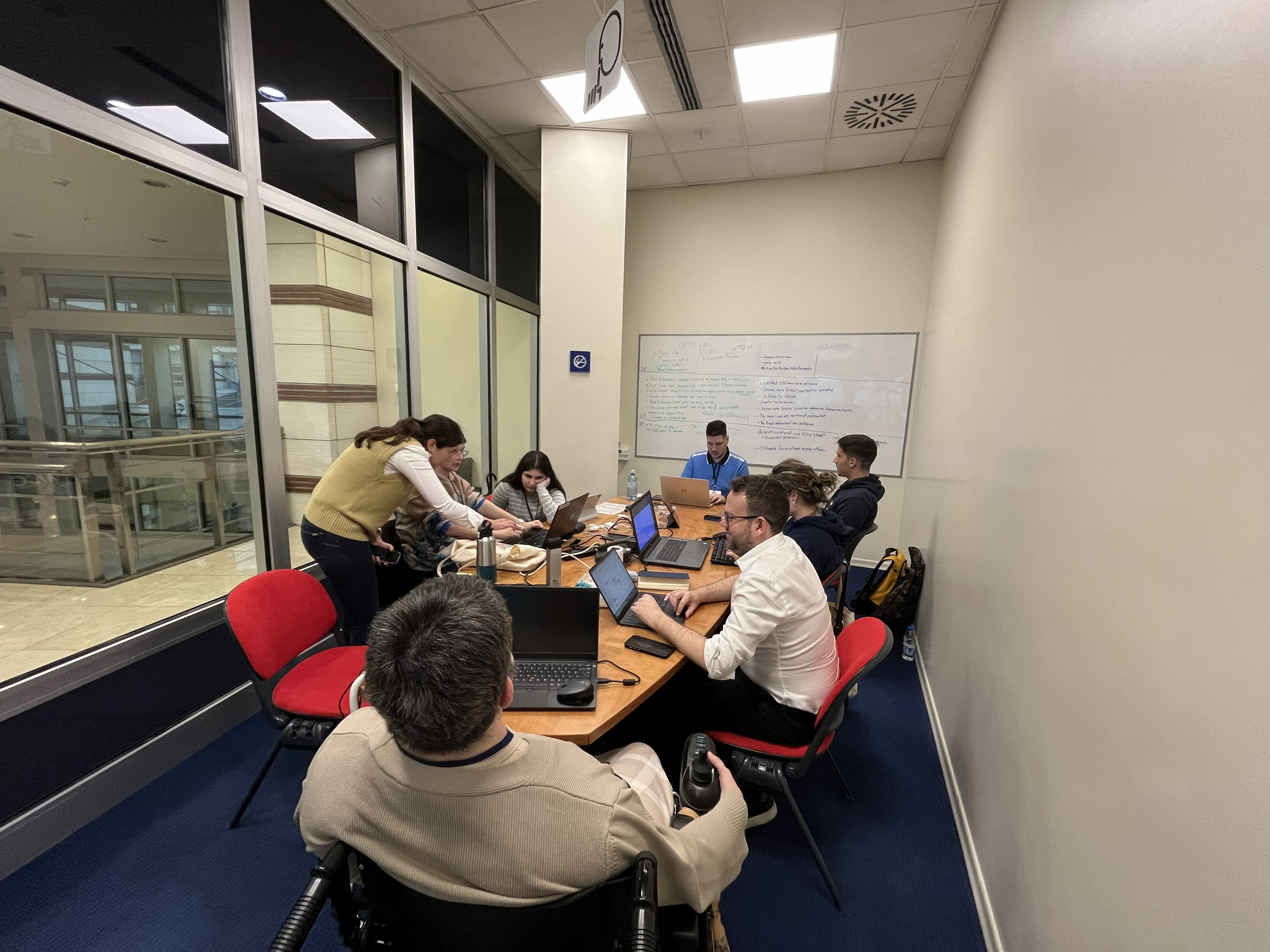
In their keynote speech, N. Zeynep Yelçe and Ela Bozok introduced project AHTO (“Ottoman Empire and the Circulation of Information in the First Half of 16th Century”), currently hosted by Sabancı University Digital Humanities Lab. They emphasized the joint trajectories between the projects and their ongoing academic interest in the subject. They also reported that their agenda in the PROJ201 course, a core component of the Foundations Development Program (FDP), is to collaborate with Sabancı University students to analyze how the memory of the Battle of Mohács is reflected in the mainstream media such as national newspapers, X, YouTube and TikTok.
Mohács 500 project was formed to create a collaborative learning environment for MCC and TEV İnanç students to explore Turkish/Ottoman and Hungarian historical relations and culture. Students had the opportunity to explore Turkish and Hungarian historical narratives of the era through innovative methods with tutoring and external reviewers. The scope of the project includes a semi-academic article produced by four different groups of students, a graphic poster summarizing the research findings with infographics, a podcast episode introducing the conclusions of cca. 20 minutes, and a presentation of the outcomes in the closing event.
The fields of study include various perspectives on Turkic-Hungarian origins, mythology, linguistics, history, and archeology. A multi-dimensional examination of Ottoman rule in the Hungarian Kingdom, shared and imported cultural values, Turkish-Hungarian heritage, alongside the conflicting perspectives on historical figures from the Ottoman-Hungarian wars, allowed students to scrutinize the lasting impact of the Battle of Mohács. While students analyzed historical phenomena like the Gül Baba Bektashi order, the spy networks of the Ottoman Empire, and the alliance between Hungary and Turkey in the First World War, they also engaged with the contemporary issues of Hungarian political emigration in Turkey, and school life and comparative curricula analysis, posing questions about how they learn history.
About the schools involved in the project
TEV İnanç is a private high school for gifted students, in Gebze, İstanbul. The school accommodates 256 students from 40 cities around Türkiye. 812 have graduated from TEV İnanç, with approximately 25% of them at Caltech, Columbia, Duke, Harvard, Manchester University, MIT, Stanford, University of Chicago, and Yale. The rest mostly studied or are studying at Boğaziçi, Koç, METU, Bilkent, and Sabancı University in Türkiye.
The Learning Institute, established in December 2021, operates with Mathias Corvinus Collegium (MCC), Central Europe’s leading educational institution and research center. The Institute comprises educational researchers and experts committed to objectively analyzing global 21st century educational trends and translating them into competitive solutions for Hungary. The Learning Institute offers pedagogical evaluation and development advice for its training programs, demonstrating the pedagogical added value of MCC and fostering educational innovation. Furthermore, the Institute promotes synergies and collaboration with other MCC institutes and schools, contributing to the training and professional orientation of MCC students.