

22/04/2026
With Prof. Dr. Ayşegül Toker becoming dean in 2024, Sabancı Business School has experienced remarkable developments, especially in the last two years. Firstly, the school's international visibility has gained significant momentum. This can be seen through international rankings and accreditations. Another important development is the launch of the Sustainability Minor at the school. This initiative is a "first" in our country. A Marketing Minor will also be launched next year.
A Significant Crossroads
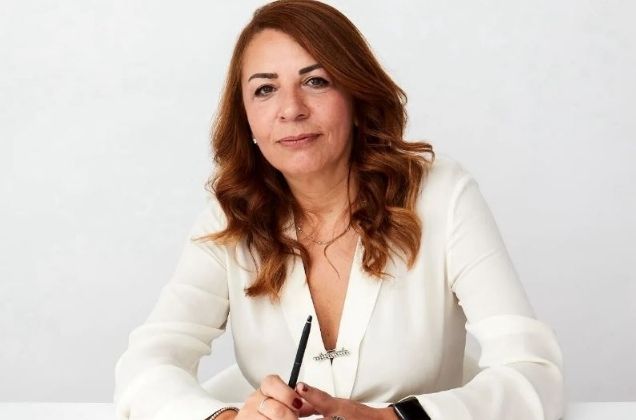
Toker points out that the establishment of the Sustainability Minor, which she calls her "greatest contribution" since joining Sabancı University as a faculty member in 2023, is significant.
Toker's academic background shows that she has a holistic perspective on the relationship between business, management, and society. This approach already aligns with the fundamental logic of sustainability: not separating economic success from social and environmental impacts.
In particular, the increase in sustainability-themed courses and programs, the strengthening of the interdisciplinary approach, and the integration of this issue with international networks during her deanship at Sabancı Business School show that sustainability has now become an institutional priority.
The first signs of this approach could be seen in the workshop titled "Sustainability at the Crossroads: What is Next?", held on October 21, 2024, hosted by Sabancı Business School. This workshop discussed how the issue of sustainability is addressed both in the academic world and in the business world.
Speaking at the opening of the workshop, Toker expressed her views as follows: “At Sabancı Business School, our vision is to create a world-class academic environment that integrates innovative research and effective teaching. We are also aware of the importance of responding to the needs of the business world and society in creating social impact. To achieve these goals, our school focuses on four key areas: digital transformation, business analytics, entrepreneurship, and sustainability. Among these, sustainability stands out as a critical focus point, becoming more important than ever due to the increasing challenges. We are witnessing the impact of these challenges on our planet and societies more and more every day. In short, it has become clear that adopting sustainability practices is no longer just an option, but a fundamental requirement for ensuring a livable future.”
Opening of the Sustainability Minor
Toker explains the story of the opening of this minor as follows: “Our Sustainability Minor program was designed as a truly interdisciplinary structure born from the partnership of three faculties. At Sabancı Business School, we undertake the academic coordination of the program. We officially started the program in the 2025-2026 Academic Year. However, we actually took the first step a semester earlier by offering MGMT 301 - Introduction to Sustainability, the only compulsory course of the program. The course is taught by our Business School faculty member, Zafer Yenal.
In addition to our courses that have been successfully running for years, we continue to enrich our program catalog with new and up-to-date content. One of the prominent new courses of this semester is MGMT 424 - Leadership in Sustainability, taught by our professor Itır Göğüş, which combines leadership vision with sustainability. While our professor Öykü Arkan Tunç's MGMT 333 - Business Ethics and Social Sustainability course focuses on ethical decision-making processes in the business world, the course MGMT 310 - Humanitarian Aid Management and Sustainability, taught by Asma Hedi Nairi, addresses a critical area ranging from civil society to crisis management from an academic perspective. Another innovative course this semester is IF 201 - On Food: Scientific, Technological and Political Approaches, which examines the intersections of food, agriculture, technology, and politics through an interdisciplinary approach. Coordinated by Professor Zafer Yenal, this course also features contributions from academics in various fields. Our course pool is further enriched by contributions from other faculties; we are proud to offer this diversity to our students through the Sustainability Minor Program, which best reflects our university's interdisciplinary approach.
Currently, the highest demand comes from students in the Faculty of Engineering and Natural Sciences. The convergence of different disciplines on this common ground demonstrates how beautifully we serve our university's vision of 'creating and developing together. '"
A 33-Place Rise
The Financial Times (FT) ranked the Executive MBA (EMBA) program at Sabancı Business School at number 48 in its 2025 global ranking. It was ranked 81st in 2023. What does this 33-place rise mean?
Toker explains this rise as follows: “To correctly interpret this rise, it is necessary to look at the criteria considered when compiling the list. FT evaluates not only the academic structure of the program, but also the career development of graduates, salary increases, the female-male ratio in the faculty, the quality of research outputs, ESG (Environmental, Social, Governance) and sustainability focus, and even carbon footprint performance. Therefore, this remarkable rise of our faculty in the FT list is the result of multidimensional development.
Indeed, we have made concrete improvements in all of these areas in the last two years. The salary increase rate of our graduates after graduating from the program rose from 51% to 72%. Our female faculty ratio increased from 33% to 37%. By improving our carbon footprint performance, we rose from 93rd to 79th place in this category. As you know, Sabancı University received the ISO 14064 Carbon Footprint Verification Certificate for the first time. We have made progress in the teaching hours allocated to ESG and net-zero targets, and we have also increased our international faculty ratio. The cumulative effect of these developments propelled us into the top 50.
I see this not as an individual achievement, but as a result of the team spirit we all demonstrated by focusing on the same goal. This FT success, coming immediately after receiving our second international accreditation, proved that we are on the right track and has been a great source of motivation for all of us.”
Success Across Europe
We asked our dean what it means for the MBA program to be ranked 64th in Europe in the QS (Quacquarelli Symonds) rankings in 2025:
Toker responded to this question as follows: “Being ranked 64th across Europe confirms that the Sabancı MBA program is among the most prestigious in critical areas such as employability and academic reputation. For us, it is another indication that we are reaping the rewards of our internationalization efforts. The fact that Özyeğin University from Türkiye is ranked 76th* in the list is very valuable in terms of demonstrating the potential of our country in higher education.”
Marketing Minor
Knowing Toker's particular interest in digital marketing, we asked whether she was considering launching such a minor. The response was more comprehensive: “Instead of limiting ourselves to digital marketing, we are taking a much more inclusive and strategic step by launching our Marketing Minor program in the 2026-2027 Academic Year. We all know that marketing is no longer just an advertising or promotional activity; today, marketing is at the very heart of organizations, from product design to data usage. To address this need, we have created a structure in which students from different disciplines can view their own expertise from a marketing perspective. We have a flexible system in the program. After taking the core courses, our students will be able to chart their own paths according to their interests. I invite all our students to share this excitement next year.”
AACSB, AMBA, and EQUIS Accreditations
The AACSB (The Association to Advance Collegiate Schools of Business) accreditation, which demonstrates that business schools provide world-class education, evaluates schools based on more than 20 criteria, including teaching, curriculum, academic staff, and research output. Only a small percentage of business schools worldwide hold this accreditation.
Sabancı Business School has achieved great success by receiving this accreditation for the third time. It first received this accreditation in 2012. This has increased the school's recognition, strengthened the global job and academic opportunities for its graduates, and demonstrated the school’s commitment to continuous quality improvement.
In addition, our school has further strengthened its international quality assurance by obtaining AMBA (Association of MBAs) accreditation in 2025. The first stage of the EQUIS (European Quality Improvement System) accreditation process has also been successfully completed, and we aim to achieve the triple crown accreditation title upon completion of this process in 2027.

Prof. Dr. Ayşegül Toker
Prof. Dr. Ayşegül Toker completed her PhD in Industrial Engineering at the Middle East Technical University in 1994 and subsequently worked as a visiting researcher at The Hong Kong Polytechnic University. In 1997, she became a faculty member in the Department of Business Administration at Boğaziçi University, conducting research on the Internet and new technologies, focusing on the adaptation of new technologies by consumers and companies.
In addition to her academic work, between 2011 and 2013, Toker served as the Coordinator of the Social Media Team, managing the university's presence and strategy across all social media platforms. From 2016 to 2018, she held the position of Director of the Boğaziçi University Entrepreneurship Center, developing projects to enhance the entrepreneurial ecosystem and culture. Ayşegül Toker served simultaneously as the Rector's Advisor responsible for budget and strategy and Head of the Business Administration Department between 2008 and 2012, and as the Dean of the Faculty of Economics and Administrative Sciences at Boğaziçi University between 2012 and 2021. After leaving Boğaziçi University in 2022, Toker began working at Sabancı Business School in 2023 as the Coordinator of Innovation, Entrepreneurship, and Industrial Relations. She has served as the Dean of the School since 2024. Toker, who incorporates new topics into her research areas due to developments in information and communication technologies, has published numerous prestigious academic journal articles, national and international conference papers, books, and book chapters on digital marketing, social media, location-based marketing, mobile marketing, virtual communities, customer relationship management, and e-commerce.
She is one of the authors of the book Mobile Marketing: Fundamentals and Strategy (McGraw Hill, 2011).
Sources:
Gökçe Çalışkan: https://www.topuniversities.com/mba-rankings/europe/2025?countries=134&sort_by=rank&order_by=asc


