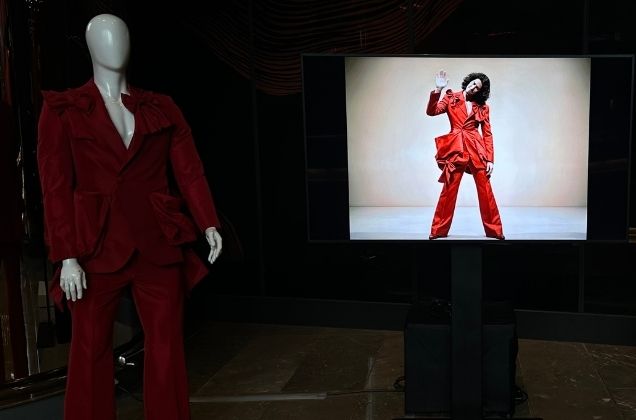
05/05/2026
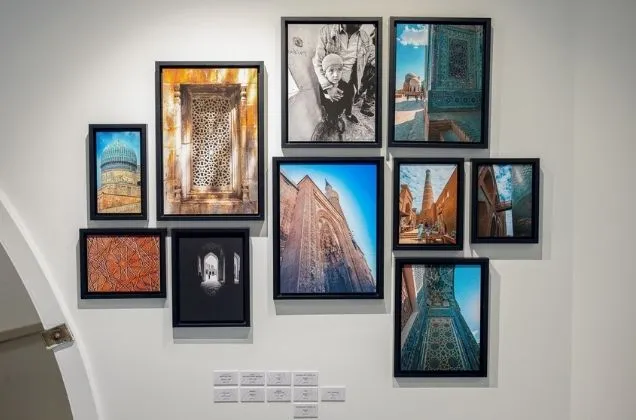
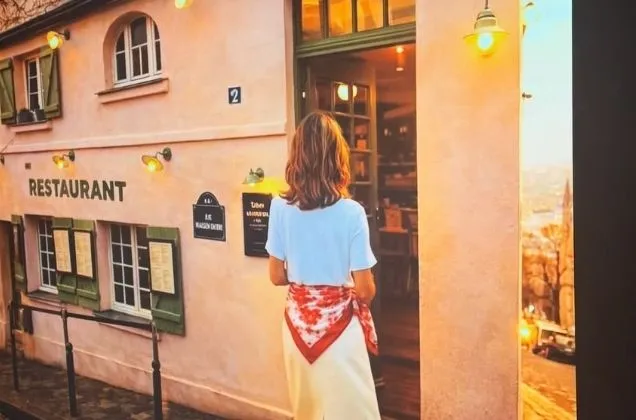
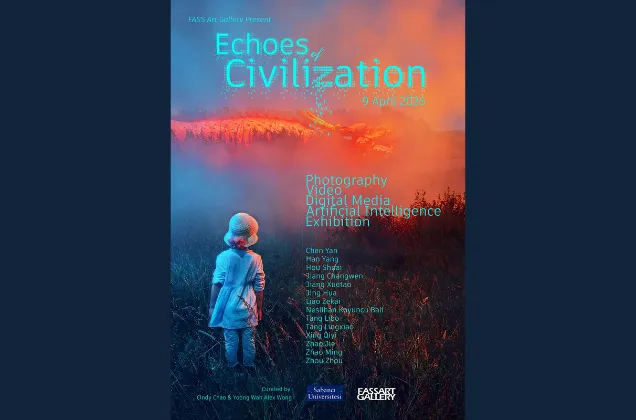
Projects developed by Sabancı University students focusing on artificial intelligence and creativity were presented to art enthusiasts within the scope of Sónar Istanbul 2026. The exhibition, which brought the university's academic output to an international stage, consisted of the final projects of the "Artificial Intelligence and Creativity" course led by Prof. Dr. Selçuk Artut, a faculty member of the Sabancı University Faculty of Arts and Social Sciences. The exhibition featured works by Rasim Qara, Asude Alim, İpek Sakız, Yağız Tüten, Ali Özgün Akyüz, and Aslınur Kurt.
Sónar Istanbul, which took place at Zorlu PSM and celebrated its 10th anniversary this year, stands out as one of the world's most important creative technology festivals with its scope ranging from electronic music to digital art. The exhibition, which is part of this powerful platform, presented a remarkable selection, inviting the audience to reflect on production processes with the projects of the students, who treated artificial intelligence not only as a tool but also as an active component of the creative process. Following this remarkable exhibition, we met with Sabancı University students whose projects stood out, and discussed their production processes and approaches to the relationship between artificial intelligence and art.
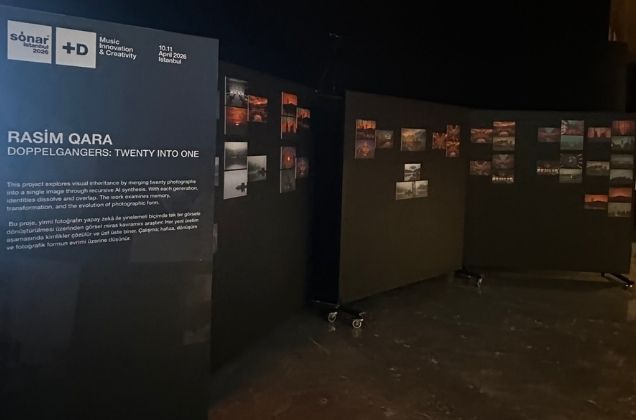
Rasim Qara – “Doppelgängers: Twenty Into One”
What was the biggest trigger for you in developing this idea? Was it personal curiosity, a technical problem, or an artistic quest?
This project actually stemmed from both personal curiosity and an artistic quest. I wanted to see how the identities of photographs would change when they were repeatedly combined with artificial intelligence. Initially, it was more of a technical experiment, but as the process progressed, it gained a more conceptual dimension. Watching how the images transformed into each other over time became my main motivation. This turned the project not just into an experiment, but into a research project.
What was the most challenging or surprising moment in the production process? Were there any unexpected results or ideas that changed direction, especially when working with artificial intelligence?
The most challenging and interesting part of the production process was that the results could not be fully predicted. Some of the visuals evolved in very different directions than I expected, which caused me to rethink the process. While it initially seemed like a problem, it actually became one of the project's strongest aspects. When working with AI, you need to strike a balance between control and chance. This makes the process more exploratory.
How do you think the convergence of artificial intelligence and art transforms creativity? Do you see this relationship more as an expansion or a break in the nature of art?
I don’t think artificial intelligence limits creativity; on the contrary, it expands it. But this expansion also causes us to question the nature of art production. The artist's role changes a little, because some of the control is shared with the system. Therefore, it can be seen as both an opportunity and a breaking point. This dual situation makes the process more interesting.
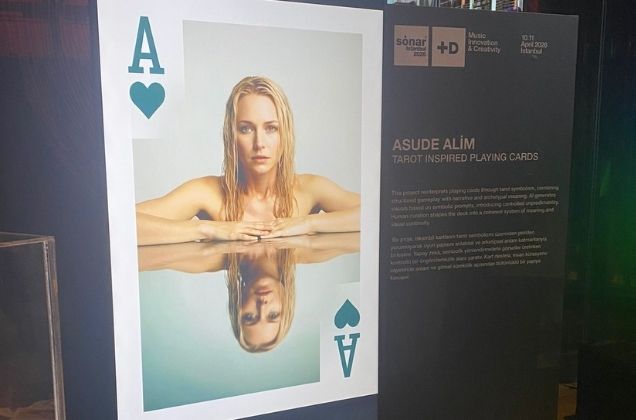
Asude Alim – “Tarot Inspired Playing Cards”
What was the most challenging or surprising moment for you in the production process? Were there any unexpected results or changes in ideas, especially when working with artificial intelligence?
I was very surprised that those detailed prompts I wrote worked like modern "magic" and produced much deeper visuals than I expected. Although I initially found it challenging that AI sometimes left the forms too general, I later realized how well this suited the spirit of those "archetypes" in the cards and shifted the the project in that direction.
What were your sources of inspiration? Did you draw from art history, contemporary digital culture, or other disciplines?
My greatest inspiration came from the symbolic language of classical tarot and the simple, minimalist visual discipline of playing cards. Taking these ancient systems and pitting them against the machine intelligence that is the mode of production in today's digital world was what I primarily drew from.
How do you think the convergence of artificial intelligence and art transforms creativity? Do you see this relationship more as an expansion or a break in the nature of art?
I think it's definitely an "expansion of creativity" because artistry is evolving from mere manual skill to "conceptual orchestration." The artist is no longer just someone holding a brush, but someone managing possibilities and designing systems; this is something that pushes boundaries incredibly.
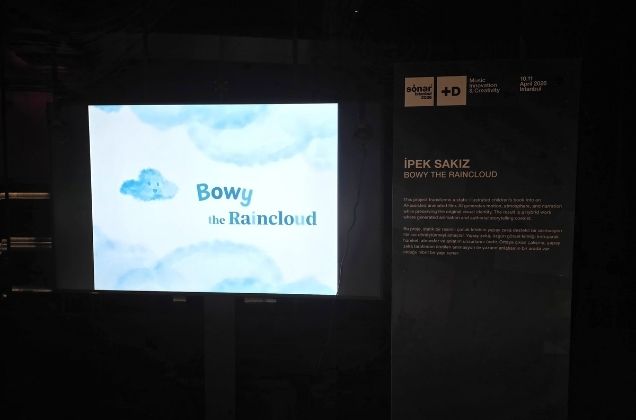
İpek Sakız – “Bowy the Raincloud”
What was the biggest trigger for you when developing this idea; was it personal curiosity, a technical problem, or an artistic quest?
This project actually started more from artistic curiosity, but there was also a technical problem. I already had a completed children's book, and what I was curious about was: How does the narrative change when movement and sound come into play instead of the rhythm of turning the pages in this story? Technically, I also had the question in mind of how I could make this transformation without producing animation from scratch. Artificial intelligence here was not a solution, but rather an area where I could test this curiosity.
What was the most challenging or surprising moment for you in the production process? Were there any unexpected results or ideas that changed direction, especially when working with artificial intelligence?
The most challenging part was the consistency of the artificial intelligence. It had a lot of difficulty in maintaining the characters and drawing style. Sometimes the form of the character changed, sometimes things that were not in the scene were added. But the most critical problem was typography. The artificial intelligence perceived the text not as a narrative element, but as something visual, and distorted it. At this point, the direction of the project actually changed. Instead of having AI do everything, I decided to divide the tasks. So, the AI generated the movement, but the typography remained entirely under my control. This was the most important turning point in the process.
How do you think the convergence of artificial intelligence and art transforms creativity? Do you see this relationship more as an expansion or a break in the nature of art?
I don’t think artificial intelligence destroys creativity, but it changes its nature. Previously, production was more linear: idea - production - result. Now there's more of a cycle: idea - production - decay - re-decision - re-production. So, I see it more as an expansion than a break. But this expansion also brings with it a loss of control. So being creative is no longer just about producing, but also about choosing, eliminating, and directing.
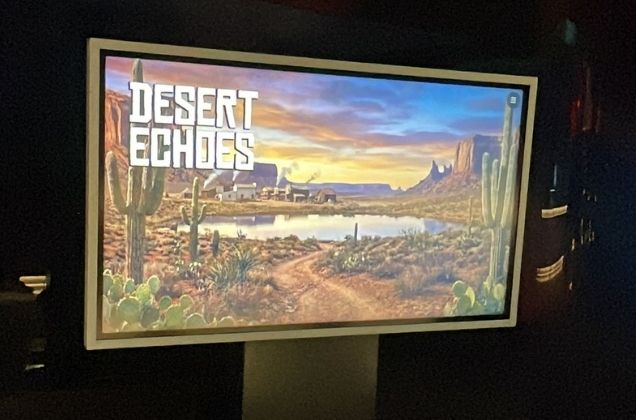
Yağız Tüten – “Desert Echoes: An Interactive Game Created with Generative AI”
What was the biggest trigger for you when developing this idea? Was it personal curiosity, a technical problem, or an artistic quest?
My interest in game development, and especially interactive storytelling, formed the basis of this project. When this interest intersected with the perspective I gained in the AI & Creativity course, I wanted to try generative artificial intelligence end-to-end in a game production. The trigger wasn't just curiosity, but more the question of "Can I really do this?"
How did you position artificial intelligence in your projects? Did you use it as a tool, or did you think of it as an active "co-producer" in the process?
I saw the artificial intelligence tools as part of my team. I had a visual director, a sound designer, a screenwriter; they were all artificial intelligence. But I was the one who directed, rejected, or approved the output of each of them. It would be more accurate to describe the process as a director-team relationship. The ideas came from me, the production from them, and the final decision was again from me.
What was the most challenging or surprising moment in the production process? Were there any unexpected results or changes in ideas, especially when working with AI?
The most difficult part was video production. A cup that wasn't in the scene would teleport, an extra character would appear, you'd constantly have to recreate it, and that would take a lot of time. Maintaining consistency was also a matter of serious patience. But the most surprising moment came from a completely different place: While producing a scene of a cowboy on horseback, a location name similar to the HUD in Red Dead Redemption 2 appeared in the bottom right corner of the video. It was concrete evidence that the model had been trained on that data, both thought-provoking and unsettling.
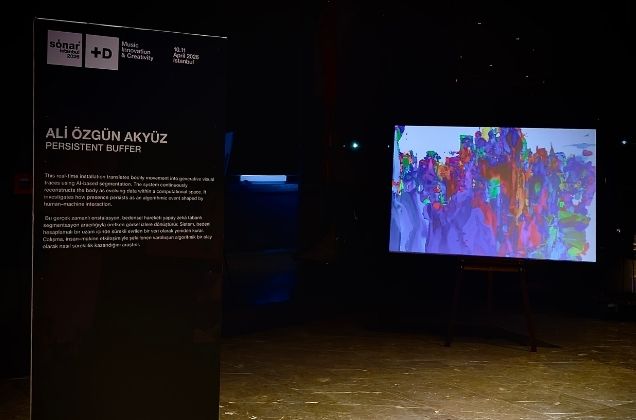
Ali Özgün Akyüz – “Persistent Buffer”
What was the biggest trigger for you in developing this idea? Was it personal curiosity, a technical problem, or an artistic quest?
Honestly, all three intertwined, but the starting point was personal curiosity. The idea that a person entering a space leaves a trace of their own presence there and how they experience that space. Then this curiosity turned into a technical problem. How can I perceive and visualize the human body in real time, without delay?
What was the most challenging or surprising moment in the production process? Especially when working with artificial intelligence, were there any unexpected results or changes in ideas?
The surprising moment was very clear. Sometimes the machine interpreted the body more than I wanted, it went beyond the edges of the perceived silhouette, it produced unexpected forms around the body. At first, I saw this as a mistake, I tried to control it. Then I realized that this loss of control is exactly what forms the heart of the work. The body is there, but it's not exactly there; the machine sees it, but it retells it in its own language. The moment I decided to make the mistake a part of the work instead of correcting it, the project opened up to a completely different place for me.
What were your sources of inspiration? Did you draw from art history, contemporary digital culture, or other disciplines?
My sources of inspiration are quite mixed. On the philosophical side, Merleau-Ponty's phenomenology of the body was at my bedside; the moment the distinction between the "seeing body" and the "seen body" is resolved is exactly what this project does. Bourriaud's relational aesthetics were also decisive; the idea that the work is in the encounter, not the object, is a starting point for me.
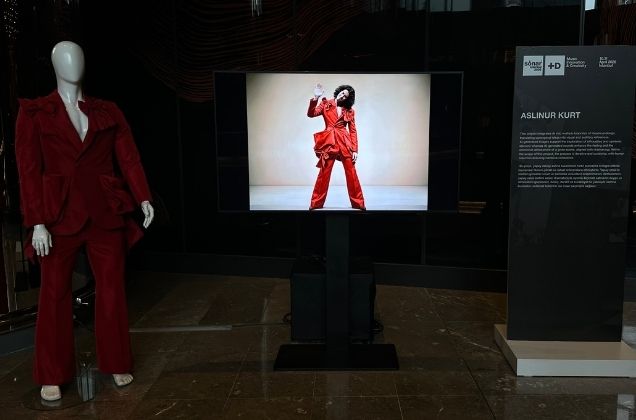
Aslınur Kurt – “A Midsummer Night’s Dream - Creative Manual”
What was the biggest trigger for you in developing this idea? Was it personal curiosity, a technical problem, or an artistic quest?
What triggered me in developing this idea was actually a combination of personal curiosity and a need I observed in the production process. In theatre, the transformation of an idea into a stage production requires considering many layers together, such as costumes, stage design, lighting, sound, and atmosphere. I wondered if these layers could achieve a more integrated visual and auditory language before the production began. Since I am involved in both design and theatre practice, I wanted to use artificial intelligence not only for rapid visual production but also to imagine, test, and develop a stage world at an early stage. Therefore, the starting point of the project for me was this question: How can we build the creative universe of a play in a more integrated way before it is brought to the stage?
What was the most challenging or surprising moment for you in the production process? Were there any unexpected results or changes in ideas, especially when working with artificial intelligence?
The most challenging thing was not using AI-generated visuals simply because they were “beautiful.” Because an image that looks very impressive doesn’t always serve the character, the text, or the logic of the scene. One of the things I learned most in this process was to choose between what is aesthetically strong and what is dramaturgically correct. A costume may look very striking, but if it doesn’t fit the character’s world, it shouldn’t be included in the project.
What were your sources of inspiration? Did you draw from art history, contemporary digital culture, or other disciplines?
On one hand, there was theatre, stage design, costume history, and performance art; on the other hand, there was digital culture, AI aesthetics, game worlds, and fashion visualizations. A Midsummer Night’s Dream is already a very multi-layered text. It carries different worlds together: fairies, humans, craftspeople, the forest, dreams, and transformation. Therefore, instead of sticking to a single historical period, I tried to create a more abstract and hybrid visual language. I drew from art history, especially from visual traditions that work with dreams, mythology, body transformation, and nature imagery. But I tried to rethink it not as a direct historical reference, but within a more contemporary and digital atmosphere.