

10/02/2026
As we are leaving behind the first quarter of the 21st century, characterized as the Silicon Age, it is vitally important for our country to gain a strong position in the semiconductor ecosystem. Answering our questions about the initiative called TICA (Turkish Integrated Circuits Alliance), established to fulfill this mission, Sabancı University President and TICA Board Chair Prof. Dr. Yusuf Leblebici clarified the current state of the semiconductor industry in the world and in our country.
“We have young people in our country who are world-class in microelectronics and digital technologies; we have universities that train excellent designers. In other words, we have a good foundation. But these young people are seeking their future abroad. They are going not only to Europe and the USA, but also to China, Taiwan, and Singapore. The only way to reverse this brain drain is to bring together companies operating in the semiconductor design sector in our country under one roof and increase international collaborations,” said Dr. Leblebici, adding, “The mission of TICA, which I helped pioneer its establishment, is precisely this; to increase the visibility of Turkish firms in this highly competitive sector and to enable them to develop technology on a global scale. In short, to prove that we can achieve strength in unity.”
Establishment of TICA
The Integrated Circuits Alliance (TICA) officially commenced operations in July 2024. A non-profit organization, TICA is a coalition of leading national semiconductor design companies and universities. The alliance's mission is to create a robust collaboration hub that advances the semiconductor ecosystem in Türkiye while meeting the needs of its members.
Currently, TICA has nearly 20 national design companies as members. Its core activities include facilitating the sharing of knowledge and experience, enabling collaborative use of software and hardware tools, developing joint projects, and representing the association at domestic and international trade fairs. Approximately 160 chip designers, each with an average of over 10 years of design experience, work for companies that are members of TICA.
Dr. Leblebici summarizes TICA's activities under three main headings:
- Seeking government support. Obtaining support becomes easier once the association's membership reaches a certain level.
- Providing continuous training opportunities for working professionals.
- Software support. Providing specialized software packages used in chip design to TICA members under more favorable conditions. Since software companies, which hold a monopoly position in this market worldwide, are aware of the design potential in our country, positive results can be achieved in this area as well.
TICA and IMEC Collaboration
Another important strategy for developing the semiconductor industry in our country is the partnership established between TICA and IMEC. According to the agreement signed with IMEC (Interuniversity Micro-electronics Center), one of the world's leading centers for microelectronics and digital technology research, a series of strategic cooperation projects is planned to be implemented to strengthen the semiconductor ecosystem.
IMEC, headquartered in Leuven, Belgium, operates globally with offices in Belgium, Europe, the USA, the UK, and Asia.
In this partnership, which will focus on advanced semiconductor materials, chip design, and next-generation manufacturing technologies, workforce development is one of the key points to be emphasized. Workshops, training sessions, and technical forums are organized to increase the expertise of researchers and engineers. By creating a pool of talented experts through partnerships with academia and industry, the way is paved for training future professionals.
Design and Production
Dr. Leblebici explains that the integrated circuit (IC) sector operates on two main axes: design and production, with the following example: “Architects begin by meticulously designing a building. All necessary structural systems, such as the foundations, supporting columns, walls, windows, stairs, electrical and water installations, are designed based on this project. Then, engineers construct the building according to this project. An integrated circuit designer goes through a very similar process to that of an architect. Before moving to the production phase, they prepare a design containing the necessary details. This is a team effort and requires a great deal of time.”
According to Dr. Leblebici, expert IC designers feel compelled to fully dedicate themselves to their work, by the nature of the job. Furthermore, this design is carried out with the help of a special software package. Today, there are a few software companies that hold a monopoly position in integrated circuit design. The cost of these software packages, with annual license fees in the millions of dollars, is so high that it would cripple many design firms. One of TICA's missions is to make these software licenses more accessible through the association under more favorable conditions. Dr. Leblebici points out that China is also working on alternatives to break this software monopoly.
After the design phase, there is a simulation phase where the design is tested in detail before being sent to production. This is also a team effort and requires very meticulous work.
In terms of production technologies, the US and Europe are currently behind other chip manufacturers in Southeast Asia, especially Taiwan. Taiwan's TSMC (Taiwan Semiconductor Manufacturing Company Limited) is the world's largest chip manufacturer and the sole supplier for companies like Nvidia, Apple, Broadcom and Qualcomm.
What lies behind the Taiwanese miracle?
We asked Dr. Leblebici what the key factors are that led a small island like Taiwan to become a world leader in chip manufacturing and design: “First of all, it’s a state policy there. At every level of education, the focus is on training specialists for the semiconductor industry.”
Professor Dr. Howard Yu from IMD Business School clarifies this dedication in Taiwan as follows: “The Taiwanese people don’t just produce chips; they breathe them. Thirty years of national dedication have created an invaluable asset. Therefore, a manufacturing plant affiliated with TSMC in Arizona, USA, unfortunately failed to perform as desired and began to incur losses: While for American employees chip manufacturing is just a job, for Taiwanese employees it is a social responsibility and a public service. This isn’t because Taiwan has the best engineers. It’s because for Taiwanese people, achieving excellence in engineering is a cultural value.”
How does TICA view the future?
With nearly 20 member companies, TICA represents high-performance analog, digital, mixed-signal, and RF circuit design expertise in all semiconductor integrated circuit technologies (CMOS, SiGe, GaAs, GaN, SOI) from 350nm to 4nm, with over 150 full-time employees, experienced integrated circuit designers, 1536 man-years of equivalent design experience, and 626 successful integrated circuit designs to date.
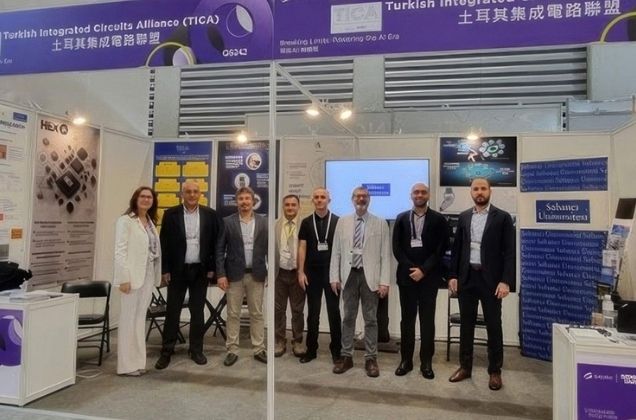
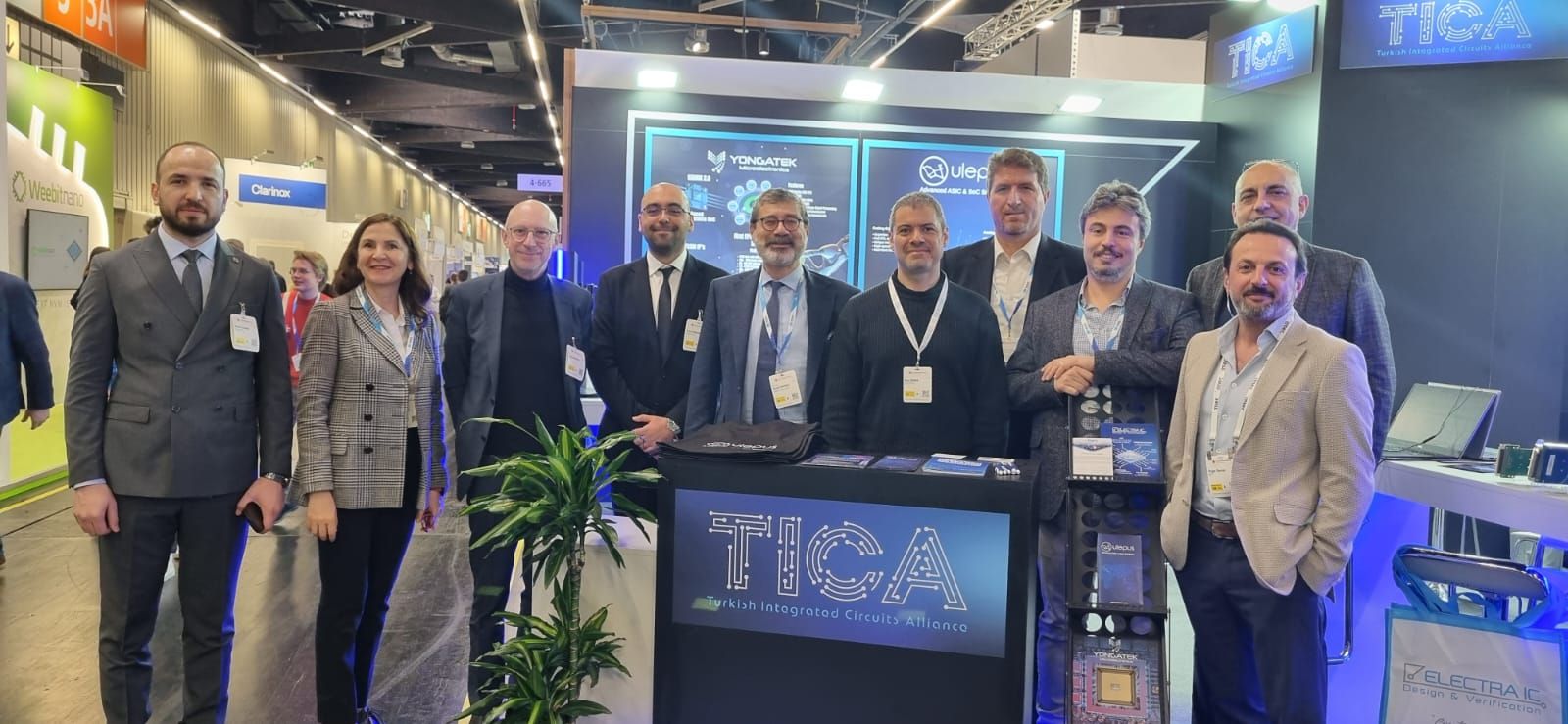
According to Dr. Leblebici, the TICA booths at the Semicon Taiwan trade fair in 2024 and the Embedded World 2025 trade fair in Nuremberg, Germany last year were very successful in terms of increasing our visibility. At these fairs, academics and industry representatives saw that Türkiye also has a place in this extremely competitive market. TICA participation in upcoming trade fairs are being planned in the near future.
Meanwhile, two new project agreements with a total budget of 384,000 EUR were recently signed between Sabancı University and IMEC. These agreements aim to conduct joint research on two related themes, involving doctoral and master's students. The CMOS 2.0 projects, supported by IMEC, will be managed by Özcan Öztürk and Korkut Kaan Tokgöz, faculty members of the Faculty of Engineering and Natural Sciences.
Sources:


