24/09/2026
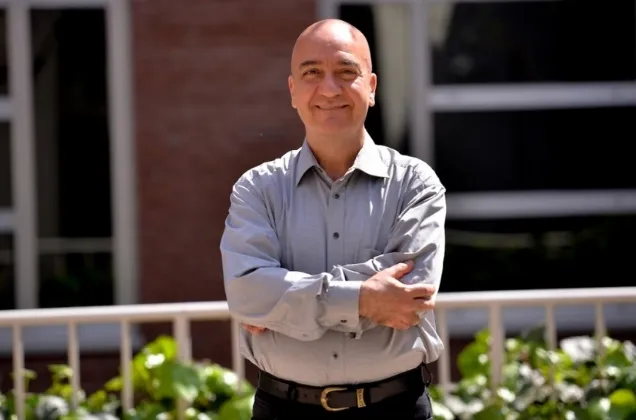
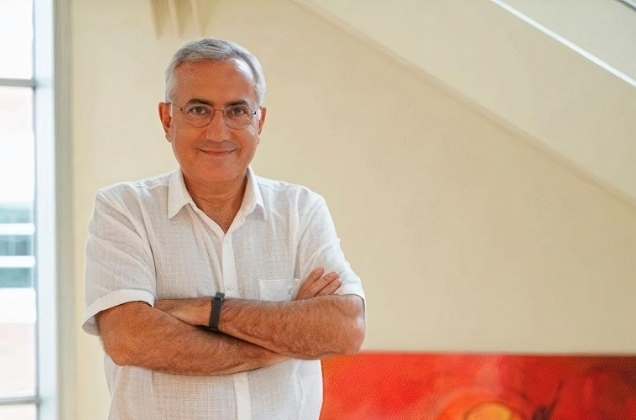
Prof. Dr. Nebi Sümer, a faculty member at the Sabancı University Faculty of Arts and Social Sciences since 2018, explained the psychological mechanisms behind many of the individual and societal issues we face today, in accessible language without compromising scientific rigor. In short, we focused on topics such as scientific ethics, parenting styles in our country, and the primary factors contributing to our deepening unhappiness.
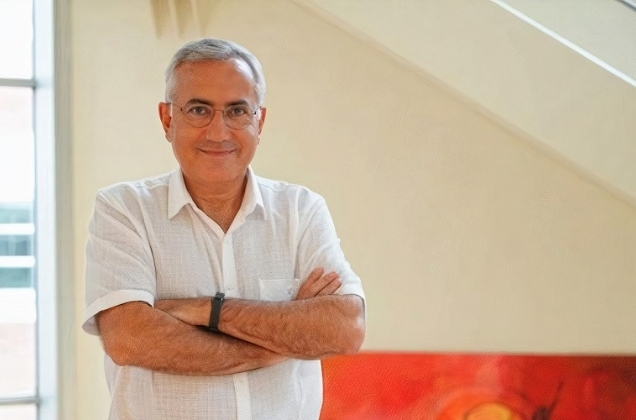
Psychology is a field that touches all our lives; at its simplest, it offers us numerous insights—such as understanding oneself, building healthy relationships, regulating emotions, and recognizing manipulation—that help us stand on firmer psychological ground and lead more fulfilling lives. So, how do we acquire these insights? By reading or consulting an expert. Prof. Dr. Nebi Sümer—who holds a master’s degree in Developmental Psychology and a doctorate in Social Psychology—is one of the best sources for this, thanks to the way he shares his academic work and psychological expertise with the public. Through his public-facing academic profile, he enables us to understand the psychological mechanisms behind many of the individual and societal challenges we face today, explaining them in accessible language while maintaining scientific integrity.
Dr. Sümer conducts research across a wide range of fields. Since we could not cover all of them in this interview, we had to limit our questions to a few current topics. Specifically, we focused on three areas: scientific ethics, parenting styles in our country, and the key factors driving our deepening unhappiness. I personally found the conversation very beneficial, and I am certain it will enrich your own knowledge as well.
Graduate and doctoral studies
Reyhan Oksay—You believe that all graduate students at the university should be required to take courses in both ethics and academic writing. What do you think is the reason for this requirement?
Nebi Sümer—Ethics is the backbone of science. Those who begin to generate scientific knowledge through graduate education must first learn and internalize why producing honest and reliable knowledge is an indispensable prerequisite. The importance of this issue becomes even clearer when considering ethical violations that occur frequently, particularly in Türkiye, such as paying others to write theses, plagiarism, data distortion, and the like.
The academic writing course is essential for learning and developing scientific discipline, mastering communication within the international scientific community, and becoming part of it.
In short, when we combine the two, the ethics course ensures the "honest" production of knowledge, while the academic writing course ensures its "accurate and effective" communication. Therefore, both courses should be taught at the very beginning of graduate education.
- You also teach courses on "testing and measurement." How do these courses facilitate distinguishing real science from pseudoscience? You argue that, since the social sciences are grounded in a value system, one cannot expect quality or merit from a student who lacks these moral values. Could you elaborate on this?
Psychological science is one of the seven "hub" scientific fields (https://link.springer.com/article/10.1007/s11192-005-0255-6) and serves as a bridge between the basic sciences and the social sciences. Despite its advanced state, psychology is one of the fields most frequently targeted by pseudoscience, and it often fails to protect itself against such incursions adequately. Various pseudosciences, ranging from astrology to parapsychology, rely on terms like "psyche" or "soul" and present themselves as scientific psychology. Although they do not rest on "falsifiable" hypotheses like genuine science, pseudoscience and conspiracy theories often mimic the appearance of scientific causality and verifiability in their explanations. Those who fail to grasp the distinction between science and pseudoscience easily fall prey to these traps. Indeed, a surprisingly large number of psychology students believe in astrology!
For this reason, I begin my Testing and Measurement course by clarifying the difference between science and pseudoscience. This distinction is essential in the social sciences, where maintaining ethical standards and professional competence depends on recognizing the risks of subjective knowledge and confirmation bias.
-You state that formatting is the issue YÖK (Council of Higher Education) emphasizes most regarding thesis writing. In other words, is it the quantity of the work rather than its quality that matters to YÖK? You even suggest that, under the pressure created by the existing system, some academics self-censor their research topics. Why is self-censorship so dangerous in the social sciences?
From the perspective of academic freedom and independent science, YÖK should not interfere in such matters at all. It should foster diversity and originality while leaving issues like formatting to universities. YÖK’s role should be limited to ensuring coordination among universities and overseeing scientific quality assurance; it should not position itself as a "gatekeeper". Any direction, pressure, or censorship of academics' research topics runs counter to the nature of academia and science and infringes on academic autonomy.
Unfortunately, such interventions have become systematic in Türkiye. The areas of interference become more apparent when examining the annual Academic Freedoms reports published by the Science Academy, of which I am a member. For instance, last week YÖK requested that all universities address the goal of a "Terror-Free Türkiye" during their 2026–2027 academic year opening ceremonies and first lectures. In the past, too, it made various demands based on the prevailing political agenda and even called for investigations into thousands of academics simply because they had signed a declaration. All of these actions constitute direct or indirect interference in universities and academic freedom.. What a university chooses to address at its opening ceremony is a matter that should be left to its own discretion. Moreover, if university autonomy is respected, their contributions to the goal of a "Terror-Free Türkiye" would become far more meaningful.
Academic self-censorship refers to the practice in which academics, in the absence of any legal or official ban, voluntarily restrict activities such as their research or course content because of perceived pressure, fear of sanctions or ostracism, or concerns about the political climate. This phenomenon poses a serious threat, particularly within the social sciences. Even without direct sanctions, some social scientists self-censor, adopting a "keep my head down" attitude in response to the prevailing atmosphere. Academic self-censorship has become widespread across many countries alongside the global backsliding in democracies. For those wishing to examine, based on empirical data, how self-censorship threatens academic freedom, I recommend two articles by the distinguished political scientist and Sakıp Sabancı International Special Jury Prize Recipient Pippa Norris: "Professors are the Enemy: Two Faces of Academic Freedom" and "Cancel Culture: Heterodox Self-Censorship or the Curious Case of the Dog-Which-Didn't-Bark."
-Many companies openly advertise services to write theses for a fee. So, how can this unethical practice be prevented?
This reflects the general moral erosion within academia. It stems from a culture—whether called merit, competence, or meritocracy—where advancement, career building, and income generation depend not on individual performance, but on the diploma one holds, connections to the right people, political views, or nepotism. Unfortunately, such situations have become normalized and are no longer seen as serious ethical violations. Those who engage in these practices do not feel enough guilt, nor does society condemn them strongly enough.
The academic equivalent of recent scandals in the economy and the stock market is paying to have a thesis written or writing or commissioning articles based on inflated data. We cannot say there is no correlation between what happens in the stock market and what happens in academia!
-Public trust in scientists and universities in Türkiye is very high compared to other institutions. In other words, despite all the negative developments, people still trust scientists. What could be the basis for this?
The trust placed in scientists and academia is, in reality, our most promising foundation and a kind of guarantee for our development. We witnessed this during the COVID-19 years as well: unlike in many Western countries, the public listened intently to the Science Board and trusted it. In these lands—where the printing press arrived nearly three centuries late—there has been profound respect and trust toward intellectuals and the educated elite since the 18th century. At its core, this reflects a yearning for development, progress, and growth. The Republic itself was founded on this trust and built its reforms upon it.
Unfortunately, I believe that academia in Türkiye has begun to squander this reservoir of trust. The general standard of academia has failed to rise above mediocrity. The number of high-quality universities remains limited. For decades, our universities have been unable to break into the top 300 in global rankings. Moreover, in recent years, we have begun to turn inward. Given these trends, I cannot be certain how much academia truly deserves this trust.
Individualism vs. Collectivism
- In our country, people are generally hesitant to ask questions and reluctant to question situations that seem amiss. What do you think is the reason for this? How should we encourage children to ask questions? What mistakes do families make in this regard while raising their children?
- Has individualism failed to develop here because we are a society with collectivist tendencies? Can we say that individualism has been on the rise in recent years?
I am not sure to what extent the tendency to avoid asking questions or questioning things can be generalized to the entire society. This mindset is no longer very prevalent among the younger generations. In the past, the patriarchal view that "one does not interrupt an elder" or "everyone knows their place" was widespread; however, this is no longer the dominant tendency.
In a comprehensive study on parenting in Turkey, funded by TÜBİTAK and conducted in collaboration with four universities under my leadership, we found that parenting styles have changed. We found that warmth and involvement toward children have increased, and fathers, regardless of their views or beliefs, are now more involved with their children. Children are encouraged to ask questions, and providing a good education is considered a key parenting goal. Similar results were observed in the fatherhood study by AÇEV.
Çiğdem Kağıtçıbaşı’s Theory of Family Models, along with numerous recent studies, shows that Türkiye is not a typical collectivist country. We are a society that is somewhat traditionalist but fundamentally "familist" and relational; we want our children to remain close to us yet stand on their own feet. However, the parenting style we use, along with the unconditional warmth we show in raising good children, tends to be somewhat intrusive, coercive, and guilt-inducing. The mindset of dictating what a child should think and feel—what we call "psychological control"—is an attitude passed down through generations; the problem largely stems from this. Perfectionism and intensive ("helicopter") parenting are prevalent among educated families, while the majority practice what I call "servant mothering"—a style where the mother conflates unconditional love with ceaseless service. This situation leads to spoiled, egocentric (let’s not call it narcissistic!) tendencies in some children, and feelings of helplessness and a lack of self-confidence in others.
Anyway, if we get into that, this conversation will never end!
Well-being data
-According to Gallup data, Türkiye is the country where people smile the least. OECD figures also show an 86% increase in antidepressant use between 2010 and 2023. It appears that the decline in psychological well-being in Türkiye has accelerated since 2017. What are the primary factors driving this deepening unhappiness in our country?
For nearly a decade, Gallup data has shown Türkiye ranking among the top 10 countries globally for negative emotions such as sadness and anger, while ranking at the bottom for positive emotions, such as smiling and feeling well-rested. We began monitoring and reporting on this issue in detail. Last year, Professor Zafer Yenal and I published the "Report on Societal and Psychological Well-being in Türkiye" on behalf of the Istanbul Policy Center, and we intend to continue this annually.
In our research, based on seven international indices and three national data sources, including TurkStat’s happiness survey, we found that psychological well-being in Türkiye is low across all metrics, with the decline accelerating particularly after 2017. In short, the drop in psychological well-being, which reflects happiness levels, coincides with a dramatic rise in antidepressant use.
Foremost among the contextual factors contributing to this deepening unhappiness since 2017 are the backsliding of our democracy and the trend toward authoritarianism. According to the V-Dem Liberal Democracy Index, one of the most respected indices, we have experienced a 74% decline between 2007 and 2024, and most indices now classify us as "not free." Other key factors accompanying this situation include the erosion of trust and social support, youth unemployment (specifically the sharp rise in the NEET—Not in Education, Employment, or Training—rate), and institutionalized exclusion and isolation. The transition to a presidential system through the 2017 constitutional amendment, along with persistently high inflation and deepening income inequality over the last decade, are also among the primary factors shaping this picture.
Despite this, infrastructure and healthcare have improved over the past 20 years; education levels, the proportion of white-collar workers, and urbanization have risen rapidly. Despite widespread unhappiness, the system appears to have settled into a sustainable social equilibrium, despite its chaotic appearance. We have characterized this situation as an "inefficient regime of unhappiness." In other words, society is neither achieving high levels of subjective well-being nor experiencing an outright collapse; rather than seeking collective improvement, the prevailing response to dissatisfaction is to simply cope with the situation or to pursue individual exit strategies, such as emigration.
-Can we say that social media is fueling this decline in societal well-being? Might citizens be falling under the illusion that negativity is on the rise simply because negative events pack a stronger punch than positive ones?
While the magnitude of the impact varies by type, social media undeniably plays a significant role. The 2026 World Happiness Report dedicates a special section to this issue, stowing that heavy social media use has contributed substantially to declining psychological well-being among young people, particularly in English-speaking countries and Western Europe. However, this impact varies greatly depending on the platform, usage patterns, and demographic factors such as gender and socioeconomic status; it appears to be a more serious source of unhappiness for young girls.
In a society like ours, where unhappiness and pessimism are widespread, social media effectively turns into a self-perpetuating "disaster algorithm"; it blows minor issues out of proportion and can transform even the most level-headed person into a conspiracy theorist! In short, it poses a serious risk, especially for those who fall into the algorithm trap and spend their days endlessly scrolling. Beyond purposes like education, using social media for more than three hours a day is a significant risk factor for both addiction and unhappiness.
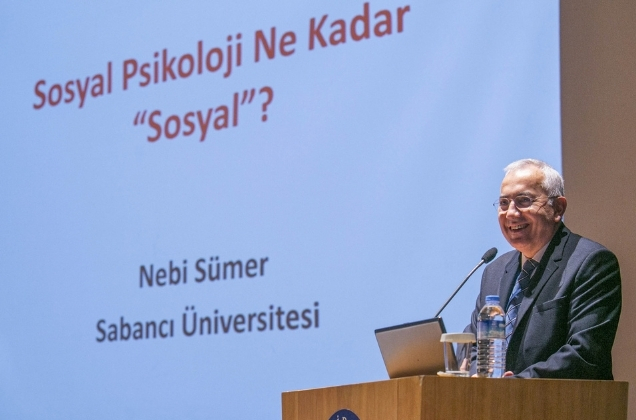
Who is Prof. Dr. Nebi Sümer?
A member of the Science Academy, Nebi Sümer received his bachelor's degree from the METU Department of Psychology in 1985 and his master's degree from the Hacettepe University Department of Developmental Psychology in 1988. He completed his doctorate in Social Psychology at Kansas State University in 1996.
He served as a faculty member in the psychology departments of Ankara University (1996–1999) and METU (1999–2018). Since 2018, he has been a faculty member at the Sabancı University Faculty of Arts and Social Sciences.