08/09/2026
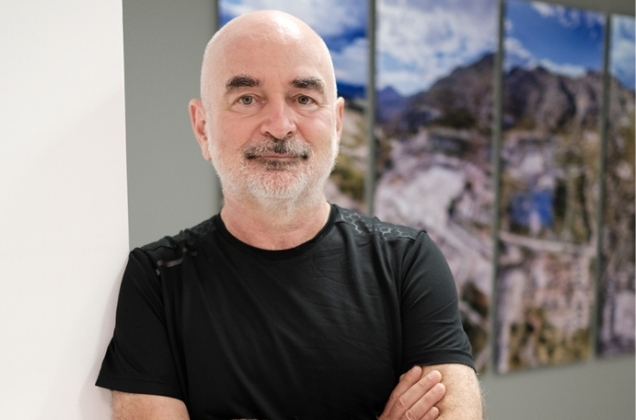
Prof. Dr. Murat Germen, who teaches photography, art, and new media at Sabancı University's Faculty of Arts and Social Sciences, defines himself as a photographer, archivist, and artist in addition to his academic career.
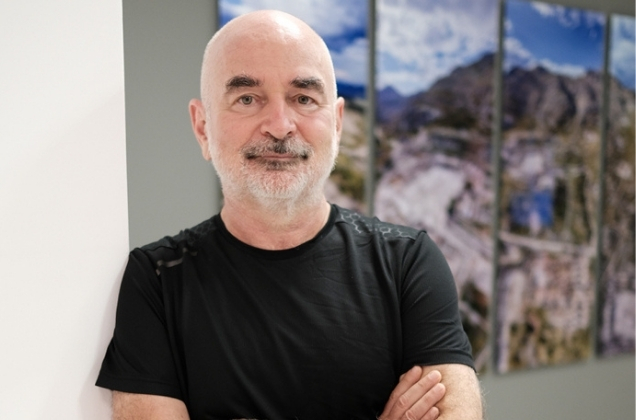
Germen explains why he chose Sabancı University, despite being a sought-after academic worldwide, with a single word: Freedom! More clearly, he says, "I am grateful that I can continue on my path 'as I am' without being forced to compromise my identity, principles, and sensitivities."
In our interview, we asked him about the central themes of his art. And we concluded that his work demands not only to be seen but also to be read.
Happy reading...
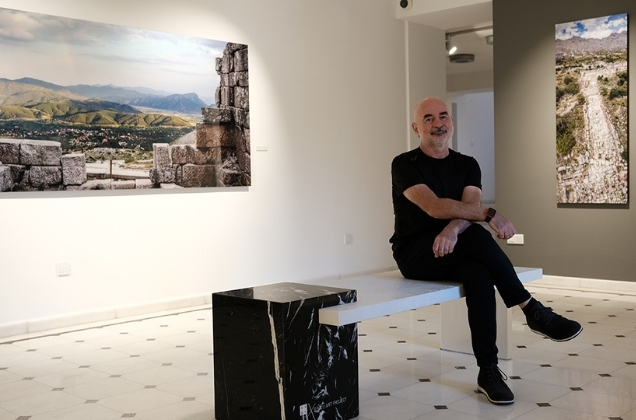
How would you define yourself? A professional photographer, architect, archivist, urban planner, designer, documentary filmmaker, lecturer, conservationist, or all of them? Or, in short, a multifaceted artist with a high sense of social responsibility who wants to document the era in which he lives?
I define myself as a photographer, archivist, academic, and artist; these identities have separate ways of existing, but ultimately they intertwine. I see photography not merely as a tool for producing or deriving images, but as a way of understanding and recording the era I live in, the places, the transformations, and the social memory. The connections I establish with architecture, the city, environmental destruction, climate change, and cultural heritage through art are extensions of this. Rather than defining the body of work I have created through a single professional activity, I see it as the production of an individual who witnesses their time and questions the transformation of places/societies through photography.
Is it a stroke of luck or a difficult legacy to bear that your family has so many valuable artists in its past? Your great-uncle Nazım Hikmet's worldview seems to have deeply influenced you. How do you think the increasing harshness of wild capitalism will affect the world?
I see the legacy of the cultural, artistic, and political figures in my family not as a burden, but as a responsibility that must be continued. It was impossible for me not to be deeply affected by my great-uncle Nazım Hikmet's worldview, which centered on human rights, equality, nature, local heritage, and a pluralistic society. The commodification of nature, labor, and human relations by wild capitalism creates not only socio-economic inequality but also a serious ecological crisis. The global "techno-feudal" rulers, arms manufacturers, and industrialists who produce the greatest share of the destruction do not seem to have any intention of stopping…
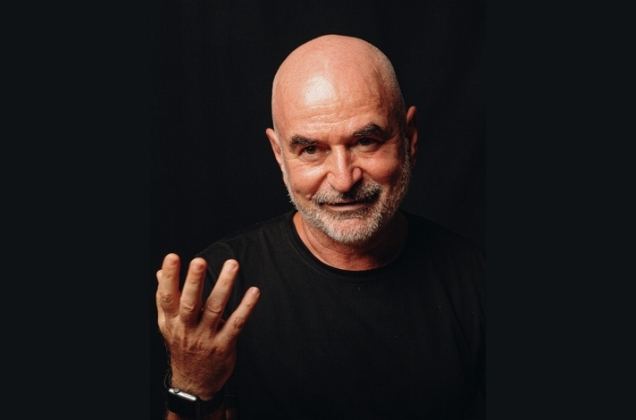
You teach courses in art, photography, and new media at Sabancı University. In fact, you are an academic sought after all over the world. What are your reasons for choosing this place? Is the interdisciplinary nature of the education, the collaboration between art and technology, or some other factor at play?
I will answer this question with a single word: "Freedom"! I am sincerely grateful to Sabancı University for the pluralistic, free, and progressive environment it has provided for 24 years. Being able to continue on my path "as I am," without being forced to compromise my identity, principles, and sensitivities, is invaluable!
You use photography as a tool for expression, research, and evidence. But what do the photographs you take with distorted lenses tell us? Does a realistic photograph make it difficult for us to see the “hidden extraordinary within the normal”? How do digital technologies add a dimension to the image?
I produce altered images not to distort the reality I perceive in the field, but rather to emphasize it. My aim is to attract attention with exceptional visuals, to draw the viewer to the work, and then to try to convey my message. Digital technology allows me to create an image that I have conceived in my mind but could not produce with a single lens, with a photograph; it creates a secondary reality where the image can be fragmented, multiplied, layered, and reconstructed.
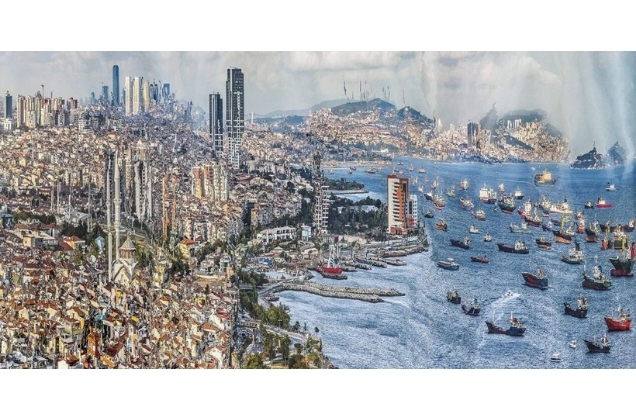
You say that politics and capital shape cities. So what good is urban planning under these conditions? Many urban planners working for the Istanbul Municipality are under arrest. Is Sagalassos the only planned city in our country today?
Urban planning alone does not have the power to fix cities, because planners do not make the final decisions. The profession has transformed into an institution that legitimizes and justifies certain rent-seeking decisions that have already been made. Those who refuse to comply and try to use the profession for the public good are arrested and eliminated.
However, when we look at Sagalassos, we see a rational urban mindset that considers topography, water, flora, public spaces, and transportation together. Ironically, if we are looking for planned cities in Türkiye, we are forced to look back two thousand years.
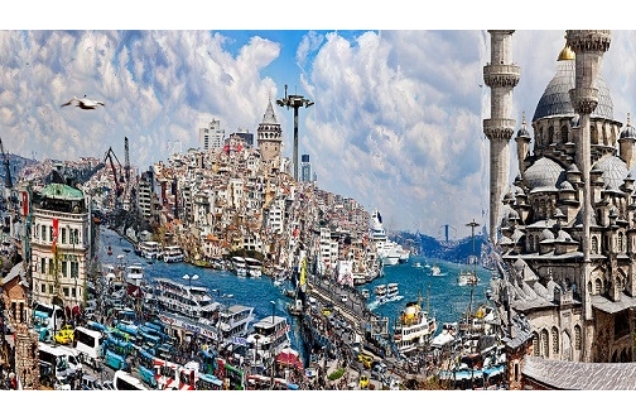
Why did you use the word dystopian for Istanbul? Istanbul is a fascinating and multi-layered city. But today, this city doesn't inspire confidence in anyone. What kind of disasters should we be prepared for if excessive urbanization and expansion cannot be stopped?
The reason I find Istanbul dystopian is not because the city is becoming ugly; it's because, despite its extraordinary beauty and multi-layered nature, it is increasingly producing uncertainty and insecurity. Istanbul is still a fascinating city, but the people living here are struggling to foresee their future, inflation, housing conditions, and the reliability of their living environment…
If excessive urbanization and continuous expansion (catastrophic mega-projects like Canal Istanbul) continue in this way, what we will face will not be a single disaster. We will struggle with crises that trigger each other, such as earthquake risk, destruction of water resources and forests, mucilage, air pollution, floods and temperature increases, transportation and infrastructure problems. The real danger is this chain reaction! Istanbul's problem is not how much it has grown, but that it is starting to consume itself by exceeding its capacity for growth…
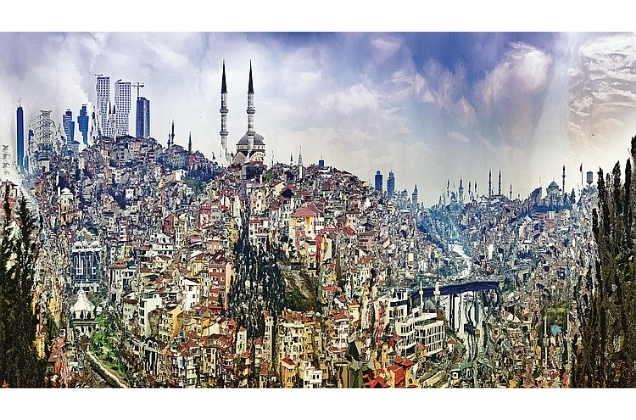
What do you say about architecture in today's world embracing waste, excess, ostentation, gaudiness, and tastelessness instead of a human-friendly, functional mission? Is this due to the influence of Western-centric global capitalism?
I find it problematic that architecture, instead of being an action that meets the basic needs of humans for shelter, has become an object of ostentation and power representation; that's why I don't practice architecture. Today, many buildings are designed not for the user, but for the investor, brand, power, or prestige. Modesty and frugality are abandoned, scale increases, material and energy consumption increases; but all this often does not correspond to an essential public or human need. The consumer culture spread by Western-centric global capitalism is certainly very influential; but today this culture is synthesized with local forms of local powers, capital, and the desire for status, and the result is often "kitsch." The problem is that the architectural profession has become a tool for local and global powers to produce prestige and market desires. I find the understanding that "there is no saving on prestige" very archaic; on the contrary, prestige is earned through frugality and modesty...
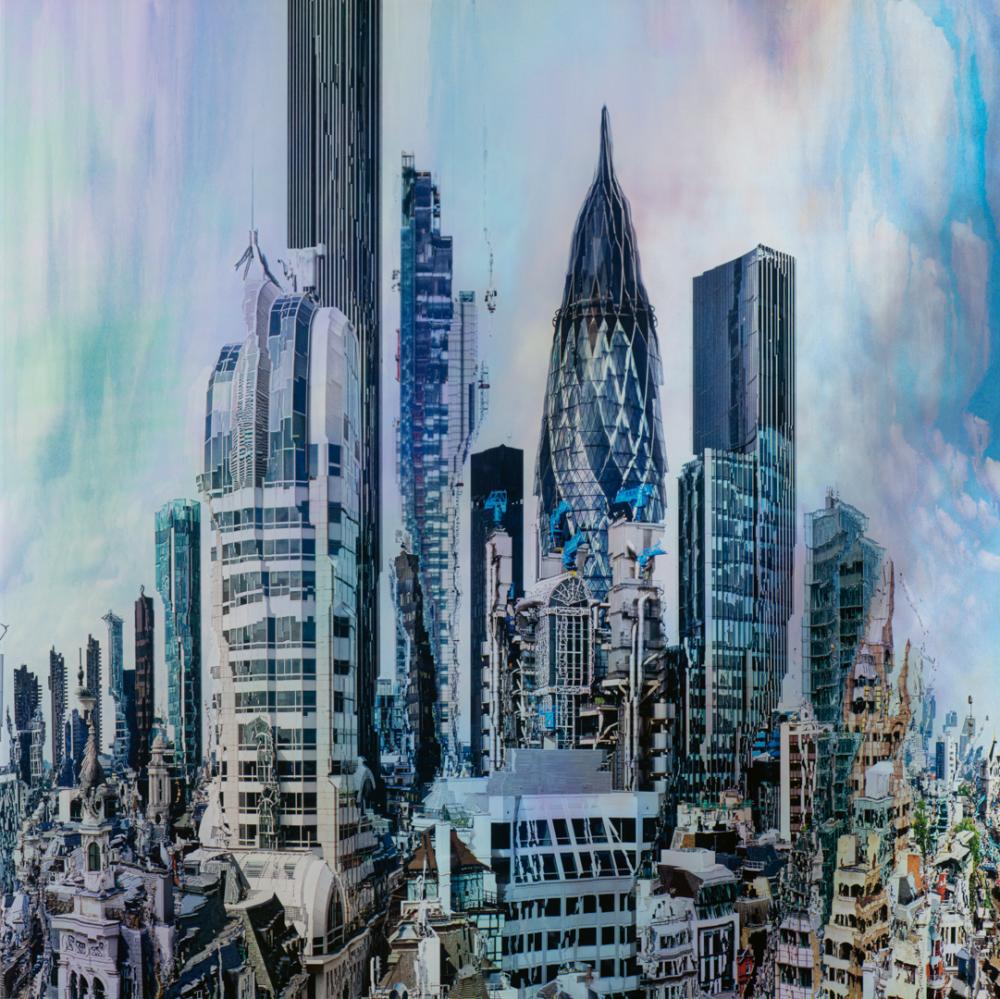
How can we prevent smart cities from creating stupid people? For example, is it inevitable that disabled people will be left stranded on foot because healthy people are waiting in line for elevators in some high-rise buildings?
People/societies who meet their own needs as often as possible can maintain their common sense. When smart technologies begin to do everything for humans, they increasingly make humans inept. People who constantly rely on others instead of meeting their needs independently, and who delegate even the smallest physical and mental effort to technology, eventually stop using their own capacity (in English, "use it or lose it!"). This creates a state of intellectual stagnation and laziness; and this situation will become even more serious with the increasing use of AI.
The people in the movie WALL-E offer a striking caricature of this: people who have forgotten how to use their bodies because all their needs are met automatically, and who struggle even to walk when the transportation system breaks down… In real life, elevators can be an example of this. If healthy people occupying the elevator for a few floors makes it difficult for disabled individuals who genuinely need it to use it, it's hard to consider the technology "smart." The term "smart city" shouldn't be interpreted as a necessity for the use of high technology; smart cities are cities where smart residents live in solidarity, share, consider the public good, and respect each other's needs.
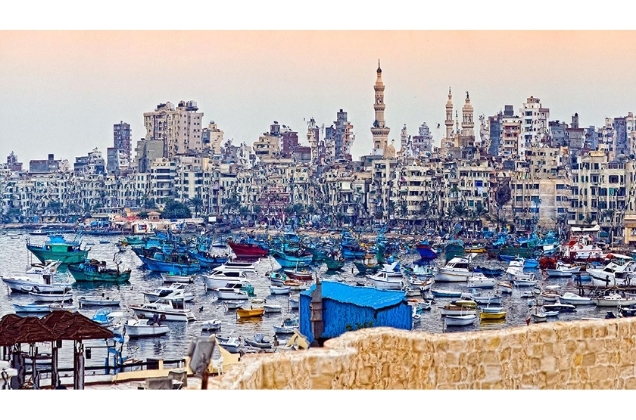
You say that being constantly on the road has given you a lot. Of all the places you've seen in the world and in our country, which one impressed you the most?
I won't single out any particular place; it all works as a whole, and what's important here is the process of being on the road itself, not the specific qualities of the places I've seen. Regardless of where you go, being on the road breaks the mold and your mind starts working differently. The routine struggle in your hometown ends, you begin to gather the energy needed to continue the struggle when you are back in town.
Do you prefer shooting from an airplane or using a drone? Why is a vertical perspective more effective for you? What do you want to show people?
The reason I prefer a bird's-eye perspective is that it frees the urban perception from the street view we are used to. When we look from the ground, we see individual buildings, roads, and façades; when we go up, the relationships they form with each other, the boundaries, the voids, and the growth patterns become visible. An aerial view is like taking an X-ray of the city: it makes the system working beneath the surface visible. With this technique, I want to show how the city is organized, how capital and real estate construction fragment the land, and how nature clashes with the artificial environment.
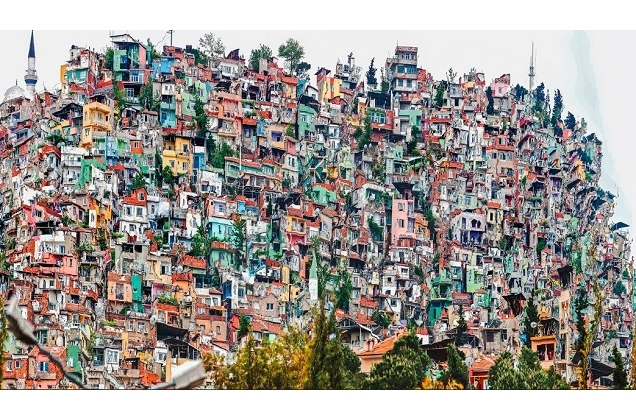
If humanity continues to destroy nature at this rate, it seems that nature will destroy humanity before it destroys nature. Is there a way to stop this trend? Or is it too late?
Humanity does not have the power to destroy nature; even if nature suffers heavy wounds, it always returns. We saw this during the pandemic when destructive humans were confined to their homes. Humanity is consuming a world that is habitable for itself and therefore causing self-destruction.
"Is there a way to stop this trend?" It's a very important question, one we should keep asking, even though it's difficult to give definitive answers. One of my suggestions is quite radical: cancel the internet…
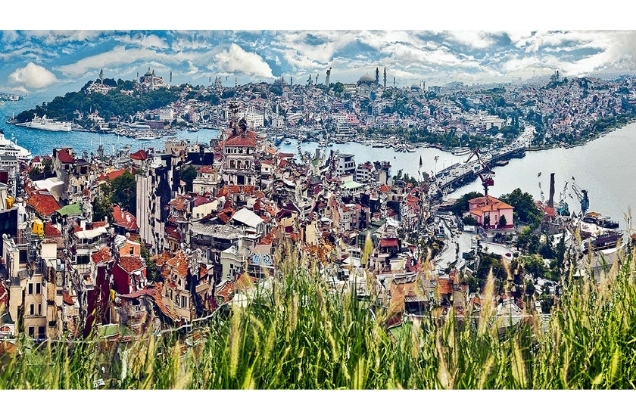
The spirit of the times rejects a lifestyle based on defending nature, cooperating with those who defend it, solidarity, humility, frugality, and contentment. So, what will the resulting cities look like under these conditions?
There are several films that foresee such cities: Metropolis, Blade Runner, Elysium, Matrix, Brazil, La Cité des enfants perdus, The Fifth Element, Gattaca, Minority Report, Children of Men, etc. Additionally, the most impactful message is delivered by High-Rise (Director: Ben Wheatley, 2015), an adaptation of J.G. Ballard's novel High-Rise, which depicts a class struggle within a single tall building. Cities will be places of enslavement, pushing the individual to the back, protecting the system, impoverished from a humanitarian perspective, with less nature/clean air/water/public space/neighborhood…
You are currently on sabbatical leave that, which you are entitled to every 7 years. You mentioned that you plan to work on a book about Istanbul during this period. How is your work progressing?
Instead of going abroad to another university during my leave, as is usually the case, I preferred to work on the Istanbul book. Apart from my usual intensive domestic/international art activities, I have made great progress on the book; the visuals are 95% ready, the text is around 70%; the book will be published around the end of the year.
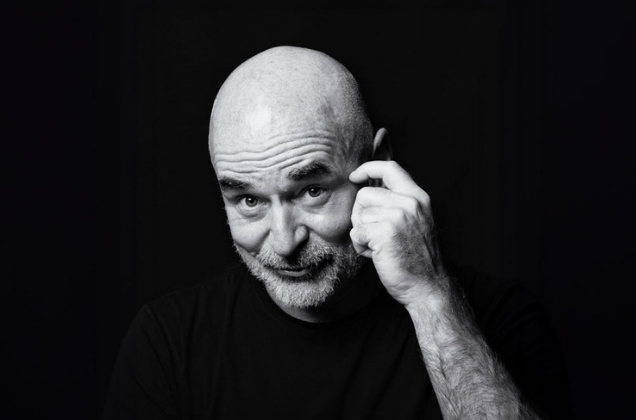
Who is Murat Germen?
Photographer and architect Murat Germen was born in 1965. He completed his middle and high school education at Saint Joseph High School. He then graduated first in his class from the Department of Urban and Regional Planning at Istanbul Technical University (ITU). He received a Fulbright scholarship and earned a Master of Architecture degree from the Massachusetts Institute of Technology (MIT), where he was awarded the American Institute of Architects (AIA) Gold Medal.
Murat Germen has numerous print and online publications on photography, architecture, planning, new media, and art.
He has also contributed to over one hundred solo and group exhibitions in Türkiye, the United States, Italy, Germany, the United Kingdom, Mexico, Portugal, Uzbekistan, Greece, and many other countries.
Numerous editions of Germen's various works are included in private collections both domestically and internationally, as well as in the collections of Istanbul Modern, Proje 4L Elgiz Contemporary Art Museum, Torun Contemporary Arts Center (Poland), Benetton Foundation Imago Mundi – Istanbul Codex, Yapı Kredi Culture and Arts, Odunpazarı Modern Museum, and Evliyagil Museum.
Murat Germen, who teaches photography, art, and new media courses at Sabancı University's Faculty of Arts and Social Sciences, continues his work in Istanbul.
Sources: https://www.indekskonusmaciajansi.com/murat-germen/#konusma-konulari
https://www.youtube.com/watch?v=b9hQEuSy3ZU
https://yapidergisi.com/murat-germen-kenti-izlemek-insani-izlemek-demek-benim-icin/
https://www.ted.com/talks/murat_germen_omur_biter_yol_bitmez