02/02/2026
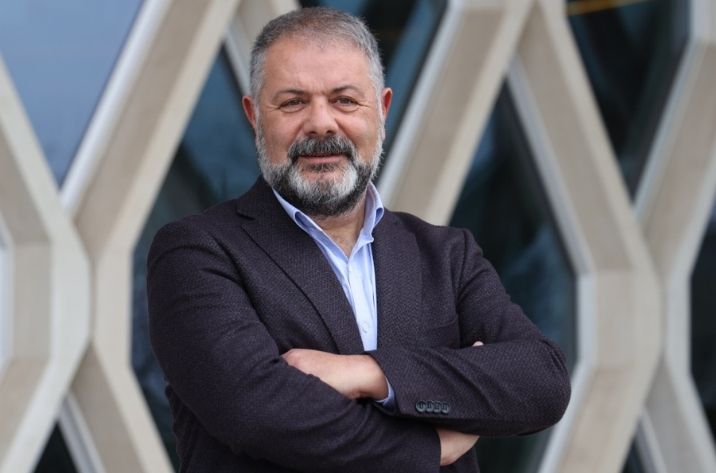
Professor Dr. Yusuf Menceloğlu, who tries to bring his inventions born in the laboratory to life with a commercial reflex, has now incorporated 6 of his ventures. Speaking about entrepreneurship, Dr. Menceloğlu says, "Entrepreneurship is an addiction for me. Sabancı University prefers not only academics with research and teaching experience, but also doctoral-level academics with experience outside the university. Therefore, I found an environment here where I could satisfy both my research curiosity and my entrepreneurial excitement. Sabancı is one of the very few universities that can offer such an ecosystem on an international scale."
The famous British statesman Sir Winston Churchill once said: "I prefer not to wish anyone health or wealth, but only good luck. Because most people on the Titanic were both healthy and rich, but very few of them were lucky." For example, the few people who survive plane crashes missed their flights either due to traffic congestion or a malfunctioning alarm. What initially appears as misfortunes are later revealed to be a great stroke of luck.
Is bankruptcy a lucky event?
Dr. Menceloğlu interprets an event that everyone would consider unfortunate as follows: “I am the child of a family from the business world. My family went bankrupt. So, I pursued my master's and doctoral studies.” In other words, if the family hadn't gone bankrupt, Dr. Menceloğlu would today be a successful businessperson solely engaged in his family trade, and we would be deprived of dozens of inventions and pioneering work in nanotechnology.
After completing his undergraduate degree in Chemistry at Karadeniz Technical University in 1983, he completed his master's and doctoral studies in polymer science at Istanbul Technical University in 1987 and 1991, respectively. Between 1988 and 1994, he worked as a visiting scientist at Tokyo Institute of Technology and the University of North Carolina, and he also gained six years of experience in industry before joining Sabancı University.
Returning to the country and establishing research infrastructure
“I didn’t want to stay in the US, because I can’t say I adapted very well there,” says Dr. Menceloğlu, describing his arrival at Sabancı University in 2000: “Sabancı University preferred not only academics but also scientists who came from the field and understood the problems better. Here, I found an environment that would both satisfy my hunger for research and support my initiatives.”
The foundations of the nanotechnology infrastructure were laid to establish the laboratory infrastructure with the support of the university administration and the Sabancı Foundation. In 2001, despite the economic crisis the country was experiencing, the infrastructure continued to develop. In 2005, it grew with the funds provided by TÜBİTAK. The Sabancı University Nanotechnology Research and Application Center (SUNUM), established in cooperation with the Ministry of Development and the Sabancı Foundation, and the Composite Technologies Center of Excellence, established in cooperation with Kordsa, became permanent centers that made significant contributions to the country’s efforts in nanotechnology and materials science with a total investment of $77 million.
Dr. Menceloğlu, who also served as the dean of the Faculty of Engineering and Natural Sciences for two terms from 2012 to 2018, is the author or co-author of more than 200 peer-reviewed journal articles and numerous book chapters on polymers and nanoscale materials, and is among the inventors of 48 patents listed in the Espacenet database.
Areas of Interest
Yusuf Z. Menceloğlu, who serves as a faculty member in the Materials Science and Nanoengineering program at Sabancı University, teaches courses on polymeric materials, textile fibers and polymer science, and nanotechnology in agriculture. Menceloğlu also mentions the efforts of Prof. Dr. Burak Erman and Prof. Dr. Kemal İnan in the establishment of the program and points out that materials science and technology is an interdisciplinary field. Materials Science and Nanoengineering is a field of study that examines synthetic and biological polymers, ceramics, and metals. Polymers, commonly known as plastics, are at the heart of almost all contemporary applications. Today, high-strength polymers are replacing steel in a number of industrial and technological fields.
Companies Founded or Co-Founded by Yusuf Menceloğlu
Dr. Menceloğlu, the founder or co-founder of 6 technology-based startups, is a true expert in turning ideas born in his lab into companies. He is almost addicted to entrepreneurship. These companies are:
Micell Technologies - 1994, USA: An innovative technology company focused on transforming medical devices to improve patient data. The company's supercritical fluid technology enables the production of advanced drug-eluting stents already in use in the interventional cardiology market.
NanomatTR Ltd. - 2006, Türkiye:
Materials produced by the company include the following:
• Additives used to enhance or improve properties such as flame retardance, UV tolerance, biodegradability, mechanical strength, and thermal stability in plastic and composite materials, ranging in size from nano to molecular scale.
• Antibacterial and antifungal coating materials for textile applications.
• Smart coatings that provide water-repellent properties to textile, ceramic, and polymer surfaces.
NanoTego, Inc. - 2010, Türkiye: Antimic®️ is a powerful antimicrobial protective agent compared to other disinfectant products. By coating the surfaces it is applied to with colorless, odorless nano-sized shields, it prevents bacteria, viruses, and microbes from adhering and, thanks to its long-lasting effect, also prevents their reproduction.
Nanografen Ltd. - 2014, Türkiye: Nanografen reduces the cost of graphene by applying recycling and reuse technology for mass production in the plastics industry, using waste tires as starting material.
Punova Ltd. - 2015, Türkiye: An R&D-based chemical company offering customer-focused and innovative polymeric solutions for industries such as automotive, aerospace, construction, and textiles that require high-performance, functional coatings, adhesives, and resins.
ANT Systems
ANT Systems is one of the most notable commercial outcomes of the research infrastructure at Sabancı University in recent years. This company combines agriculture with nanotechnology. It improves soil health while saving water and chemicals in agriculture. The company is collaborating with Professor İsmail Çakmak on this subject.
The new products launched under the ANT Systems umbrella are as follows:
NANOTERN: One of the most serious environmental problems in the world is the ever-increasing water scarcity. Developed as a solution to this problem, NANOTERN is a nanotechnology product that absorbs up to approximately 1800 times its weight in water and gradually releases it back to plants in a controlled manner over 40 days. Thanks to its high absorption capacity, it can support crops during long periods of drought. ANT Systems' flagship technology, the product remains active in the soil for up to 2 years and is adaptable to all soil types.

INSEASE: The aim of this product is to prevent the overuse of insecticides. Despite their toxic effects, pesticides are indispensable components of industrial agriculture today. Only 0.1% of pesticides applied in an agricultural area achieve their target, while the remaining amount leads to the loss of biodiversity, the decline of extremely valuable species, water and soil pollution, the development of pesticide resistance in plants, and numerous public health risks. INSEASE Technology is a nanotechnology solution in the form of greenhouse sheets that release the pesticide in a controlled and slow manner. These sheets slowly release the active ingredient at the correct levels that effectively repel insects, without harming crops or the environment.

ANTIMIC AGRO: Antimic Agro is a sanitation technology that offers a long-term solution to protect product quality and extend shelf life. Compared to other disinfectants, Antimic Agro is a more powerful antimicrobial preservative. When applied, it forms colorless, odorless nano-sized shields on the surface. These shields prevent microorganisms such as bacteria, viruses, algae, and fungi from adhering to the surface. As they remain effective for a long time, they stop the growth of microorganisms.

Dr. Menceloğlu is the Chair and Chief Scientific Officer (CSO) of ANT Systems. The company’s CEO is Can Yurdakul. They are preparing to open a facility with an annual capacity of 1,500 tons in the Tuzla Chemical Industrialists Organized Industrial Zone.
Having begun exporting to Peru and Iraq, ANT Systems has established its distribution network in the Gulf Cooperation Council region.