13/04/2026
Professor Peter Katzenstein, recipient of the 2026 Special Jury Prize at the Sakıp Sabancı International Research Awards, visited Sabancı University's Tuzla Campus the day after the award ceremony, meeting with students and academics. The day-long program began with an informal morning meeting with doctoral and master's students, followed by a presentation on his latest book and a subsequent panel discussion, transforming the program into an academic debate.
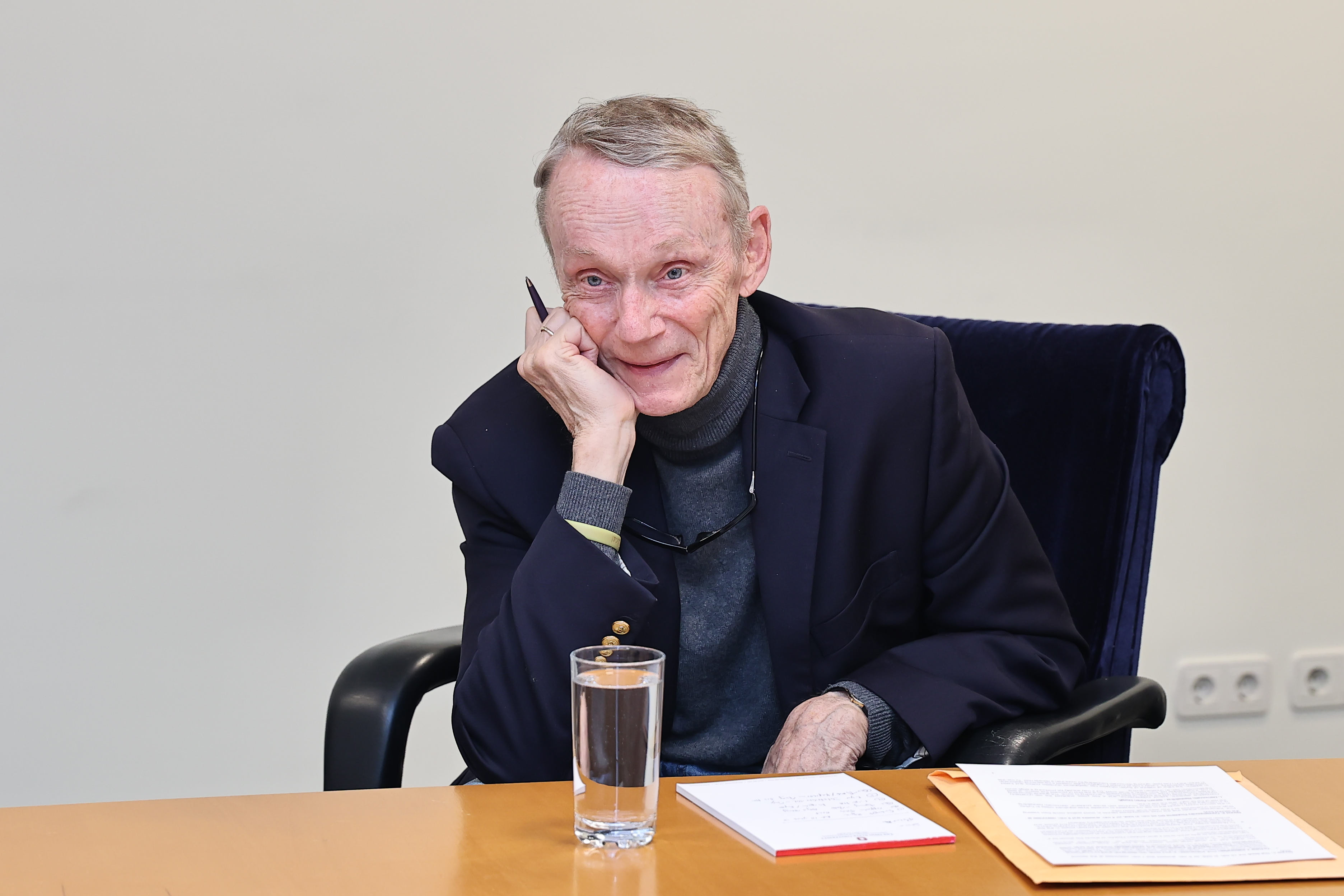
In the first event of the day, Katzenstein engaged in a comprehensive conversation with political science doctoral and master's students about thesis topic selection, research design, and academic life. Students shared their interests across a wide range of topics, from energy transition to authoritarian regimes, populism to civil-military relations, while Katzenstein described this diversity as "wanting to study the world," but emphasized the need to break it down into manageable parts.
Katzenstein, who particularly emphasized the issue of data in academic production, stated that data collection plays a central role in doctoral studies and that students should clarify their expectations with the help of their advisors. Noting that thesis topics often emerge at the intersection of personal experiences, intuition, and intellectual curiosity, Katzenstein stated that the academic journey is not linear and is often shaped by serendipity. He also touched upon how today's students access information, emphasizing that artificial intelligence tools can be used as "intelligent study companions," but that turning them into shortcuts that replace reading can weaken intellectual reasoning; he underlined the importance of using artificial intelligence for the development of questioning practices.
Uncertainty, Risk, and the “Post-Newtonian” World
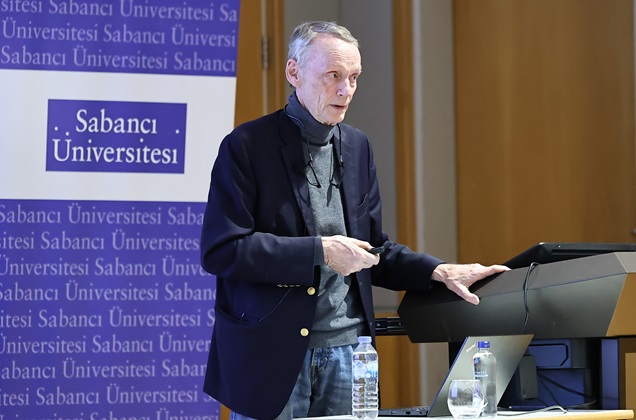
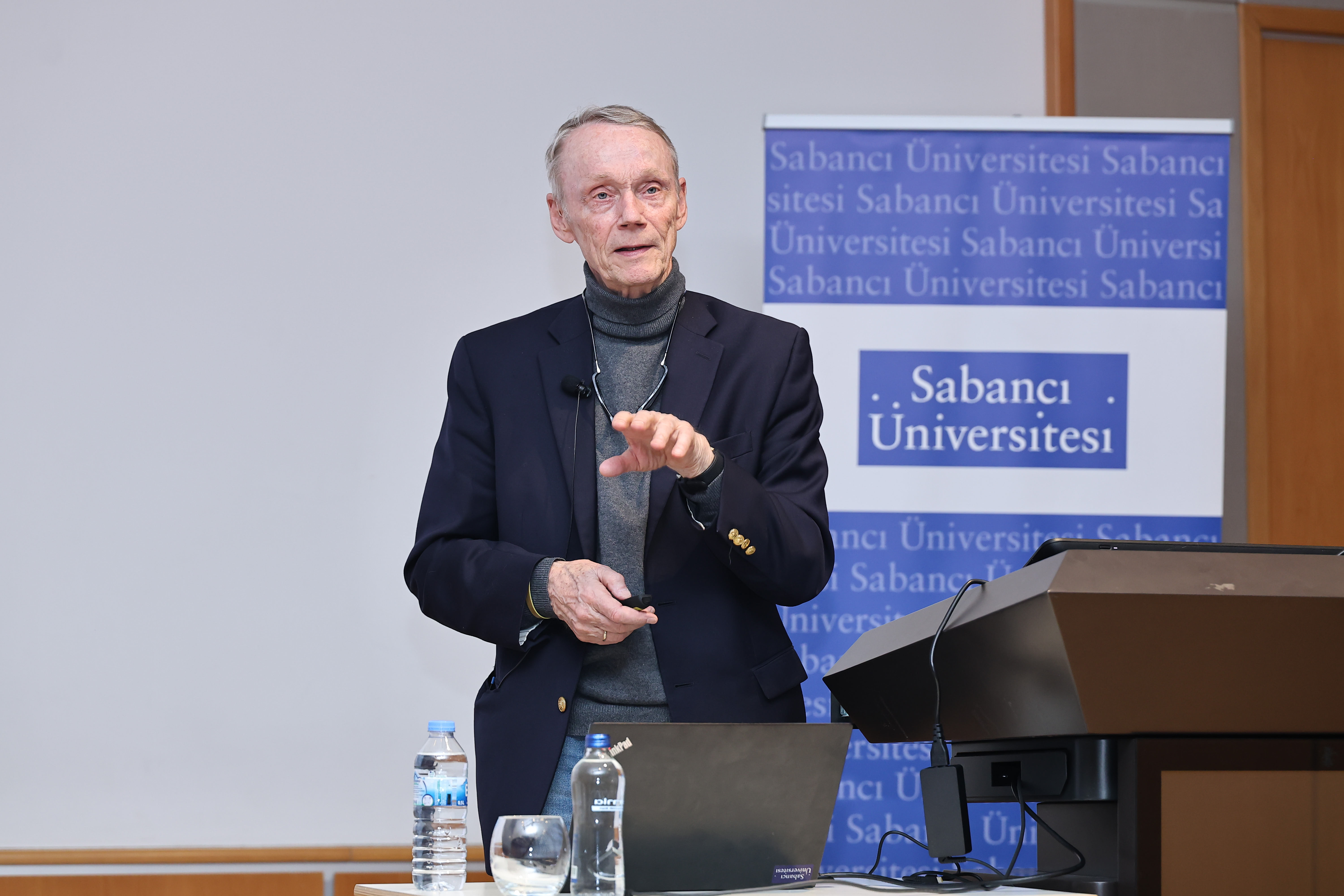
Later, at the event held in the Cinema Hall, Katzenstein gave a presentation titled “Planetary Realities: Entanglement, Power, Risk, and Uncertainty in International Politics” within the framework of his latest book, Entanglements in World Politics: The Power of Uncertainty. In his talk, Katzenstein, who opened up a rethinking of “power,” one of the fundamental concepts of the international relations discipline, stated that traditional approaches are mostly based on a “Newtonian” worldview. In this context, he introduced the distinction between the “small world,” where risk is measurable and calculable, and the “big world,” where uncertainty prevails.
According to Katzenstein: Risk refers to situations where probabilities can be calculated; uncertainty refers to situations where probabilities cannot be calculated, and sometimes even the events themselves cannot be predicted.
This distinction is critically important not only for theoretical understanding but also for understanding political and economic crises. Speaking through the example of the 2008 financial crisis, Katzenstein emphasized that rational expectations theory ignores real-world uncertainties, which has serious consequences. The presentation also centered on three analytical dimensions: context, process, and language.
Katzenstein offered a critical perspective on established approaches in the social sciences, particularly noting that language is not only a tool reflecting the world but also an element that constructs and transforms it.
Interdisciplinary Discussion, Uncertainty, and the Role of Insight
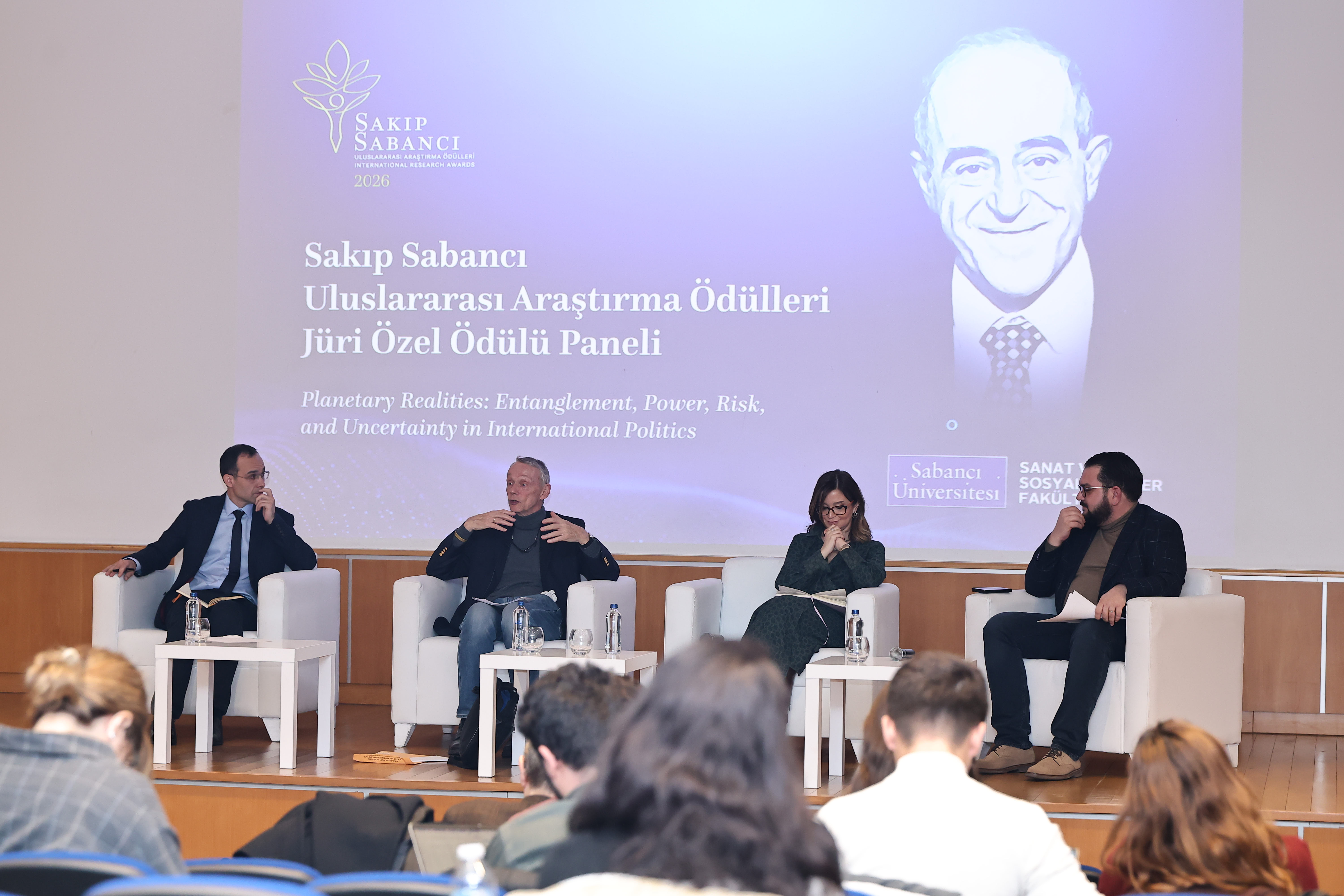
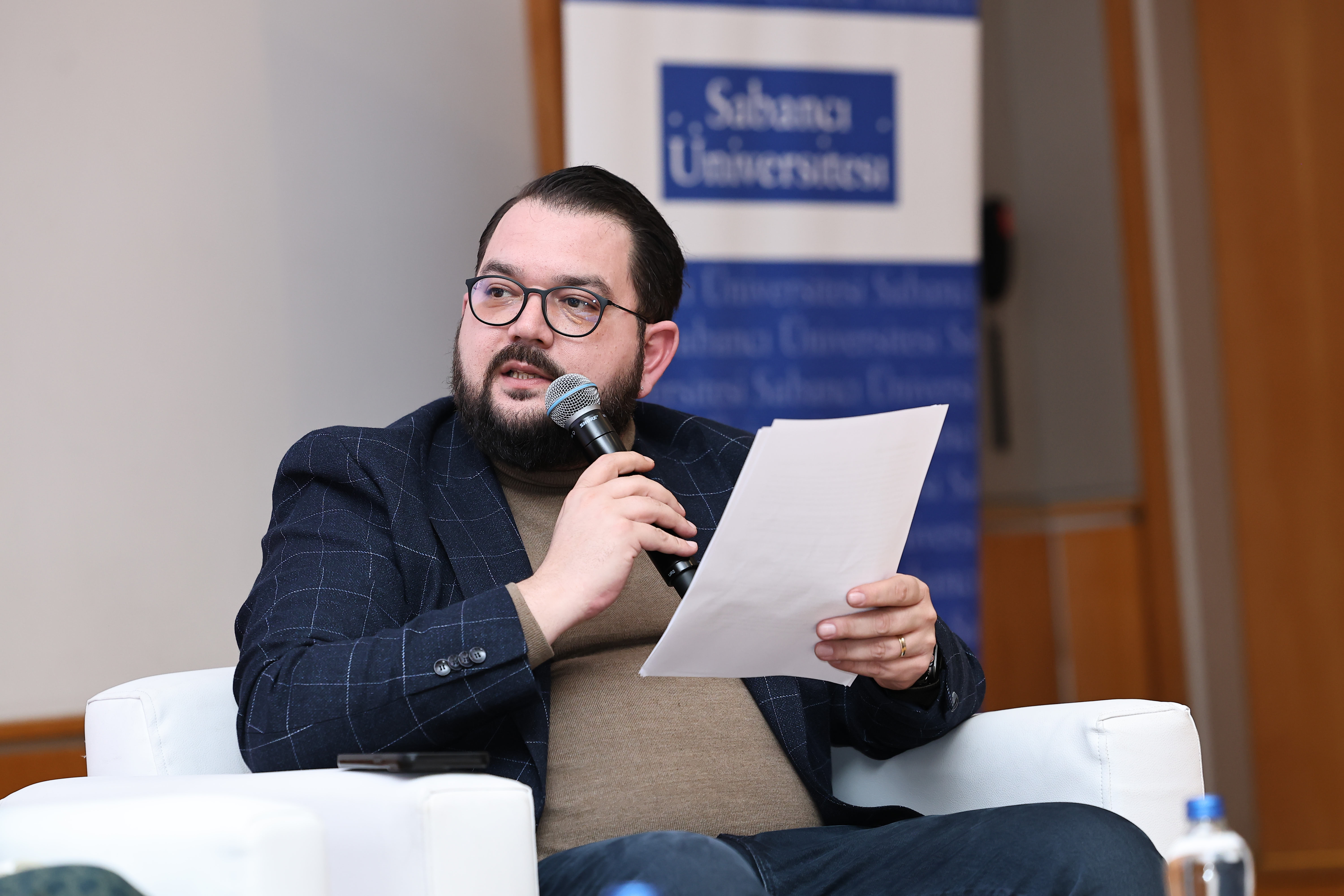
Following the presentation, a panel moderated by Associate Professor Mert Moral was held, with Prof. Dr. Senem Aydın-Düzgit and Associate Professor Mustafa Kutlay participating.
The panel examined Katzenstein's concepts from different perspectives. The discussions focused particularly on the following topics:
- The tendency of international relations theories to systematically "reduce" uncertainty to "risk"
- The difference between "control power" and Katzenstein's concept of "protean power"
- How current developments such as democratic decline, the rise of the far right, and global conflicts can be analyzed within this theoretical framework
Senem Aydın-Düzgit emphasized that the discipline tends to simplify uncertainty at both theoretical and methodological levels, stating that this reduction process is institutionalized particularly through quantitative methods and model-building practices. Mustafa Kutlay stated that this approach is insufficient for explaining surprising developments, and that Katzenstein's concept of "protean power" offers a stronger framework for understanding the capacity for flexibility and adaptation in the face of uncertainty.
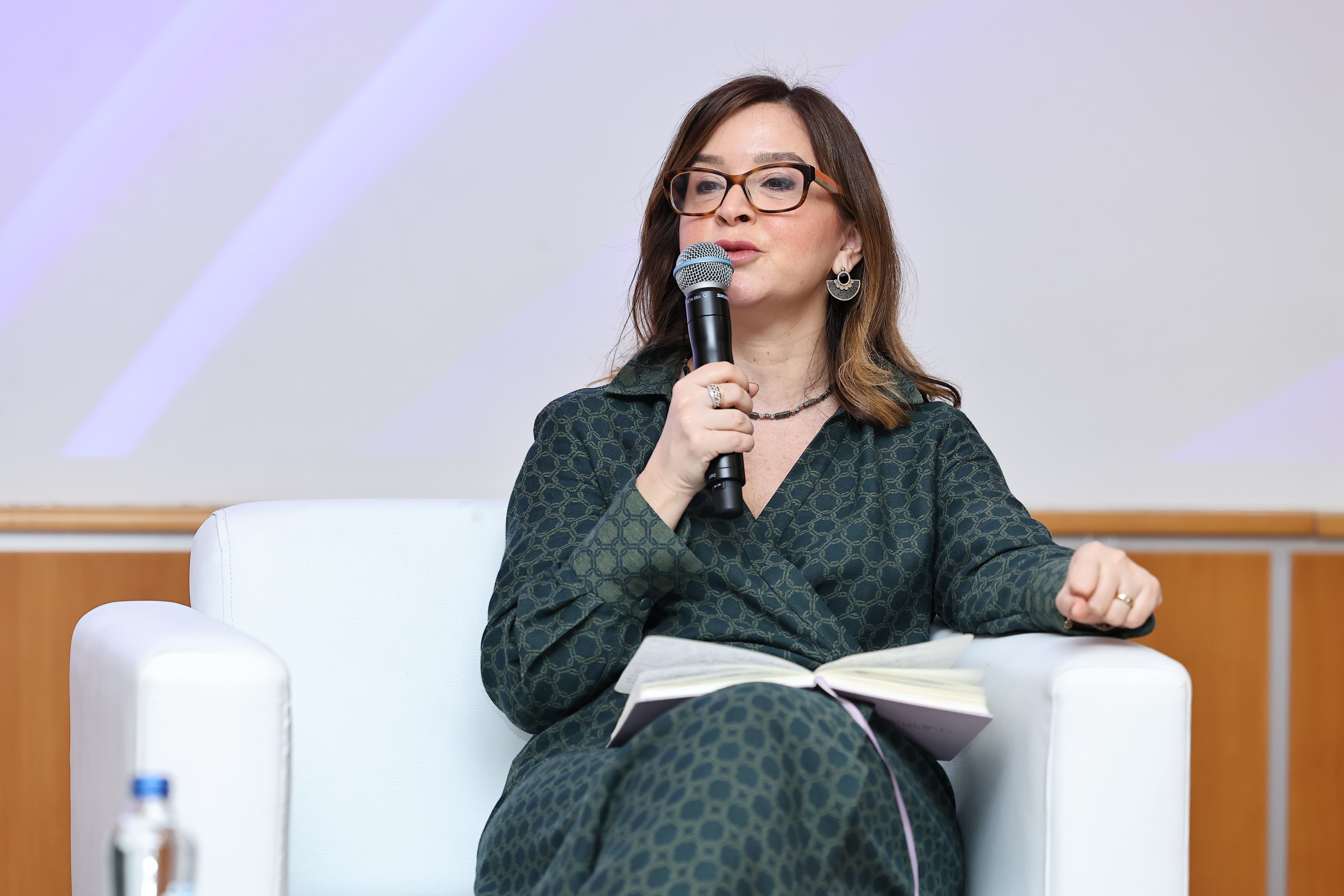
One of the striking aspects of the discussion was Katzenstein's emphasis on "gut feeling" in decision-making processes. Peter Katzenstein criticized the academic world's tendency towards over-rationalization, noting that policymakers often act on incomplete information and intuitive judgments rather than theoretical models. According to him, decision-making in a world full of uncertainty inevitably involves quick assessments and "instinctive" reactions; therefore, intuition is not a weak method, but a form of decision-making inherent in politics. However, he emphasized that these intuitions do not always produce correct results, and that flawed learning processes and erroneous conclusions can also shape political outcomes.
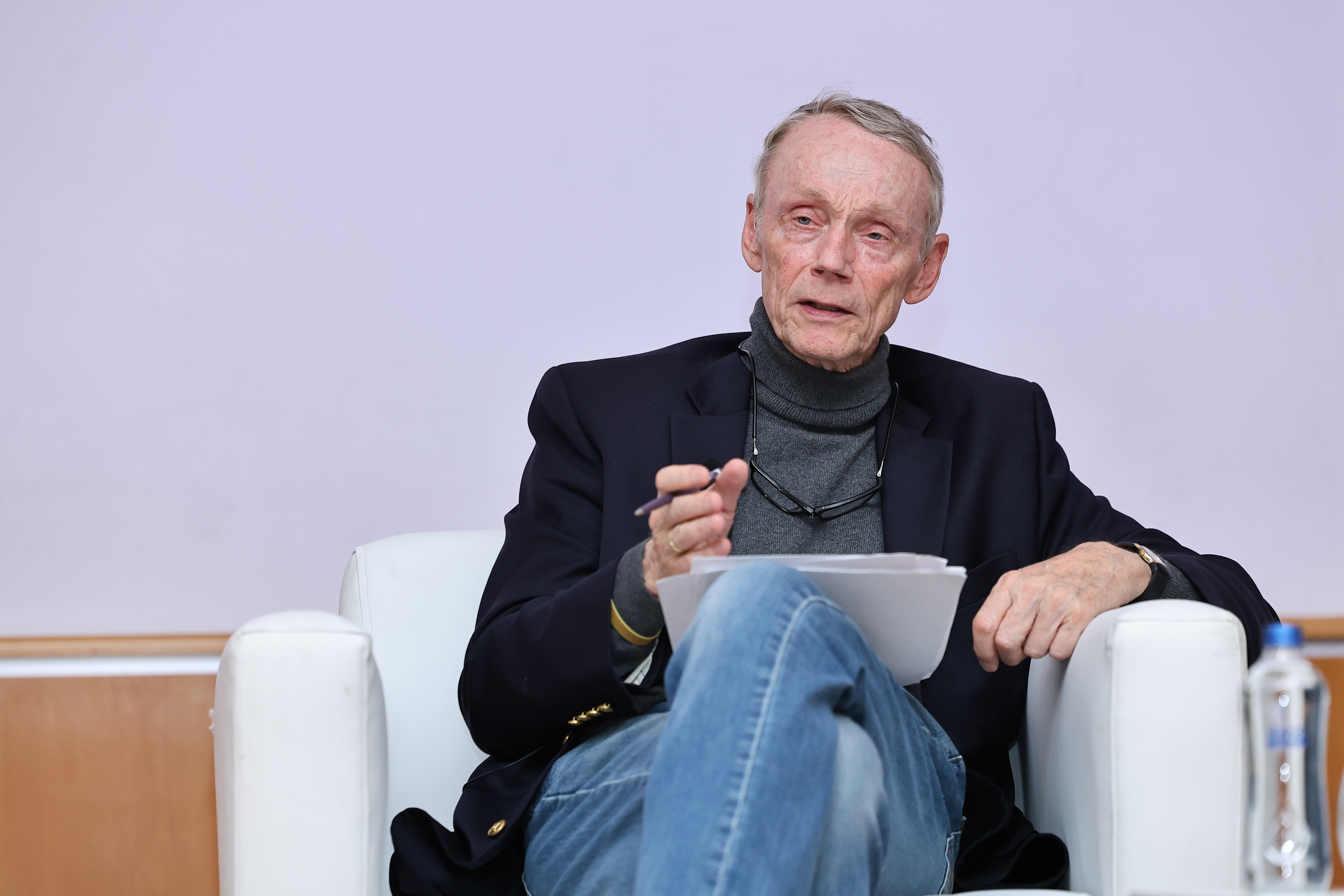
At this point, Senem Aydın-Düzgit also contributed to the discussion, stating that political responses arising in an environment of uncertainty cannot be explained solely by rational calculations. Aydın-Düzgit stated that, especially in processes such as democratic regression and waves of protest, the perceptions of actors, timing, and interactions can lead to unexpected results, noting that intuition and "feeling" can often be decisive, surpassing analytical models.
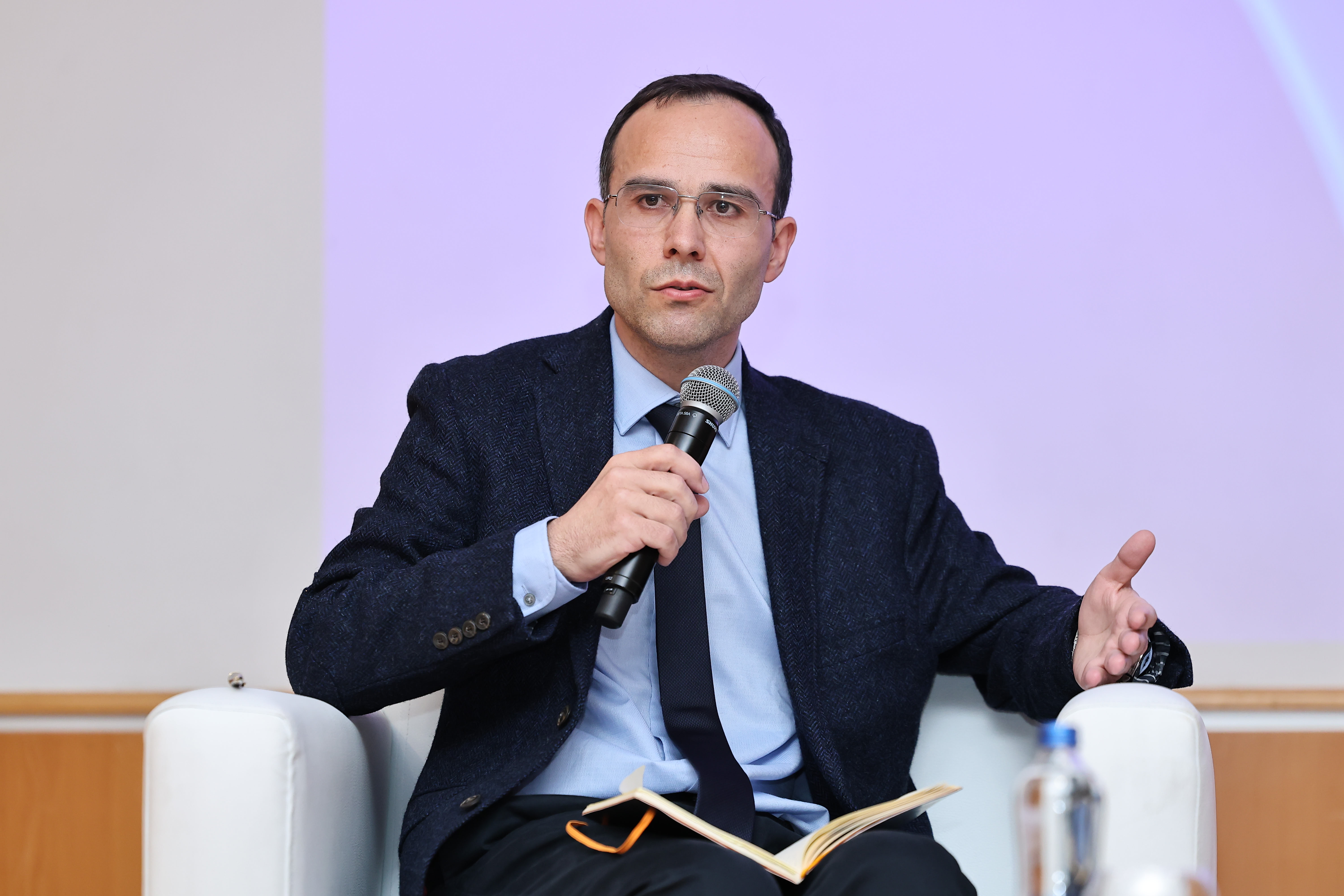
The second part of the panel focused on methods of coping with uncertainty. Mustafa Kutlay, drawing attention to the scenario-building approach, emphasized the importance of considering different possibilities together rather than producing singular predictions in an environment of uncertainty. According to Kutlay, this approach offers a more flexible and realistic analytical opportunity in the face of increasing entanglement in international politics.
The final section also opened up the discussion through current examples such as the theoretical framework, democratic regression, political movements, and interstate conflict. Katzenstein stated that such processes are not linear or entirely predictable, but rather should be considered as "complex systems" where different dynamics are intertwined.
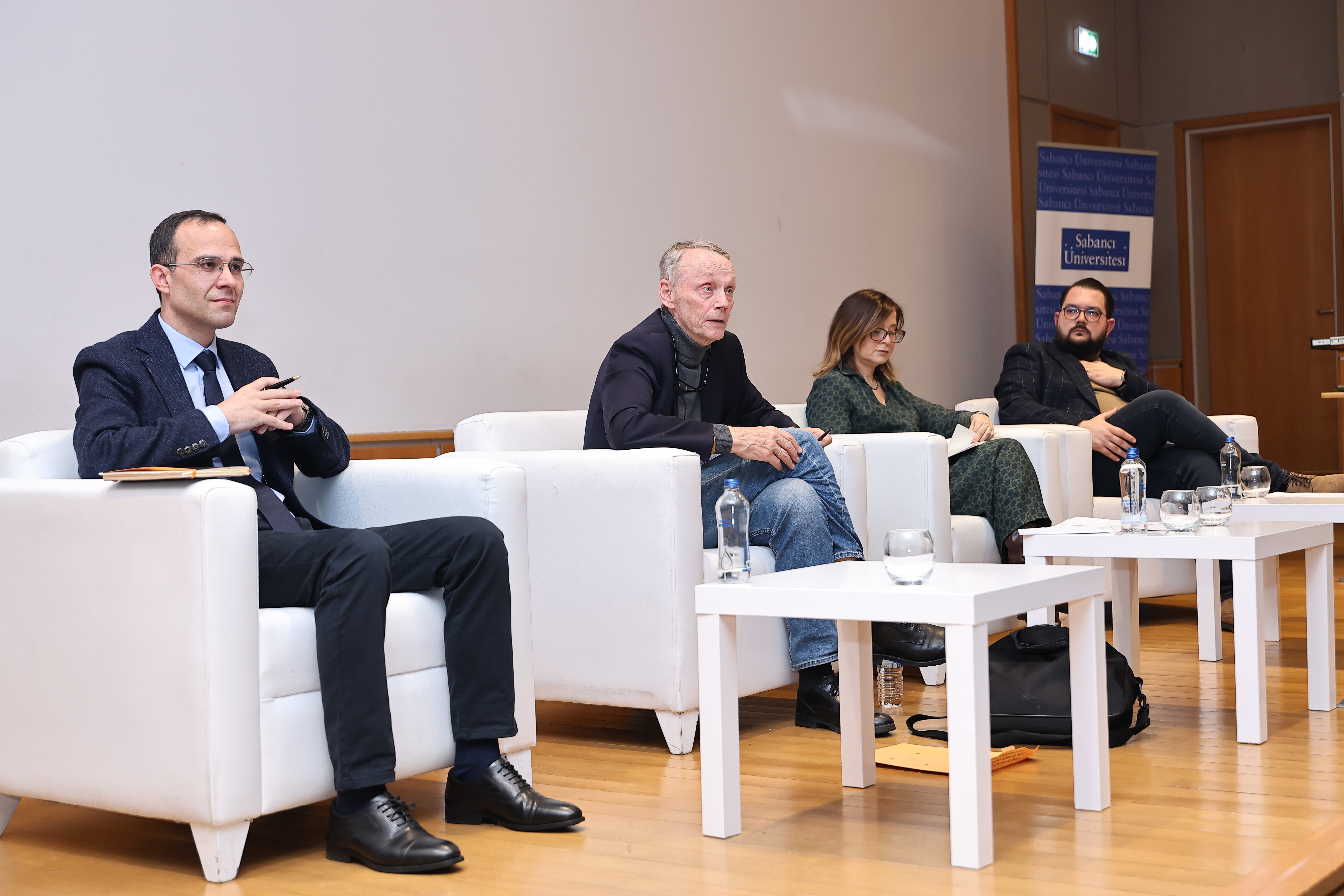
The question-and-answer session following the panel further deepened the discussion with questions from the audience. The panel discussion and question-and-answer session concluded by highlighting that uncertainty is not only a problem to be analyzed, but also a phenomenon that reshapes ways of thinking and researching.